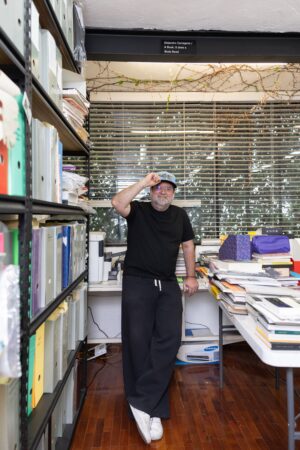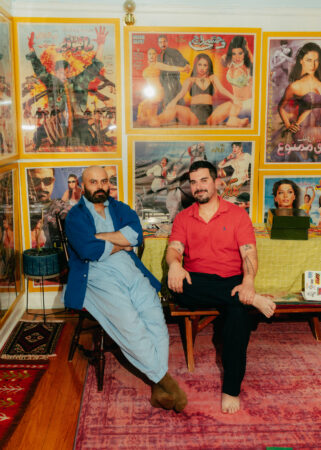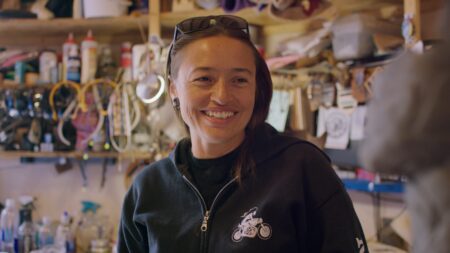
Interview conducted for Art21 by Jurrell Lewis in July of 2026. Original photography for Art21 by Timothy O’Connell, all additional photography courtesy of the artist. This interview is published as a part of the partnership between Art21 and Printed Matter’s NY Art Book Fair.
In the Studio
Sara Yukiko follows her eye
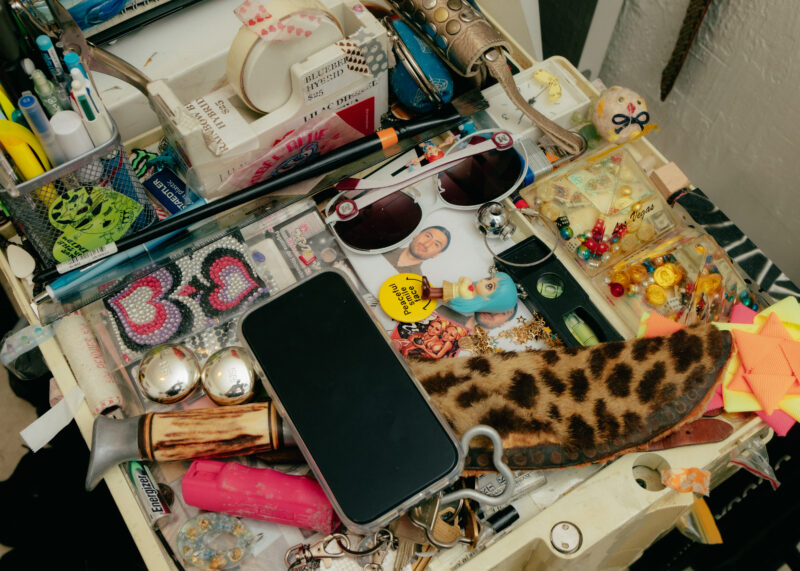
Jurrell Lewis–I know that you are a collector, both in your practice and personal life, and I’m curious how the idea of the “collection” influences your practice and the work you make?
Sara Yukiko– I’ve always been a collector. Even as a kid, I was collecting rocks, feathers, buttons, and whatever caught my attention. At some point, I realized I could make that instinct part of my art practice. Now I collect images, videos, and objects.
I think collecting is really a way of following my eye. I’m constantly seeing things that I’m drawn to without necessarily knowing why, and I trust that instinct. I don’t have to know why something belongs before I give myself permission to keep it. Often, I only understand how things relate to each other later. It’s the same when I’m taking photos or making videos: I don’t always know what something is going to become, but I trust that if I’m compelled to make it, it will eventually have a place in my world. A lot of my practice is about letting those things accumulate and discovering the relationships between them over time.
JL–In your work, you deal with the secondhand in multiple ways: through appropriating images and objects in your work and then the actual content that you’re appropriating, like secondhand materials from resale listings online. I’m curious how you think about the nature of the secondhand, and how you work with that as a material?
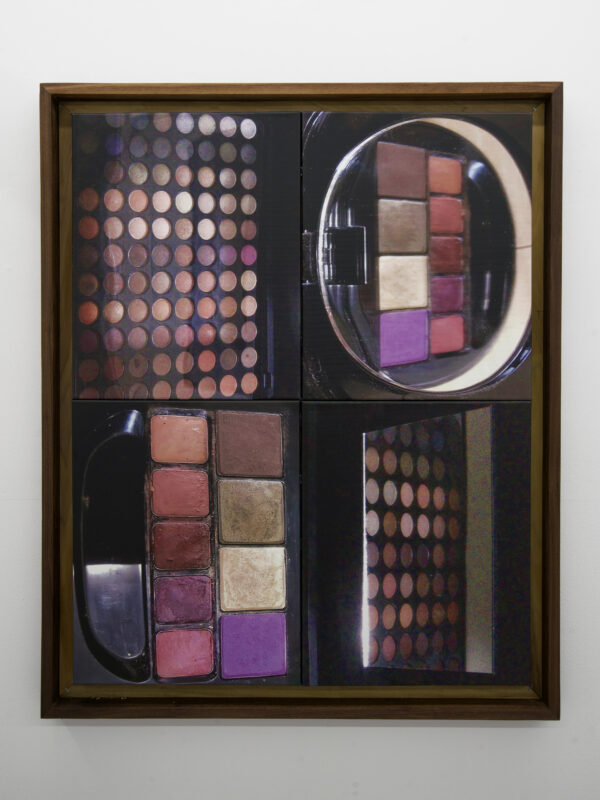
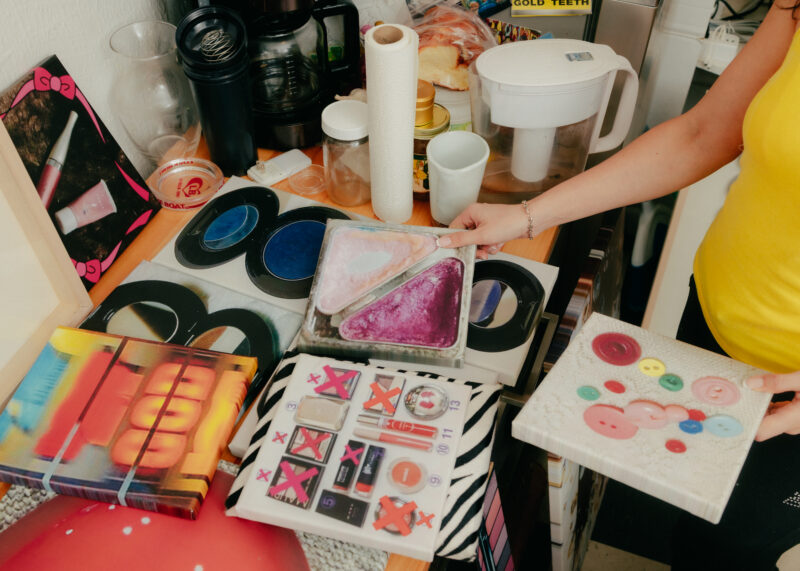
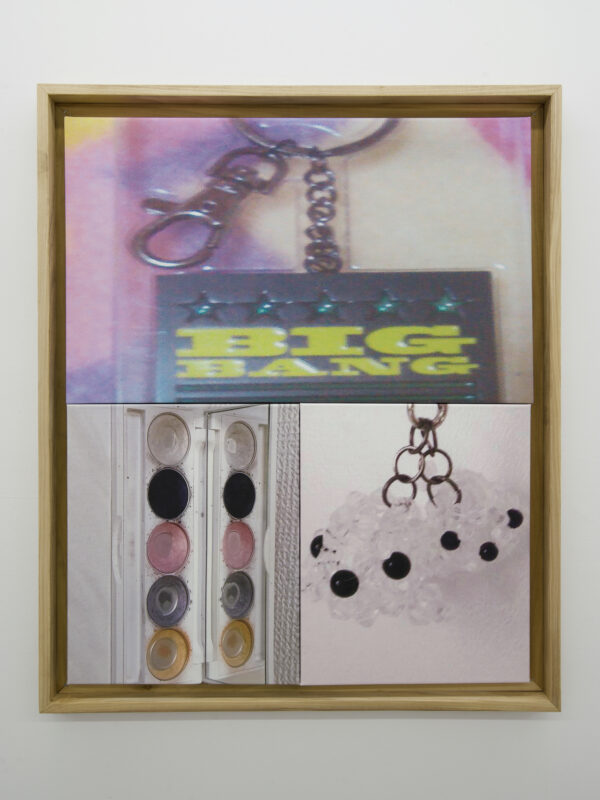
SY– I’ve always been interested in the things that people overlook, the things that aren’t necessarily meant to be looked at closely. Secondhand objects naturally have a sense of history to them that new objects don’t: you can see marks and textures on them and imagine what they might have gone through before they came to you. I’m interested in what happens when something that initially feels insignificant or disposable gets given a lot of attention. A used makeup palette, for example, might be completely overlooked in its original context but when I put it alongside other things, you start to see it differently.
With the photos I take from listing sites, the original purpose wasn’t to produce a beautiful commercial photograph. The photo was taken simply to illustrate the object someone is trying to sell, but because they weren’t made with the intention of being polished, you can see a lot of personality in them.
When I come across an image and end up saving it, it’s because it has this “thingness” to it. There’s something about the casualness and intimacy of the image that makes it feel really human. The people taking these images don’t envision this kind of audience; they’re just trying to sell something.
Initially, I wasn’t sure if it was okay to use the photos because they were made by other people. But, I think there’s something interesting about extending the life of an image that was made for such a temporary purpose.
JL–I’m also curious about the collection as a way of organizing things and creating meaning. How does that organizational process work in your practice?
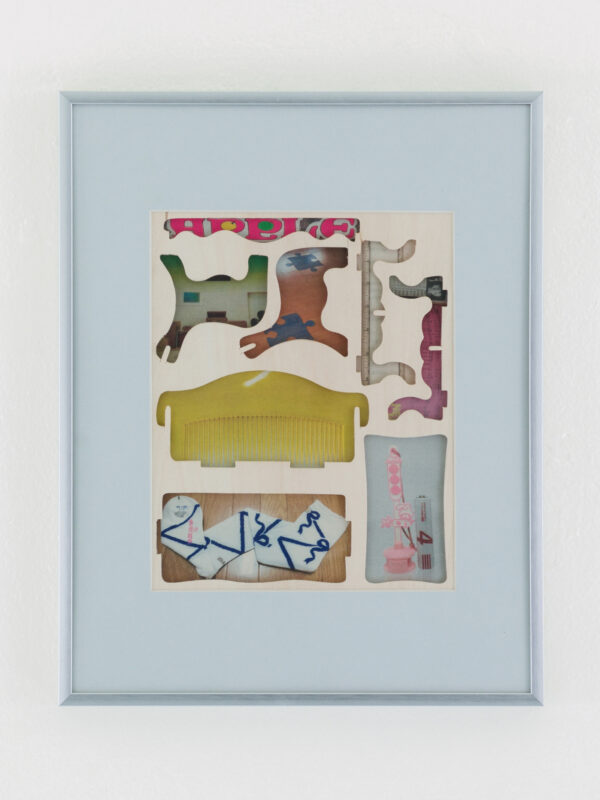
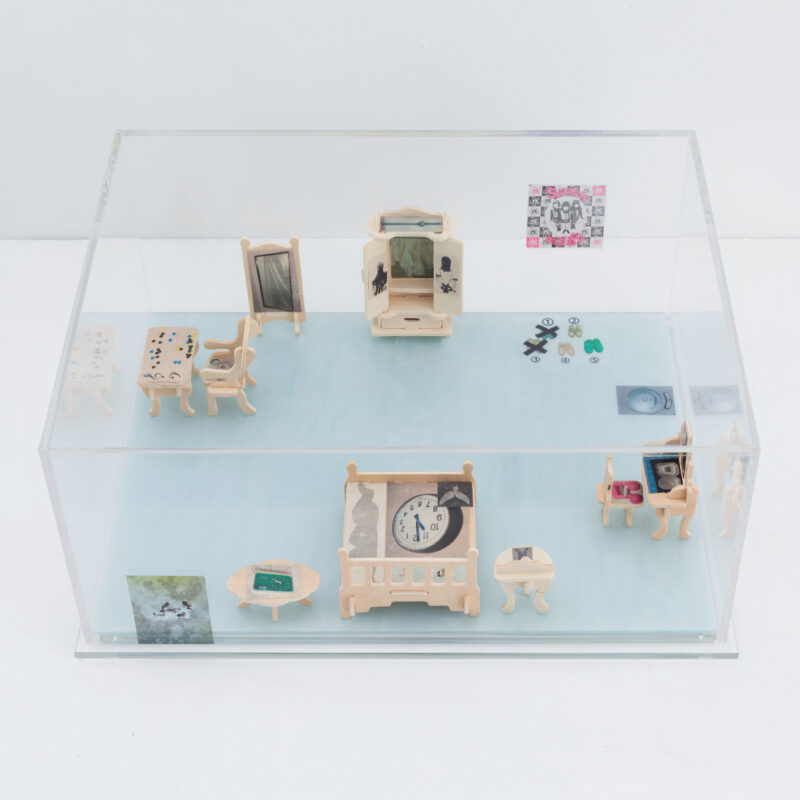
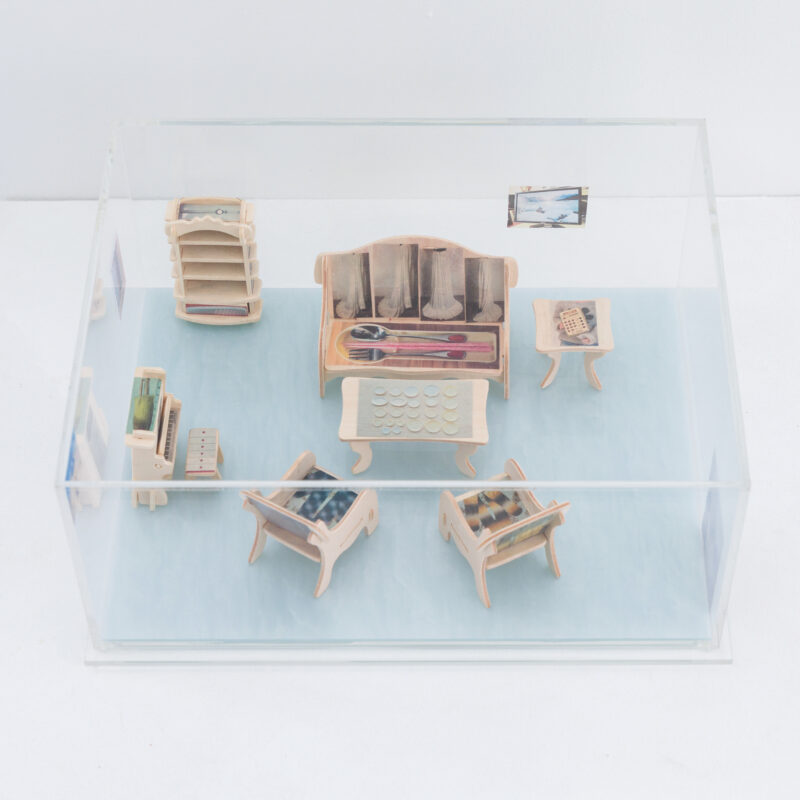
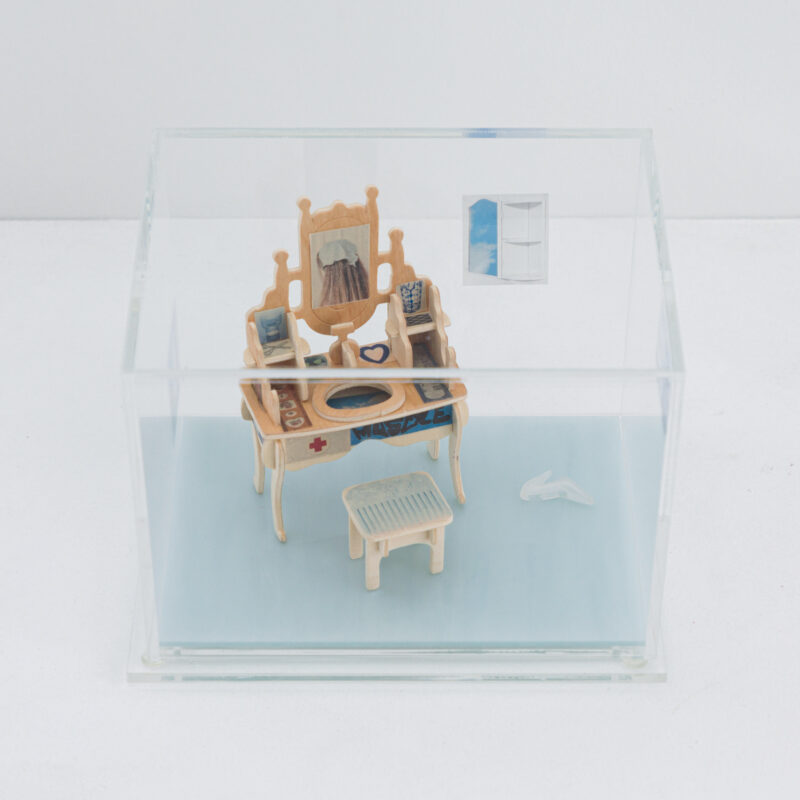
SY– When I first started collecting these images from listing sites, I was, at the same time, working with these wood cutout furniture sets where I was left with both the furniture itself and the negative space in the sheets from which they were cut. My first solution for arranging the images was to place them on different pieces of furniture in the dioramas while also using the negative space in the sheets as frames for the images. I liked that the images could take on different meanings depending on where they were placed and what they were next to. The furniture itself also had a personal meaning for me because the pieces represented objects from my own physical space. There were all these different relationships between the images, the furniture, and the space they occupied, so there was a lot to play with.
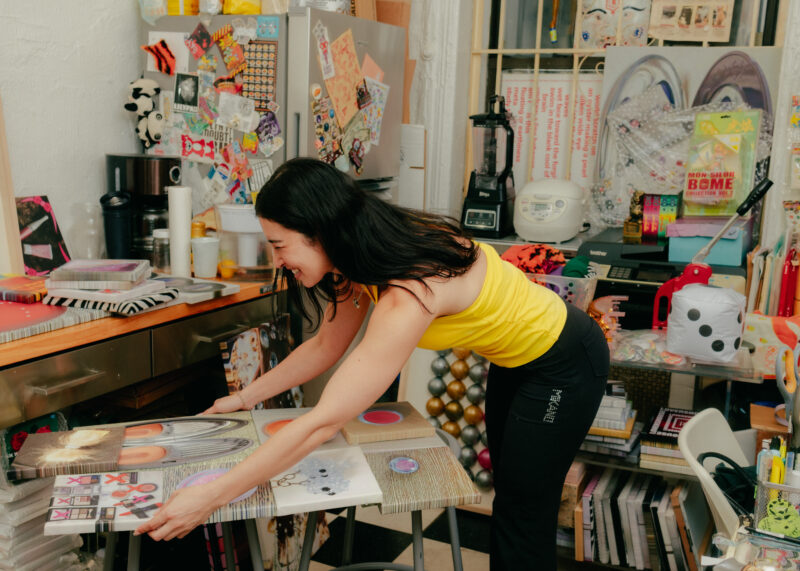
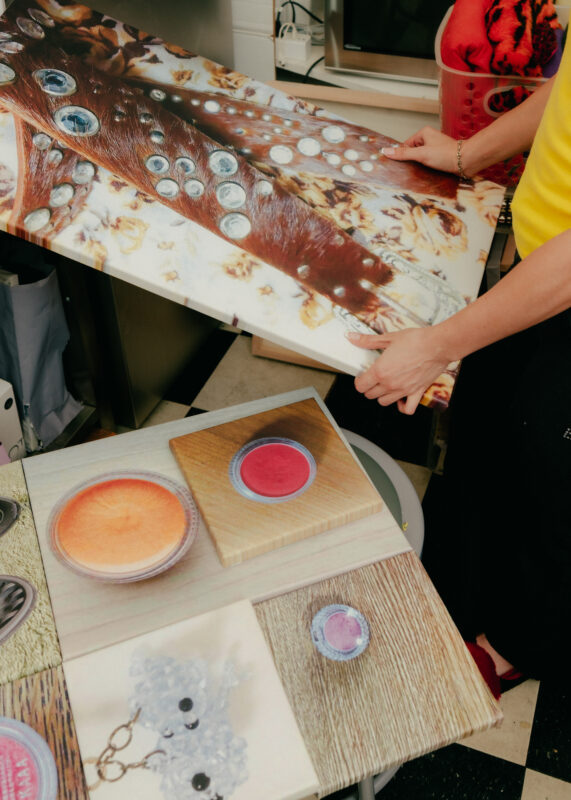
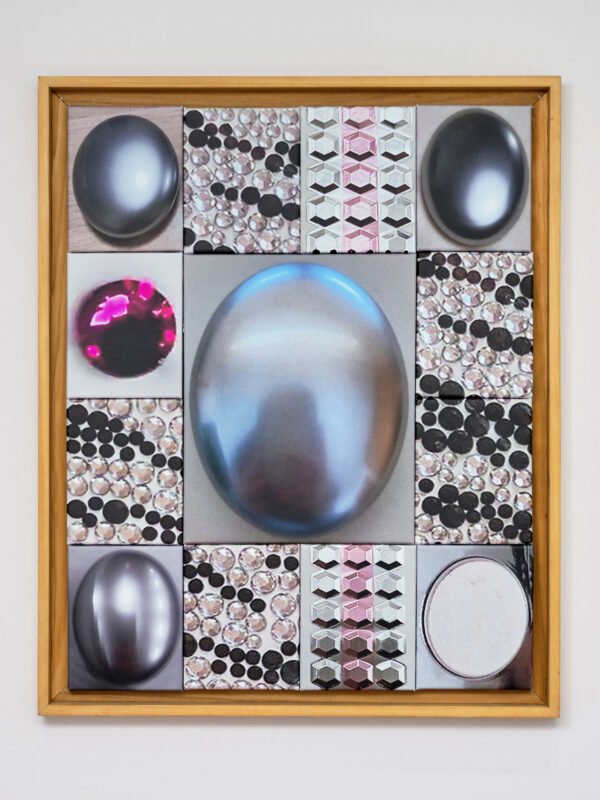
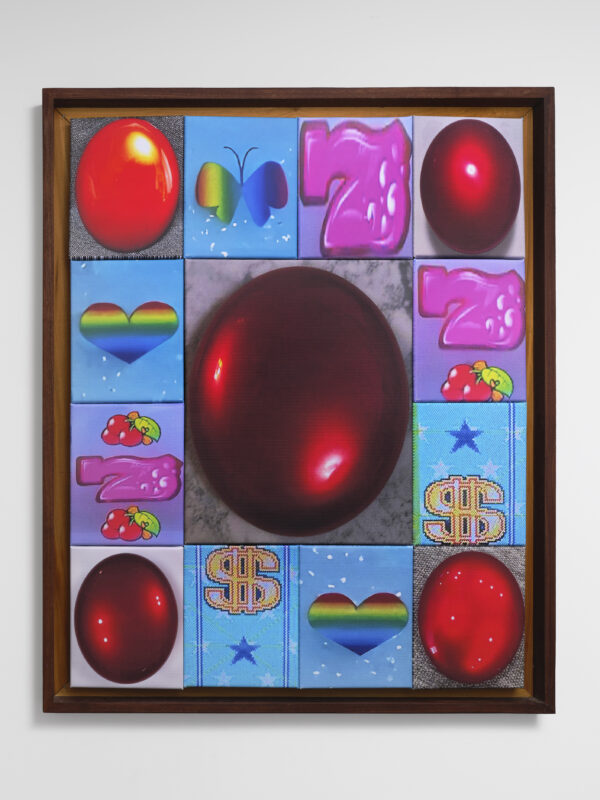
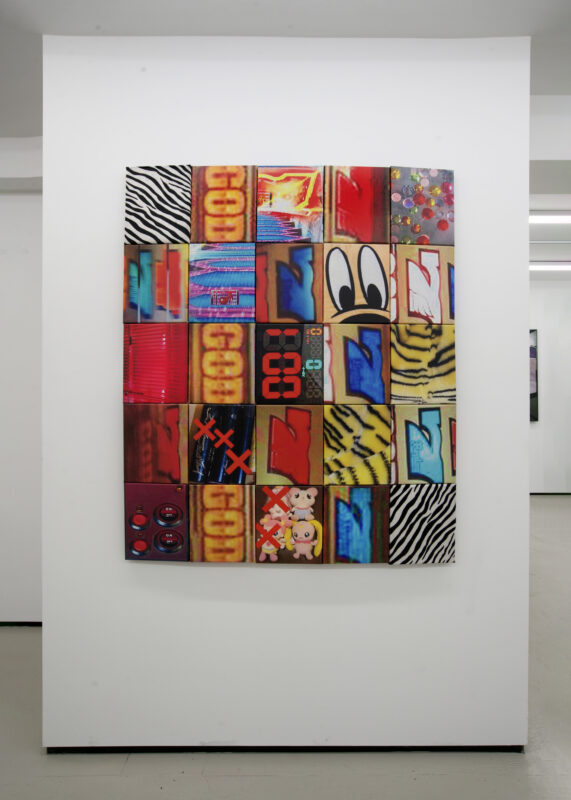
Now, with my printed canvas pieces, I use the grid because it gives me a structure that can expand or contract. An image could take up a tiny piece of the grid, or it could be scaled up to become a larger texture within the work. You can play with the arrangement of color, scale, and pattern, and the grid becomes a kind of template. The grid gives me a limitation, but within that limitation there’s a lot of freedom. I like having a system that gives me somewhere to start without determining where I’ll end up.
Usually, I start with placeholder images that give me a general vibe and then continue filling in the grid until something fits. It’s a lot of trial and error, almost like throwing paint at the canvas and seeing what sticks. Sometimes, I use the same images and objects across different pieces, but I can use them in completely different ways. I might use an entire image, or crop into a small section and treat it almost like a texture. One object might not mean that much on its own, but in the context of the collection, it might. It’s a puzzle without a clear answer, and I just move things around until the whole thing starts to feel right.
JL–It feels like the internet is an influence in your work, both because of the ways that it has transformed collecting and because it’s the site of particular kinds of aesthetics you use in your work. I’m interested to talk about the ways the internet informs your work.
SY–The internet has completely changed the scale at which I can collect. I have access to such a huge volume of images and objects, and there’s almost no limit to how far I can follow a particular image, object, or idea. It lets me fall into holes where one image or theme leads to another, and suddenly I’m somewhere totally different from where I started.
It’s also changed what I consider interesting or worth looking at. I’m constantly encountering things that weren’t necessarily made to be looked at in an artistic light—product listings, ads, memes—and thinking about them in ways that are removed from their original context. The internet puts all of these different visual worlds next to each other, so I can make connections between things that would otherwise feel unrelated. I think that kind of proximity has made the distance between different references feel much less important to me.
JL–For the New York Art Book Fair (NYABF), you’re creating the special edition for the opening night, which is a folder that’s meant to contain a “special collection.” Could you talk about how you arrived at this idea?
SY–Printed Matter came to me with the idea of a folder, and I immediately liked the idea of a container that invites a collection. It could be built at the fair and continue to change even beyond it. Whoever gets one can fill it with whatever they find at the fair, so it becomes different for every person. To me, it’s also a celebration of the joy of collecting—the excitement of finding something and deciding that you want to keep it. I’ve always loved the fair because of how personal that experience can be, and because you’re able to take something directly from the artist or publisher who made it.
I wanted the folder itself to feel bold, recognizable, and celebratory, especially since it’s the 20th anniversary of the NYABF. I’ve always loved stationery, so I liked the idea of taking something very simple and familiar and making it feel special through color and typography. The bold pink type repeats around all four sides, creating this kind of frame around whatever gets placed inside. I chose “Special Collection” because of the library’s special collections section, so it’s both a play on words and a graphic element in the edition. I like that the phrase describes what’s inside while also becoming part of the collection itself.
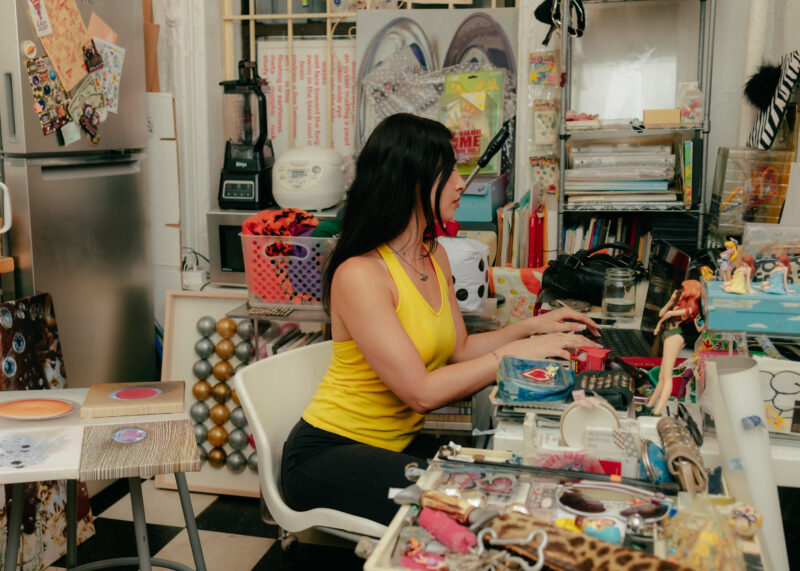
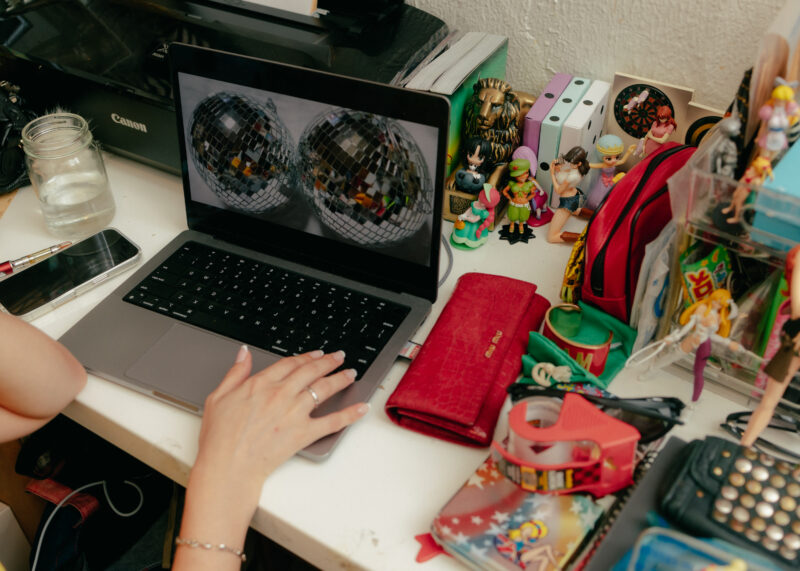
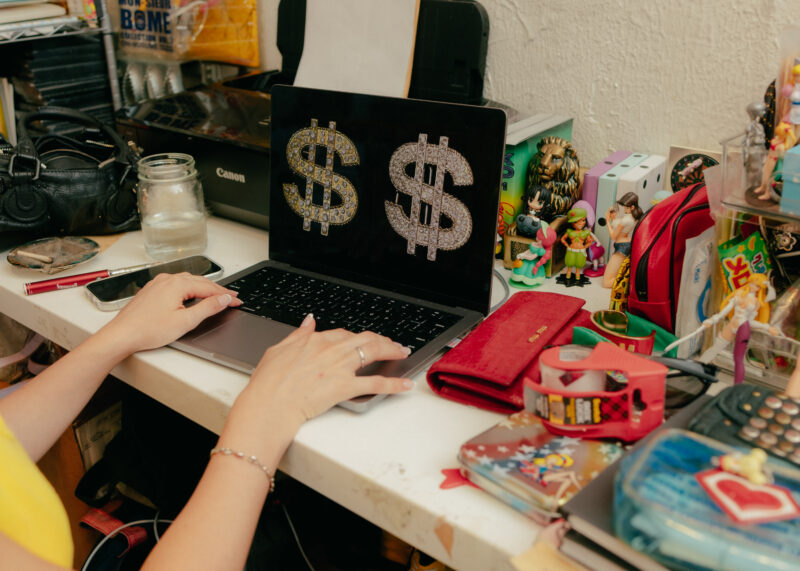
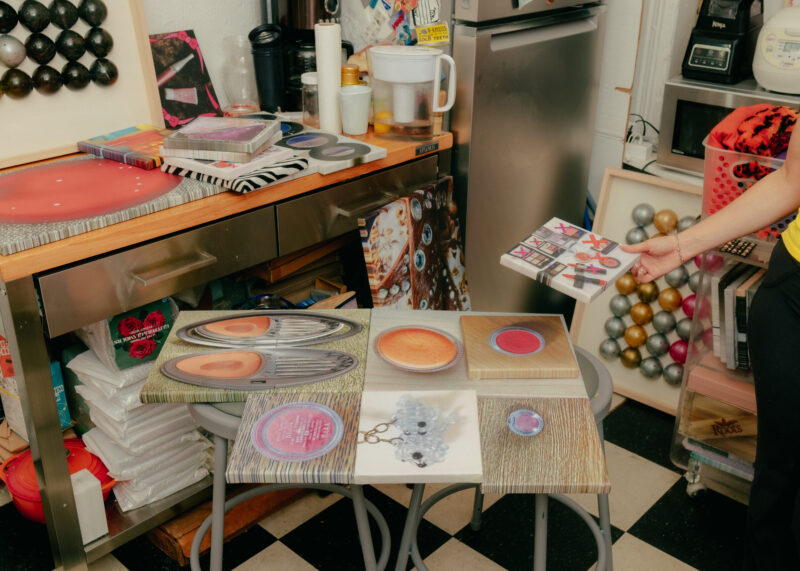
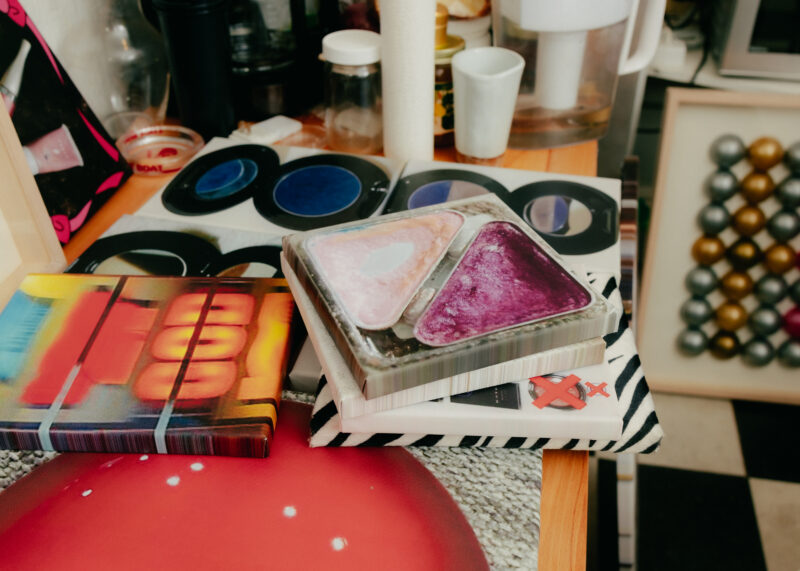
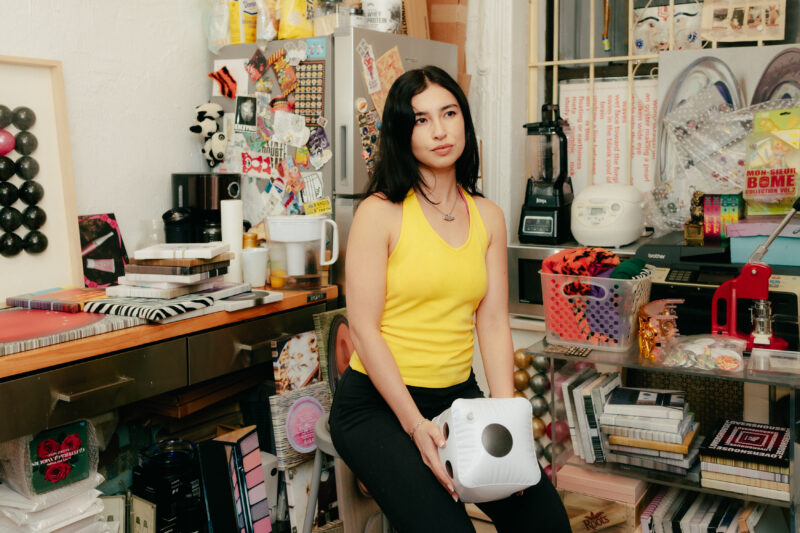
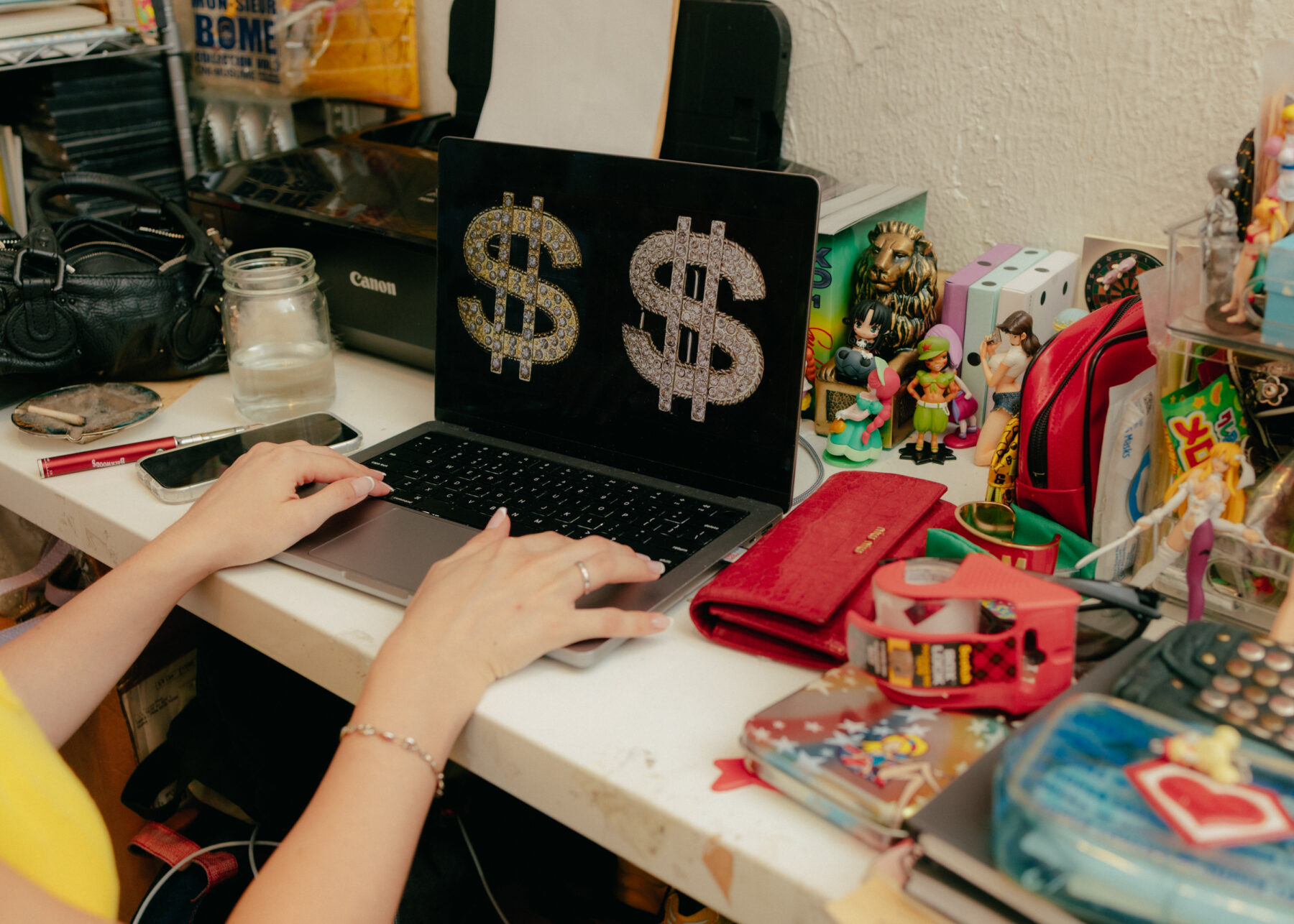
Sara Yukiko's studio photographed by Tim O'Connell for Art21 in July of 2026.
Sara Yukiko's studio photographed by Tim O'Connell for Art21 in July of 2026.
Sara Yukiko's studio photographed by Tim O'Connell for Art21 in July of 2026.
Sara Yukiko's studio photographed by Tim O'Connell for Art21 in July of 2026.
Sara Yukiko's studio photographed by Tim O'Connell for Art21 in July of 2026.
Sara Yukiko's studio photographed by Tim O'Connell for Art21 in July of 2026.
Sara Yukiko's studio photographed by Tim O'Connell for Art21 in July of 2026.
Sara Yukiko's studio photographed by Tim O'Connell for Art21 in July of 2026.
Sara Yukiko's studio photographed by Tim O'Connell for Art21 in July of 2026.
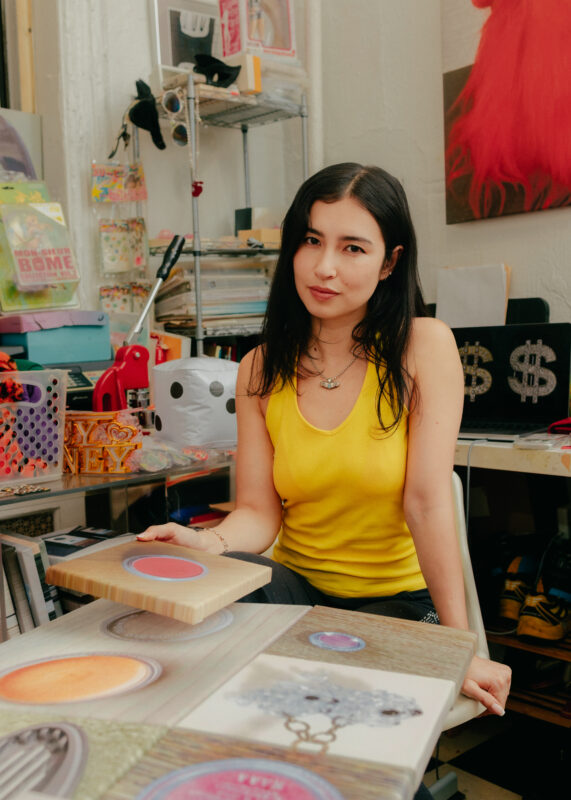
Sara Yukiko in her studio photographed by Tim O'Connell for Art21 in July of 2026.
Sara Yukiko. "OFF," (2026). Digital print on canvas. Photographed by Sliphouse.
Sara Yukiko. "Sock Drawer," (2022). Wood, Newsprint. Photographed by Stefany Lazar.
Sara Yukiko. "Center Stage" (2022). Wood, Newsprint. Photographed by Stefany Lazar.
Sara Yukiko. "Greenroom" (2022). Wood, Newsprint. Photographed by Stefany Lazar.
Sara Yukiko. "Powder Room" (2022). Wood, Newsprint. Photographed by Stefany Lazar.
Sara Yukiko. "ON," (2026). Digital print on canvas. Photographed by Sliphouse.
Sara Yukiko. "Funhouse," (2024). Digital print on canvas. Photographed by Gern en Regalia.
Sara Yukiko. "Big Bang," (2024). Digital print on canvas. Photographed by Gern en Regalia.
Sara Yukiko. "Auspicious Coincidence," (2024). Digital print on canvas, faux fur. Photographed by Gern en Regalia.