Interview conducted for Art21 in July of 2026 by Noor Tamari. Original photography for Art21 by Timothy O’Connell. This interview is published as a part of the partnership between Art21 and Printed Matter’s NY Art Book Fair.
In the Studio
Khajistan builds knowledge from the bottom up
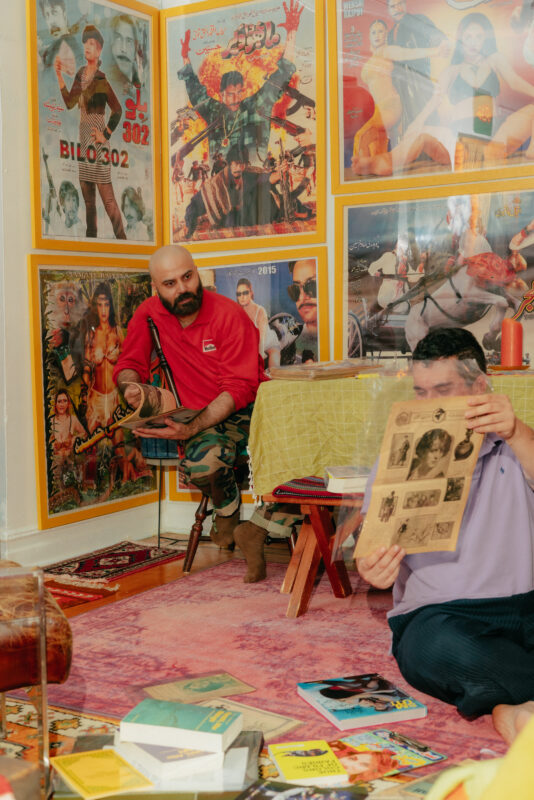
Noor Tamari—To start us off, what is Khajistan?
Saad Khan—Khajistan was a word that always lived in me. It was, literally, a village near Herat in the 9th century. I learned about that much later in life, from an old Persian book called Hudud al-’Alam (Boundaries of the World), written by an anonymous author in what is now Afghanistan. My mother is Pashtun, so some of it was personal meaning-making and some of it was metaphysical. Living in Lahore, I knew people like me had lived before, but I had no record of them: how they spent their time, what amused them, how they played and loved. Today, what Khajistan has become is an online space for the region where we keep that kind of thing, so the next person doesn’t have to wonder as I did.
Joey Chriqui—It began with things that can’t necessarily live on the internet, things that end up being censored, banned, or just completely eradicated from it. That was the seed that bore the fruit of what Khajistan is now: a repository of said banned, censored, and overlooked media. It came out of a genuine love for that material and just wanting to see more of it, to dig into the things people were curious about, loved, and lamented over.
SK–When we were working on our film, Showgirls of Pakistan (2020), we were dealing with a lot of born-digital media from Khawaja Sira communities, the third-gender people in Pakistan, and I think the name Khajistan has something to do with that as well. Khajistan is like this third place online, which hovers above the physical space where things not allowed to exist in the physical world can just exist.
JC–We ended up cultivating a way larger field of imagination beyond what was in Showgirls of Pakistan. With Khajistan, everything is on the same plane: religion alongside what people would call vulgarity, erotica, and propaganda.
NT—What does the logo of the pigeon represent?
JC—Like the name Khajistan, the meaning behind the logo came to us after. It started as more of an aesthetic thing, also representing Saad’s childhood and my years spent in New York where I would sit on the stoop and watch uncles building community around raising and racing pigeons. I’m realizing now that the pigeon as a logo is the perfect encapsulation of that overlap between our worlds: the world of New York, and “the middle world,” as we call it. There is also this natural overlap in the pigeon being the original messenger of information.
SK—Pigeons are the only animals I grew up around. My uncle had like 70 pigeons, we fed them millet. Pigeons and masculinity in the region are strongly correlated. Men show love and affection to their pigeons, and each pigeon, after every voluntary flight around the sky, chooses to come back to its keeper. Khajistan is looking at subcultures that emerge from segregated spaces, and much of our work focuses on male-segregated spaces because that is what we have and have had access to. I also see this as an East-West difference in how we look at pigeons: a pigeon in New York is considered a flying rat, whereas where I come from, pigeons are loved and have been both historically and in the present found in religious places such as shrines or mosques. What one person sees as very important and divine, and another sees as vermin, is interesting to me.
NT—Can you walk me through the process of collecting the different materials? How does this work get translated into knowledge formation?
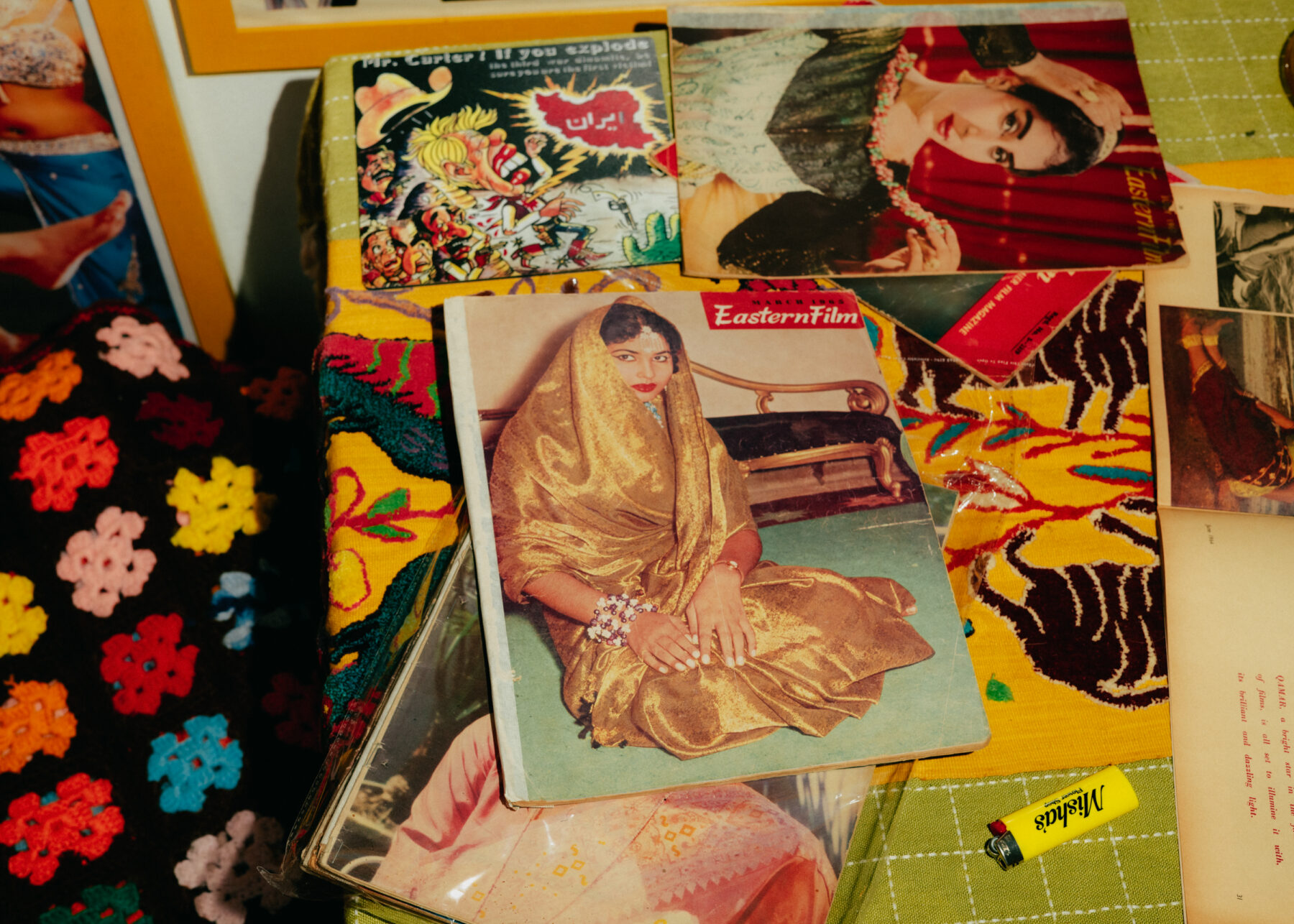
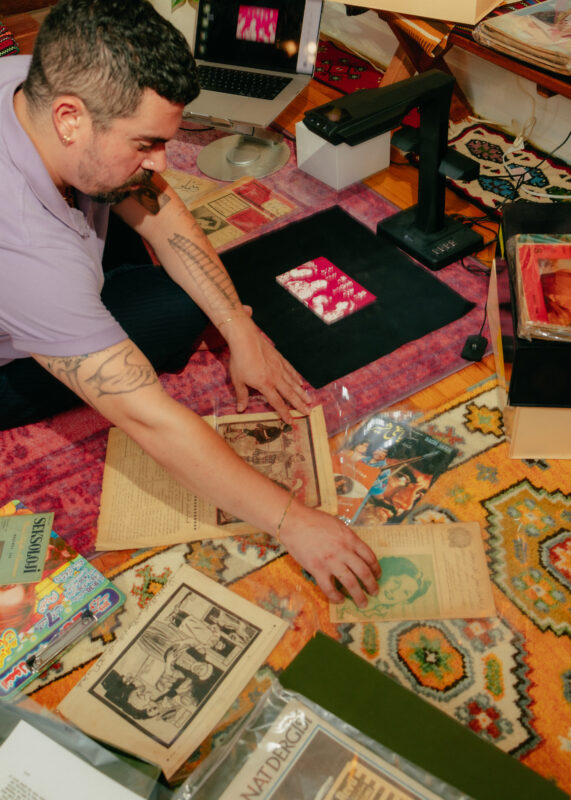
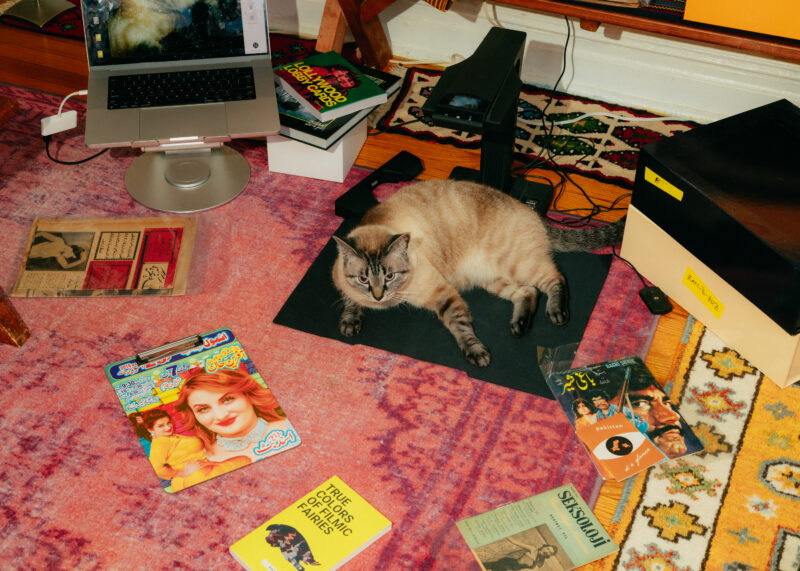
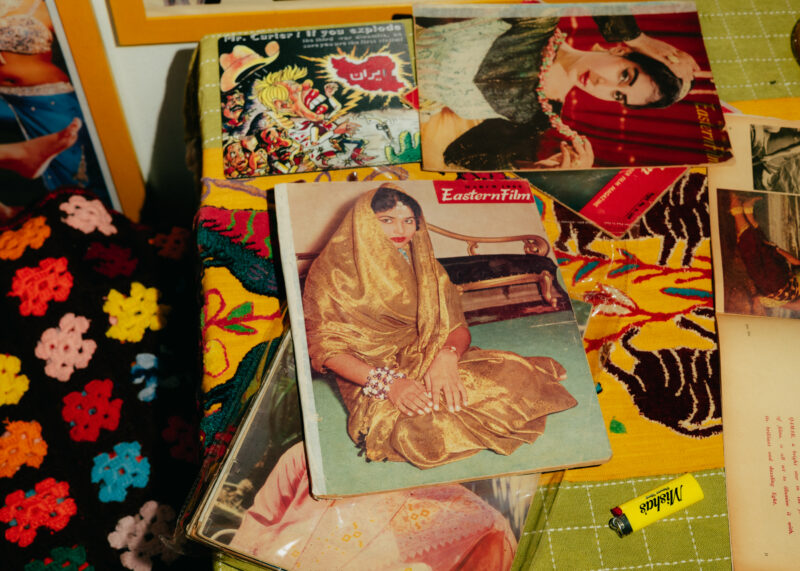
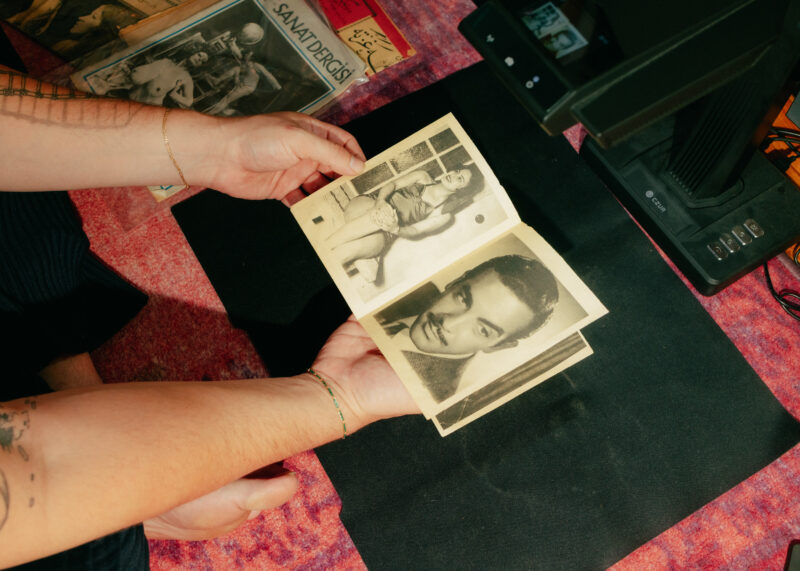
SK—For the physical material, we work with collectors across the region. It’s an informal network of people communicating through WhatsApp groups, Telegram, and community portals in Urdu, Farsi, Arabic, Pashto, and other languages. We buy en masse and digitize the collection. We make books from the digital material and sell the physical objects to universities with paper conservation and climate-controlled storage, because the paper is often very bad and needs looking after. Those sales to special collections are what keep Khajistan running.
Other material comes from our own collections, like the book we published, Karachi, After Midnight. That was initially a dead HTML file of a diary blog that I downloaded when I was 13 because it mattered to me.
JC– I also had a blog from when I was 13 to 17, and when that website was shutting down, I downloaded the HTML.
SK– Joey was writing his blog at the same time as the author of our book. Even though one was in Philadelphia and the other in Karachi, they were saying the same thing. They were both talking about desire, pain, wanting, and yearning. People collect to contextualize their own existence, and that is what we see time and time again. Whether that record counts as knowledge is decided somewhere else.
In my lifetime, the knowledge about our part of the world has been produced by Ivy League and other big Western institutions and trickled down to our countries, and our own upper classes are the ones who parrot it to us. That shapes how we see ourselves because that knowledge is either colonial, or war propaganda, or at best one kind of knowledge standing in for all of it and all of us. It makes us look at our own people with a suspicion that feels borrowed. On top of that, you get the global tropes, where a burka is bad unless it’s on a girl skateboarding in a Depop commercial. Khajistan works on what sits underneath all of it: street press, vernacular material, printed or audiovisual, knowledge from the bottom up. We buy it, we digitize it, which really means rescuing it and storing it the way we can afford to, and then selling the physical material to the Ivy League schools. That is how the loop gets completed. The street material we pump into the Ivy League informs the stale epistemology of the region, and it trickles back down to the ruling and middle classes at home, the same people who had no use for it in the first place. Now they read it and write academic papers on it.
NT—A lot of your work, whether it is the memes you publish, the materials you archive, or the publications you produce, relies on a vernacular language. Who is your audience, and how important is legibility in your practice?
JC—We do this for us, to see ourselves in the world. People sometimes find it hard to bridge the worlds that Saad and I come from—especially when looking at Jewish histories in the region, which are often seen as entirely separate.
We are gathering the pieces of our shared history and trying to expand beyond the veil of institutional memory. Other people seeing themselves in this world is an incredible byproduct.
SK–My dad posts AI videos of women of different races reciting the Quran on his WhatsApp stories. They are marginally erotic, and acceptable under the guise of religiosity. I’ve never been able to pin him down. Is he Wahhabi? A liberal? An anarchist? A capitalist? I still don’t have answers. He’s living and surviving, and aren’t we all? Khajistan should be just as hard to pin down.
NT—Exhibitions seem to be the newest aspect of Khajistan. How does that add an additional dimension to the practice? What gets added and what gets sacrificed?
JC—The fact that Khajistan was born long before we segued into exhibition and institutional work allowed us to come in with a sense of who we are and what we do.
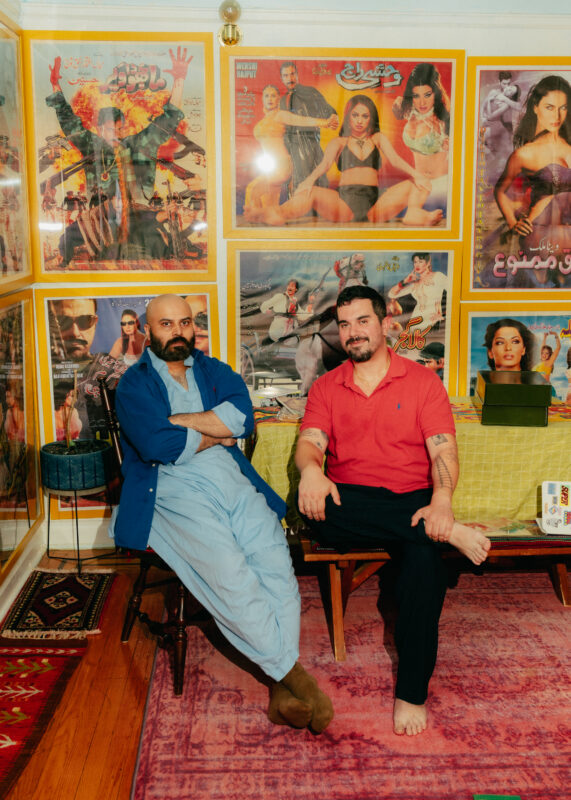
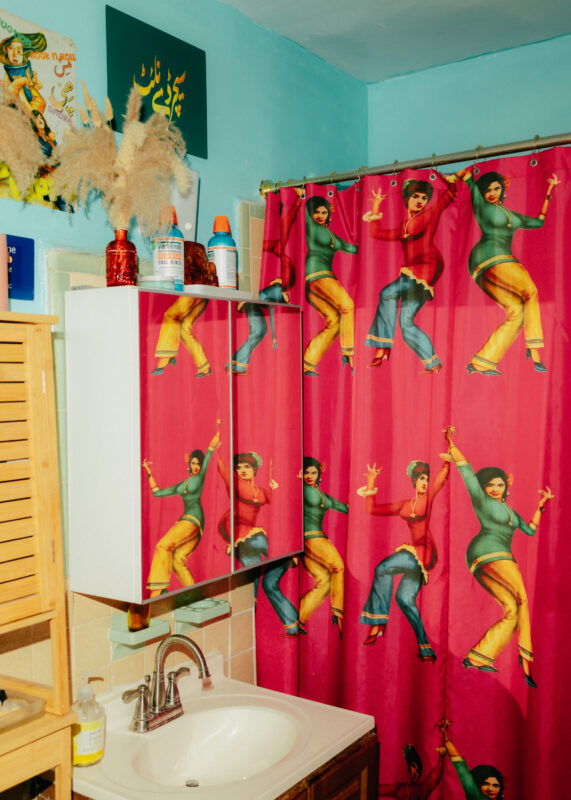
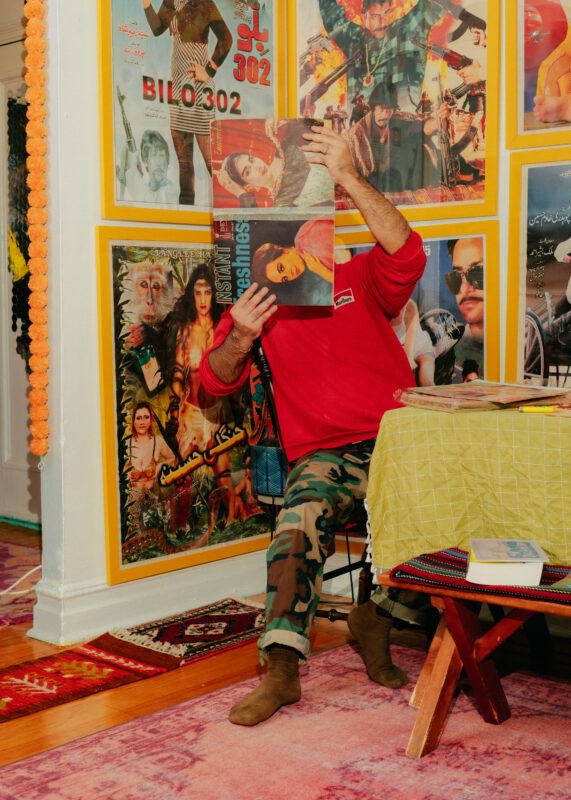
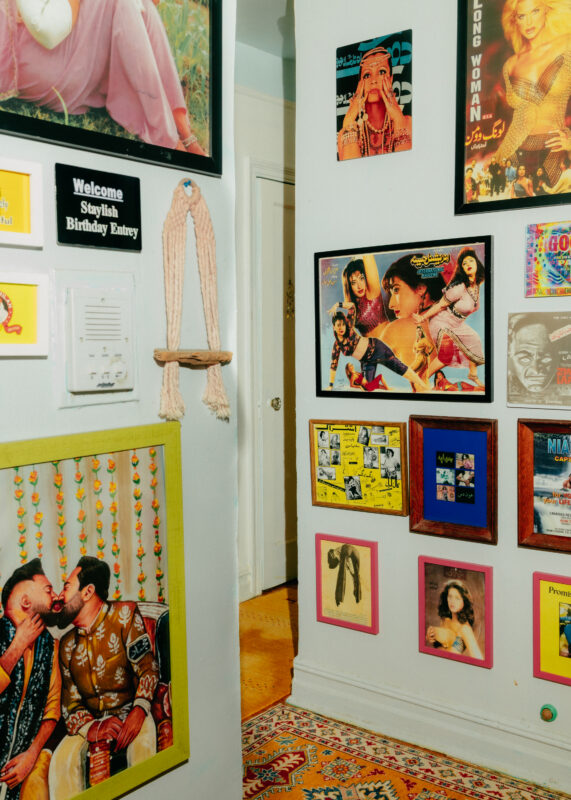
What gets added is 3D space. We dream of having a brick-and-mortar where people can come and sit, but it’s built up in the world of Khajistan, where everything has a very classic auntie aesthetic. It’s such a joy to take that private, personal thing and build physical spaces out of it. For example, a great deal of the things at Office of War Information at Pioneer Works came from my dad’s office. It’s a part of the play for sure. This is our sandbox, and this is us building our little castles.
SK—The point is not to be critical of the institutions; it’s to do things the way we want, without spending much energy on what they want from us. Conservative military people walk into the Office of War Information and don’t feel the show is against them. I keep thinking about ninth-century Baghdad where Syriac Christians, Zoroastrians, Muslims, and Jews worked and translated old texts together. It wasn’t equality in a modern sense. The Christians did most of the translating, and they were paid for it, and the people paying wanted the medicine and the astronomy. Nobody was being tolerant. The knowledge got kept because someone needed it. Above all, it was trade. Some Greek texts exist today only because someone translated them into Arabic. We’re not telling you what any of it means: we keep it, we let it stay complicated, and people draw from it according to the lives they’ve lived. That work should keep happening whether or not you get institutional laurels.
NT—You end your manifesto with the sentence, Khajistan, let’s play. What does play look like?
JC—Because of the nature of our family stories, and the histories we come from, with all the pain, trauma, and displacement, you reach a certain point where all you have intact is your sense of humor. Historically, archival work has been very rooted in rescue and recovery, which is part of the nature of our work. However, instead of putting it in a glass box for observation, we take the material and have fun with it. We are very purposeful in the fun that we have.
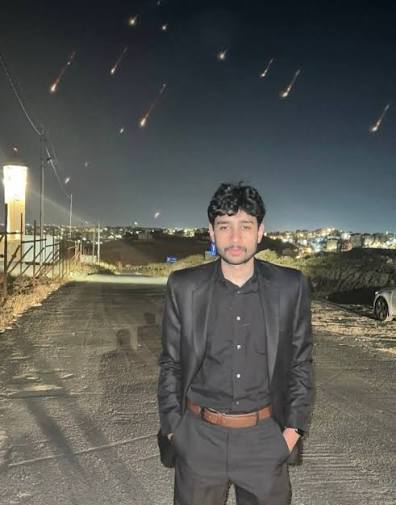
SK—There was a meme that came out of Jordan during the current Iran-Israel-America war that is the perfect reflection of this. It is an image of a young man posing in front of a sky full of missiles. When there’s so much pressure, playing or making fun is just a way of coping. It’s a way of living. Life goes on even in war. What is that life? That life, along with other versions of it, is Khajistan. A lot of play is involved in it; that’s the only way we know how to deal with things.
JC—A lot of the time, the idea of who we are and what our cultures are becomes more of an abstraction than anything else. Khajistan is very much about lived, on-the-ground experience, and that involves humor and play.
NT—What role does publishing books have in the larger practice? What does it mean to be presenting your work at New York-based institutions such as the NY Art Book Fair?
SK—It is very important to interact with where you physically are, and we are physically in New York. And at the same time, we can’t distribute in our countries, which is also where New York comes in.
JC—We have seen how vast the internet is and how the internet itself is an ether. Things get lost, and we’ve witnessed that in our lifetime. As kids, we thought that everything could just live there. As more time passes, you see the internet’s breadth growing into something almost unsustainable in its archival capacity.
SK—Any big company can censor you, or take your stuff off the internet entirely. We’ve seen it happen. Our people, and I don’t mean the upper classes, have never had the chance to record themselves at all. When we were making Showgirls of Pakistan, the people we worked with recorded every single phone call, because they have no trust in the justice system and no expectations of it, that system is not for them. You have to be your own evidence. The recordings are the receipts. That is what we are doing too.
NT– What is next for Khajistan?
SK–We have been working on a reading room on the website for years where you can read the region’s periodicals and books from the last 100 years, the ones we have been acquiring and digitizing. We have scanned over a million pages so far, with much more to go. Khajistan is our stake in the new wells of knowledge people will drink from, and the reading room is where that actually happens. This October, we are opening a month-long computer lab at Recess Art in Brooklyn to test-ride it with the public.
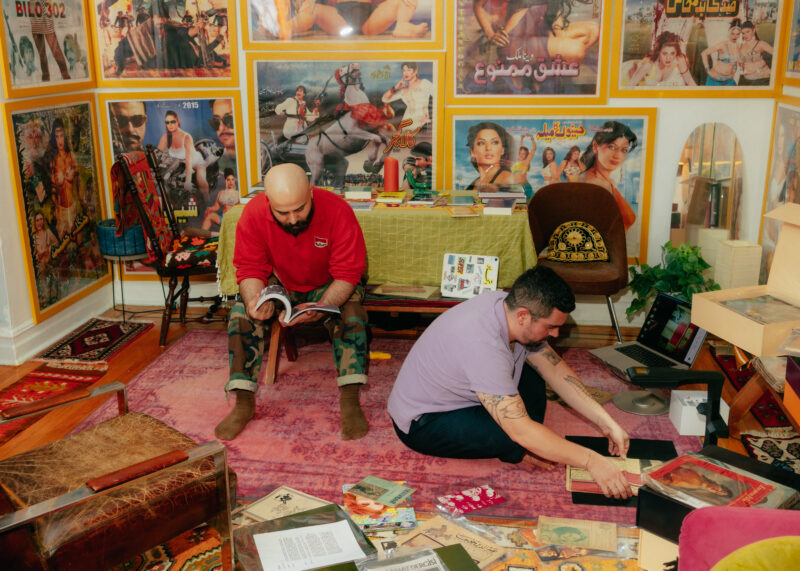
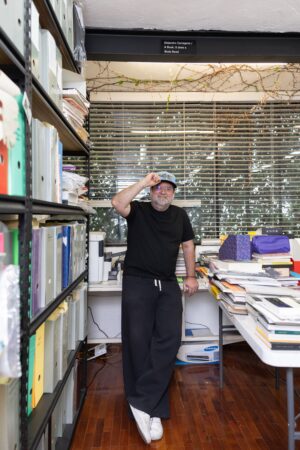
Photographed for Art21 by Timothy O'Connell in July 2026
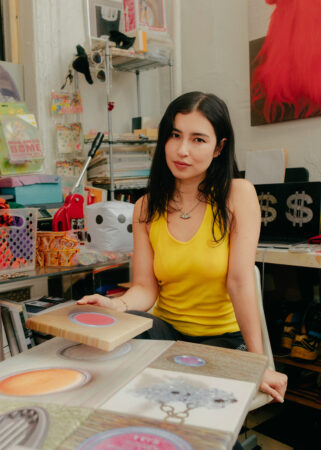
Photographed for Art21 by Timothy O'Connell in July 2026
Photographed for Art21 by Timothy O'Connell in July 2026
Photographed for Art21 by Timothy O'Connell in July 2026
Photographed for Art21 by Timothy O'Connell in July 2026