Interview conducted for Art21 in July of 2026 by Jurrell Lewis. Original photography for Art21 by Laura Malo, all additional photography courtesy the artist. This interview is published as a part of the partnership between Art21 and Printed Matter’s NY Art Book Fair.
In the Studio
Alejandro Cartagena sacrifices the photo for the book
Jurrell Lewis–What brought you to artistic practice? Specifically, what led you to photography as a medium?
Alejandro Cartagena–Initially, I studied leisure management, and after almost a decade of practicing that, I stumbled into photography. It had been in my life here and there, but in 2004 I took several workshops that made me see how photography could contain so much meaning, metaphor, and narrative, so I left everything I was doing to pursue it.
Since then, I’ve been through several phases with the medium: cycles of being absolutely romantic and thinking I could change the world with my images to thinking, “What the hell is an image? How do I decompose an image and break it up into pieces? How do I find structures to see how photographic images work in the world we live in?” I started from a very romantic place, and now I am in a very conceptual and structured analysis of the medium itself.
JL–I’m glad you bring up leisure management, because it was something that I was also curious about. How did those experiences in leisure, service, and hospitality shape or contribute to your perspective and interests as a photographer?
AC– It’s ingrained in my practice and the themes that I touch on, specifically labor and working conditions. I’ve worked in leisure management, but also worked odd jobs from landscaping to painting and things that require a lot of the body and a lot of passive time. There’s a confrontation with the city when you’re in that kind of labor force; you’re battling with all this structure that’s around you. Those experiences, you either have lived them or you haven’t, and having lived that for 10 years, it really informs how I see the world. It’s there in the work that I’ve produced.
I wouldn’t say that I’m in any way an activist, but I am a sensible citizen who’s concerned with how we think about labor and the city. If not for me, many of these stories might not even be documented in this particular context of the city of Monterrey that gloats about everything being “OK” and prosperous. There is still a romantic documentarian pursuit in some of my practice. I believe there is value in visualizing social, economic, and labor phenomena. Of course, that comes with its problems, because I am “the other” at times. I am looking into these conditions from the outside, but I do feel that I am part of this through passed lived experience, through being a “co-citizen” with the people or the places that I’m photographing.
My work comes from a very personal perspective, and I think there’s honesty in that. I’m not trying to report–I’m trying to document and see the world from my own perspective, and I try to be as honest as I can about that.
JL–Your work is often calling attention to stories, lives, and movements that are not a part of any official history. How do you think about expanding or revising history through your work?
AC–If I were to have a philosophy of practice, it would be focused on the idea of alternative stories. A lot of the stories I tell through photobooks might never reach the official histories of this city, Monterrey, or this country, Mexico. There is this great opportunity, responsibility, and power in telling those alternative stories. Bookmaking is a guerrilla-style insertion and distribution of these histories–if you print 200, 500, 1,000 copies, it becomes hard to erase these narratives that are distributed around the world through those books.
JL–Your project Suburban Bus (2016-2021) is one such story–what was the impetus behind creating that body of work?
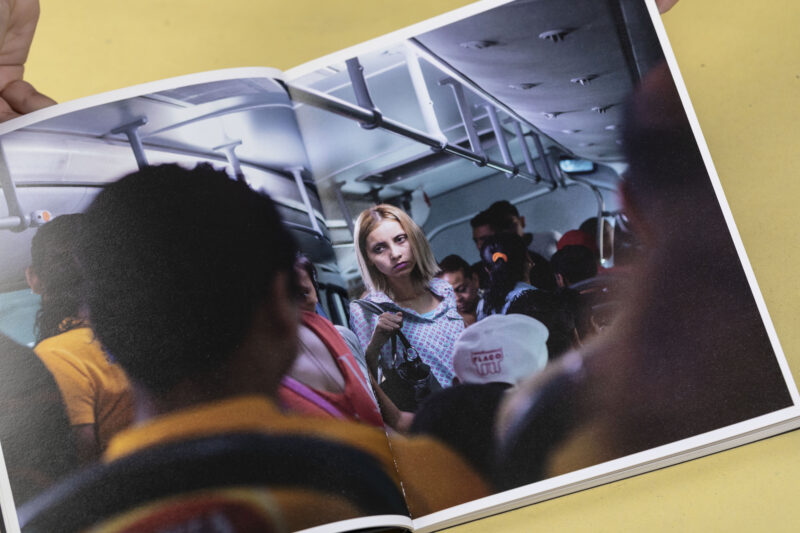
AC–That project is part of this big arc of my practice that touches on mobility, particularly private and public transportation in the metro area of Monterrey. Suburban Bus began as a commission for a French newspaper. They approached me to produce a photo series touching on the idea of journeys at the beginning of the 21st century. Having traveled for an hour and a half from downtown Monterrey to the suburbs for work over almost ten years, I wanted to talk about urban-suburban travel. It felt like such a simple story, shared by thousands and thousands of people here and worldwide.
I found a bus company with routes between the city of Monterrey and the suburbs of Juárez that would let me take photographs in the buses. I photographed for two days while riding the buses, and that was all I needed. That made me nervous because I typically take months or even years to produce a body of work, but here I had the journey’s conditions as a parameter to build a story.
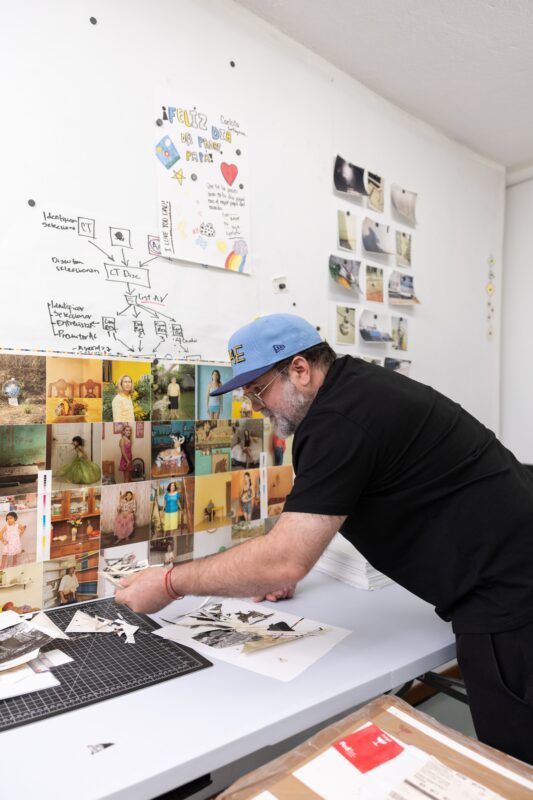
After submitting the work for the newspaper, I sat on the project for at least a year, thinking about how to turn it into a book. For many years, I’ve worked with an editor named Fernando Gallegos. Together, we put up the 3,000 images I took over those two days on the wall of my studio and started selecting the best ones. After narrowing it down to 600 images, we sat for months, trying to figure out where the story was.
At first, we organized the images into pairs–the simplest way to edit a photobook is to find things that go together. Good pairings develop an aesthetic tension and invisible language between the images, which tie them together. But after doing that exercise, we sat with it again for about a month, and it still wasn’t doing it for us. They were good pictures, and good pairs, but that was it. Then I had an “Aha!” moment, and I told Fernando, “Let’s not edit it. Let’s just sequence the 600 images in the order that I took them.” And that was it. The condition of producing the work was how it needed to be edited. That was the first time I’d edited a book that way, and it was sort of miraculous that it worked. Working with Fernando, we have a saying: We don’t edit the work. We try to find what the images need to tell the story, and that is what we did for the Suburban Bus book.
JL–After your 2026 retrospective at SFMOMA, Ground Rules, you revisited Suburban Bus to create a new photobook, could you talk about this new project?
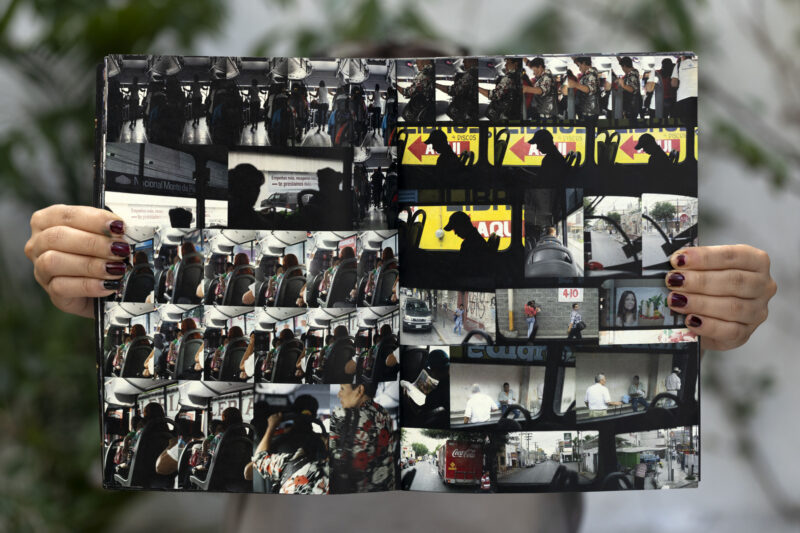
AC– Suburban Bus: The Archive (2026) contains all 3,000 images from those two days, sequenced chronologically. There are so many images that no one stands out, and it becomes something different. I don’t think about these decisive moments or unique images that tell a grand story; I’m more interested in the accumulation of images, and here I’ve taken that to the max. There are really bad images and really good images, but in the end, it’s not about that. It’s about the sensation of traveling from one place to another and seeing every single moment of that trajectory. The journey becomes a sort of visual texture, a blur. Like when you are in a bus or a train, where the outside and inside blend with the people and the movement. The book becomes a representation of the sensation of traveling in a bus. At least that is what I think it is doing!
This is the authorship of being an editor in photobook-making: the capacity to see which elements of design, scale, rhythm, tactility, and placement of an image combine to create a sort of visual idiom. Can you let the images breathe through the correct combination of elements and have them tell their story? That becomes the experience. You’re looking at Suburban Bus: The Archive, you’re on page 20, and you start feeling this dread, realizing there are 100 more pages to go. That’s exactly what it feels like to travel by bus–you’re going somewhere, you’re trapped, and there is this feeling of physical dread. So, if a reader experiences that, then we made a good book. The ideal scenario is building a book that embodies its themes. It works only for this set of images, this project, this object. If you can get to that place, then it becomes an experience. Though not all books need this!
JL–You’re interested in the structures that create meaning in photography, which is particularly clear in your series Photographic Structures (2019).
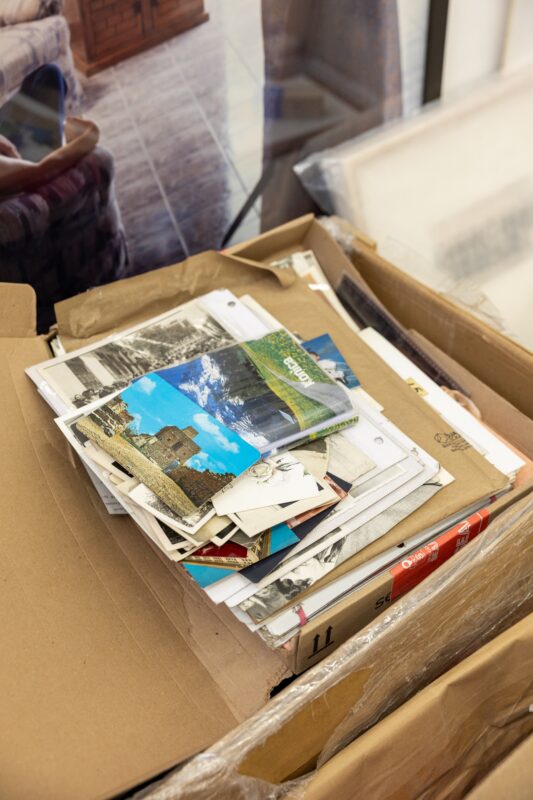
AC– I came to that project, not through a story I wanted to tell, but through a desire to talk about the medium itself and how it constructs meaning through composition and the photographic apparatus. Around 2016, I started going to dumpsters in Mexico City to collect images that were discarded and thrown away. I didn’t know what I was going to do with them, but I accumulated thousands of them and began to see patterns in how photographs were constructed. Because these were not my own images, I had a colder relationship to them and could see things I wouldn’t normally pay attention to in my own images.
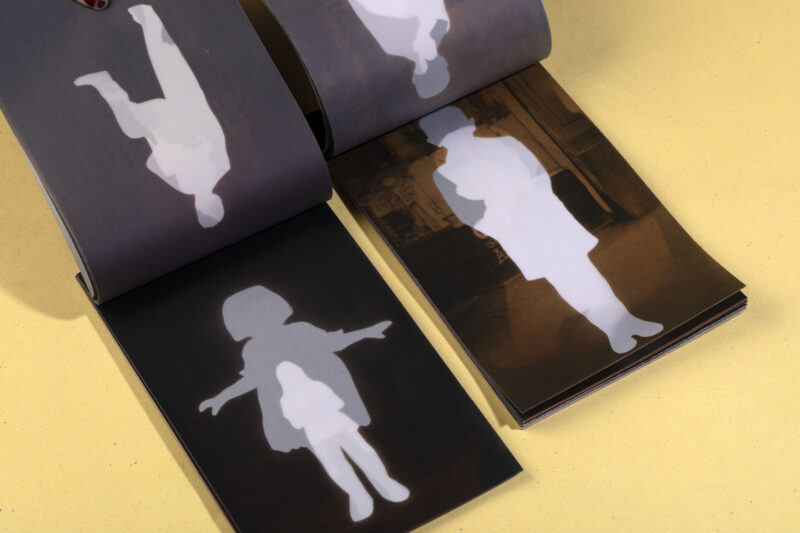
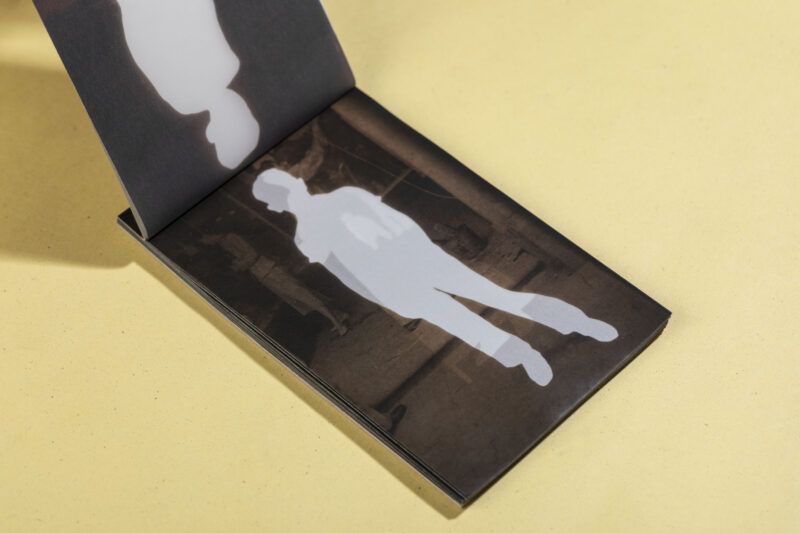
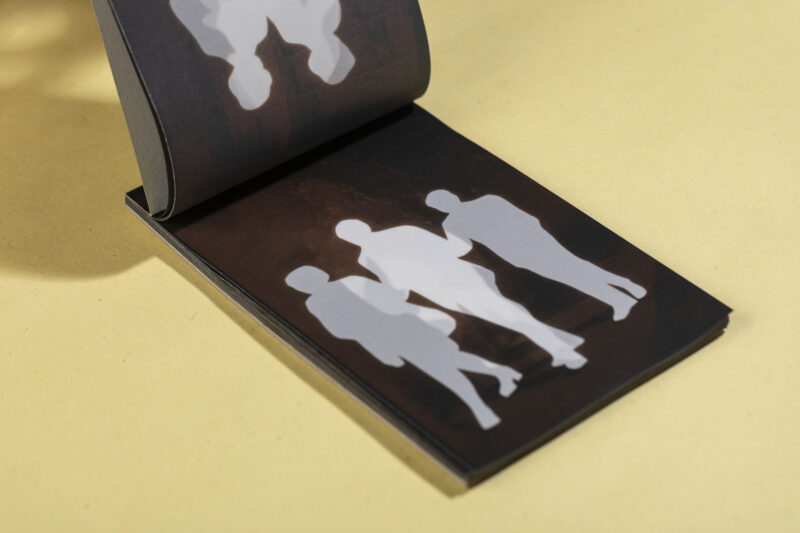
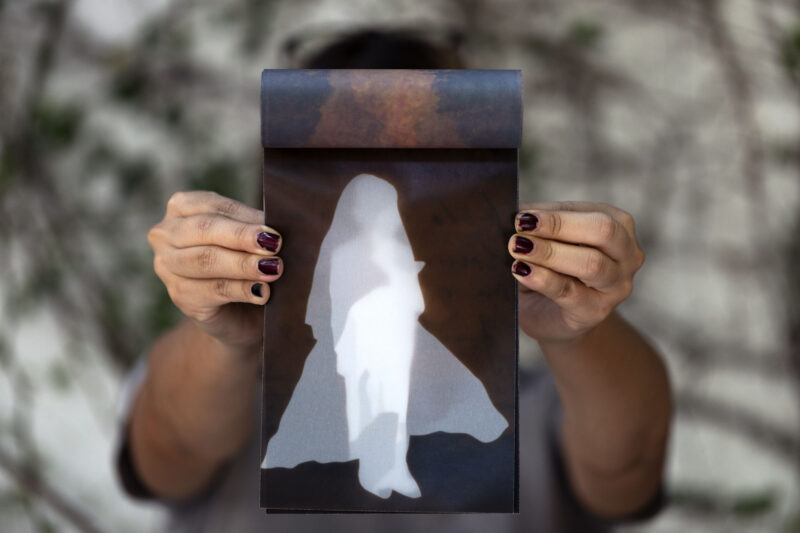
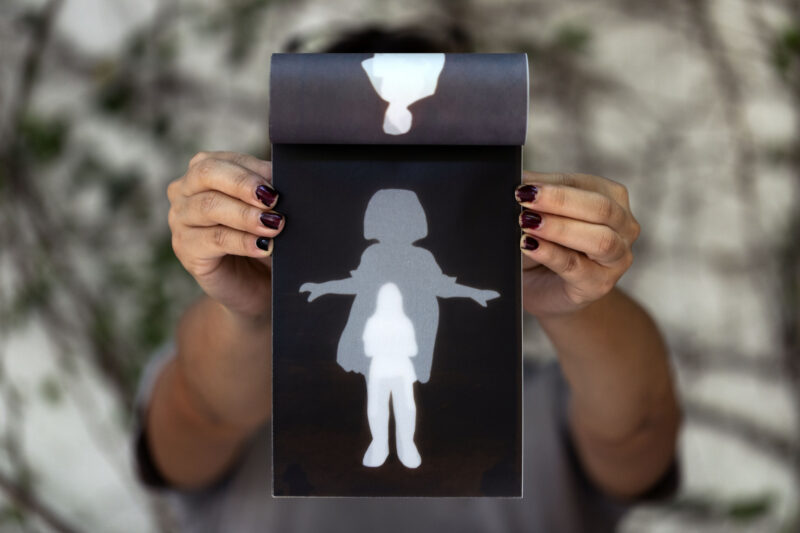
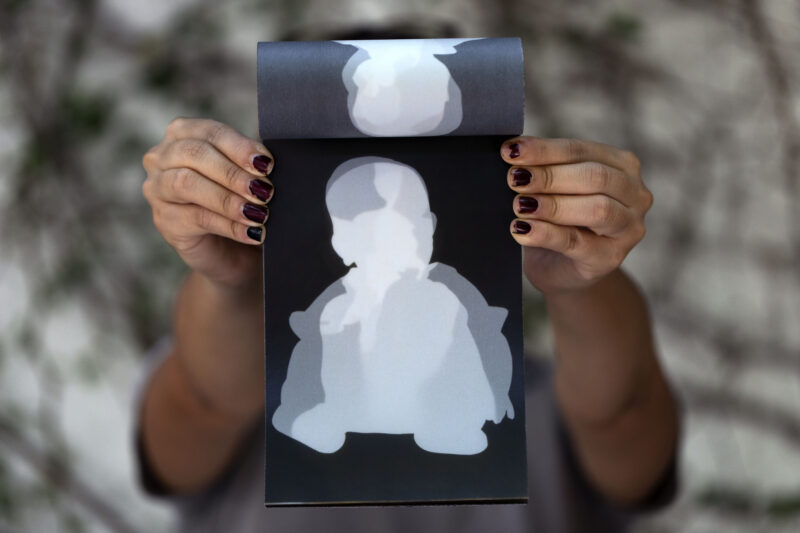
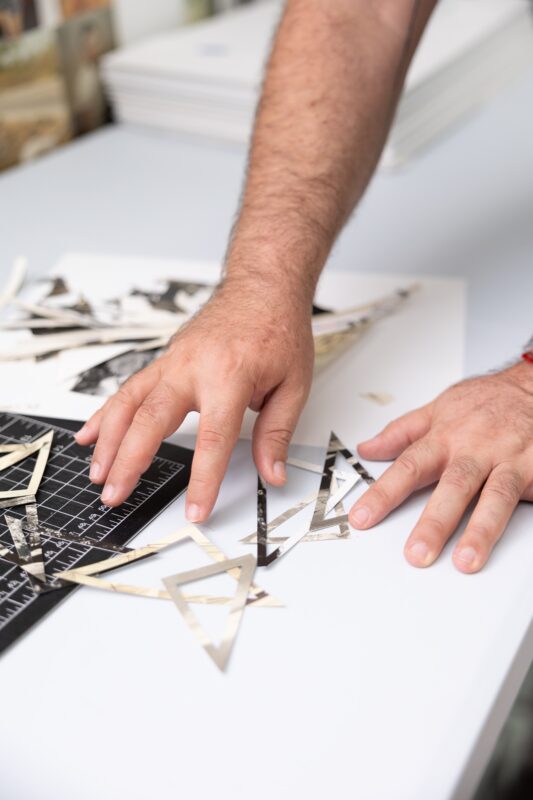
For example, in a group photo, if the location is important, the photographer takes some distance to include the landmark or landscape. If the place isn’t important, then the photographer moves forward and frames to the edges to focus on the faces. Group photos in Japan, China, Mexico, the US, and Brazil all use these same structures to represent human beings. For my project, I extracted the figures from these images to remove that urge to interpret who the subjects were. That allowed you to see the structure.
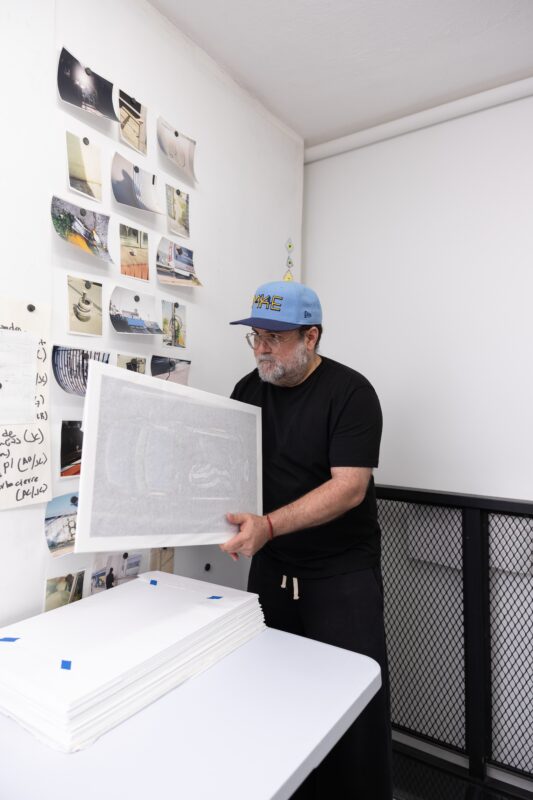
At the NY Art Book Fair, I’ll present the translation of this project into a photobook, called Fossils (2026). In 2023, four years after I started working on the project, Fernando and I began experimenting by taking the cutout image, projecting a beam of light behind it, and photographing the resulting silhouette, which is what is in Fossils. For the book, we used transparent pages and a white silhouette, so each page has the trace of the figure that isn’t there. When the book is compiled, the individual pages create this layering of time and material, like a fossil, which is an accumulation and layering of different times and materials.
These projects are part of this question I am always thinking about. Where and when does meaning get ascribed to an image? One can say that, given the history of photography over the past 100 years, it is the decisive moment. That meaning is constructed when you take the image. But I think we know that this is not the only place where meaning gets ascribed to a photographic image. Accumulation has shown us that it is a means of ascribing meaning to images. There is a whole cohort of artists and photographers who think of the accumulation of images.
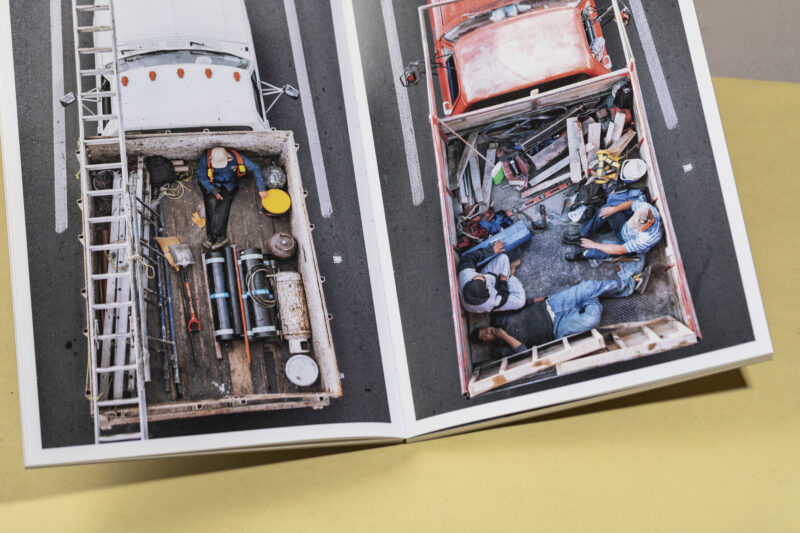
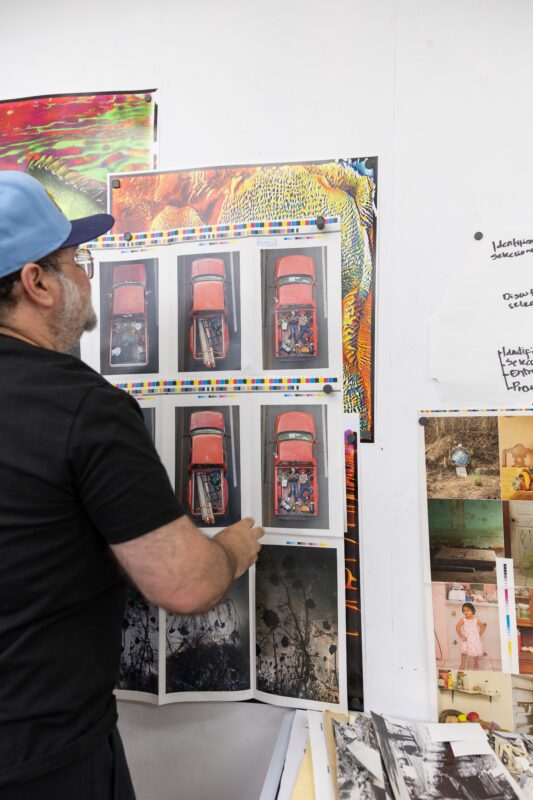
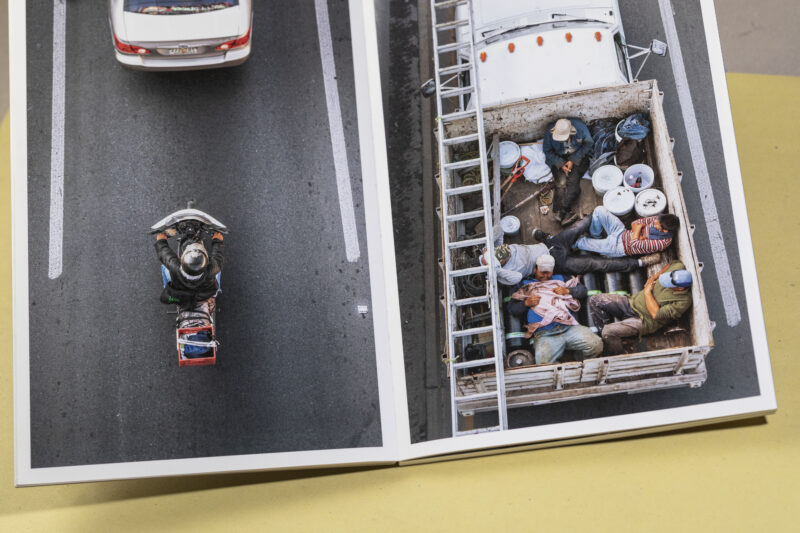
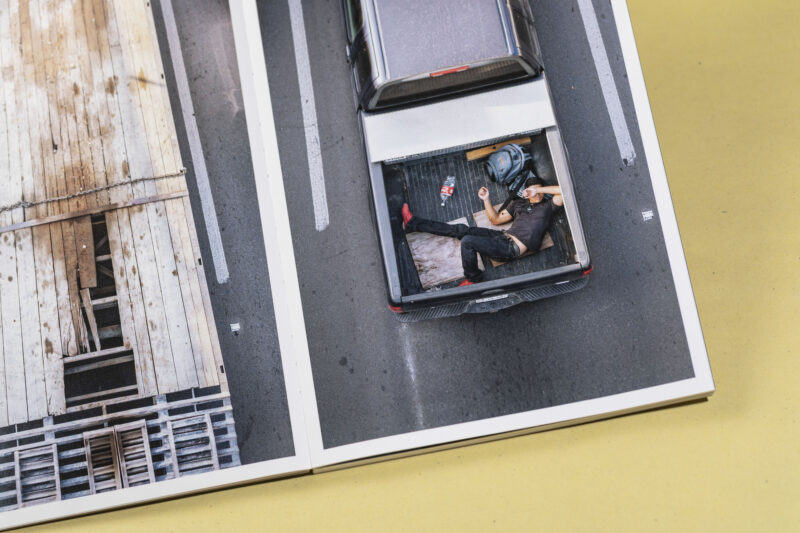
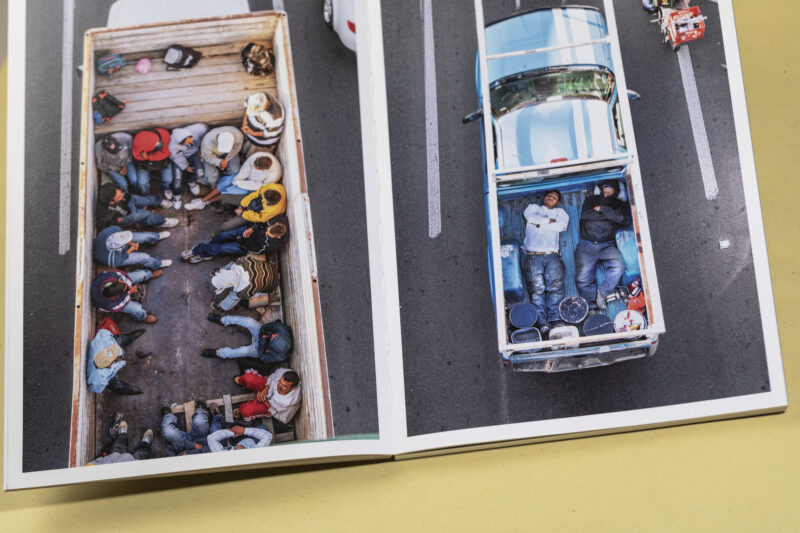
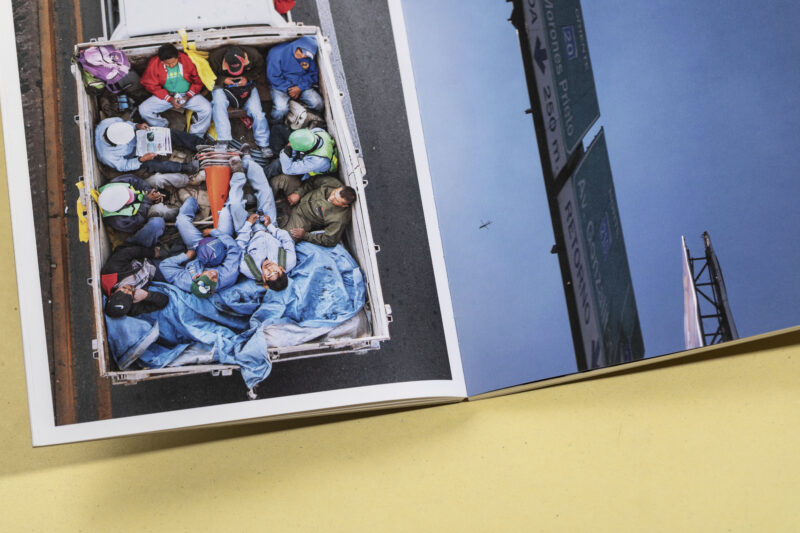
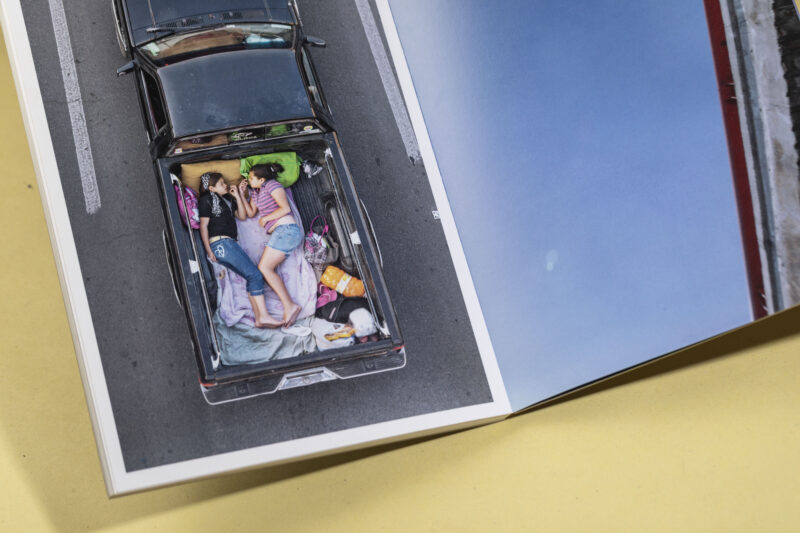
Like in the Carpoolers Project, if you see one image, you think, “What a good photograph.” When you see 100, it’s like, “Oh my God, this is something that’s happening in a place. This is a social and cultural phenomenon, not just a good picture made by a chance encounter.” Seriality and accumulation allow for a construction of visual metaphors.
JL–As a photobook maker, you also are a founder of the collective Los Sumergidos, where you not only self-publish, but also publish and distribute the photobooks of other Latin American artists dealing with similar themes. What led you to start Los Sumergidos? Has it had an impact on your practice, both as a photographer and as a bookmaker?
AC–Los Sumergidos started by chance in upstate New York. I was there visiting my friends, Carlos Loret de Mola and Juan Madrid, two photographers, and Freddie Martinez, a writer.
We were all connecting on the fact that Latin American stories and photobooks had very little presence, as far as we could see. So, the three of us built a book that told a clichéd story about what it means to be Latin American, one that felt very palpable to an audience we thought did not hear many Latin American voices.
We made up a story about a protagonist who goes from Mexico to the US and disappears there, using photos from three different artists and fake interviews with the protagonist to build a narrative. It is a sort of novella telling the typical story of what we think someone aspiring to immigrate from Latin America to the US would experience.
Once the book started getting some recognition, we realized there was something there. We started talking with friends and people we knew who were planning to make books, asking if they wanted support with design, funding, or distribution. Once people started saying yes, we built a program. There are only a few of us, so we do between three and five books each year. We’re not trying to make any money. We’re just trying to sell books to make more books. That’s our motto. And we’ve been successful in bringing these alternative stories, voices, and ideas into the hands of people around the world, so they see that there are more ways to think about Latin America.
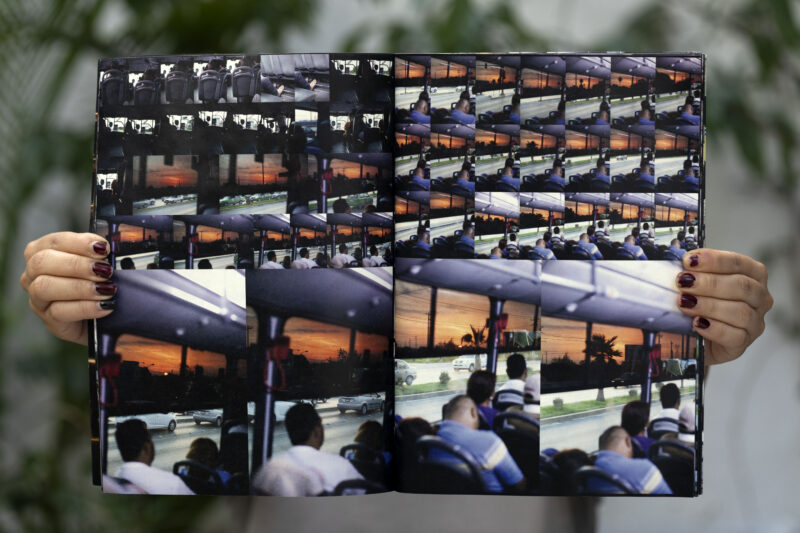
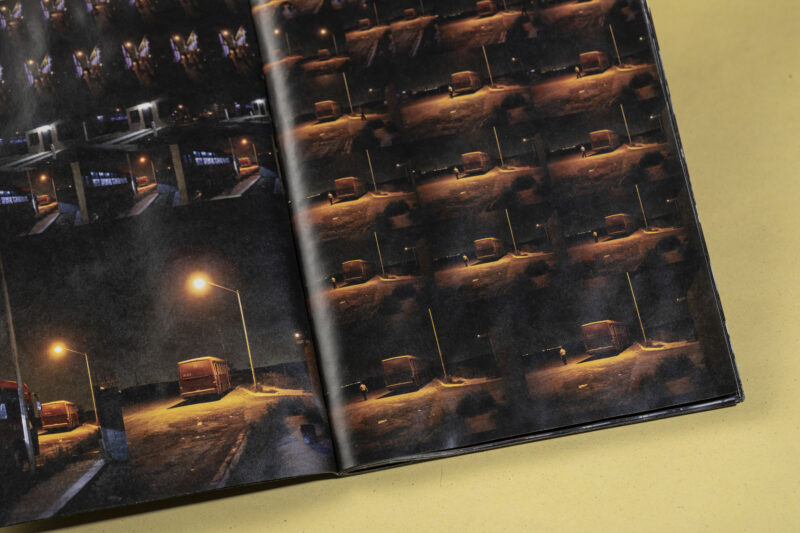
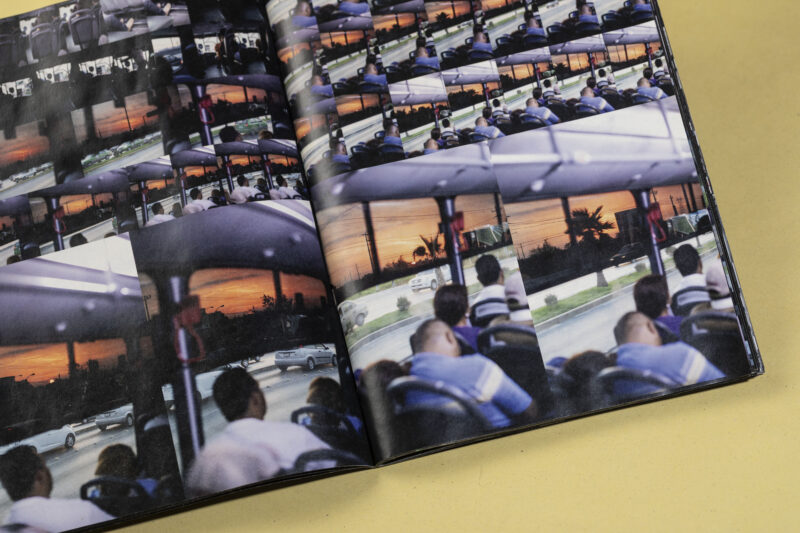
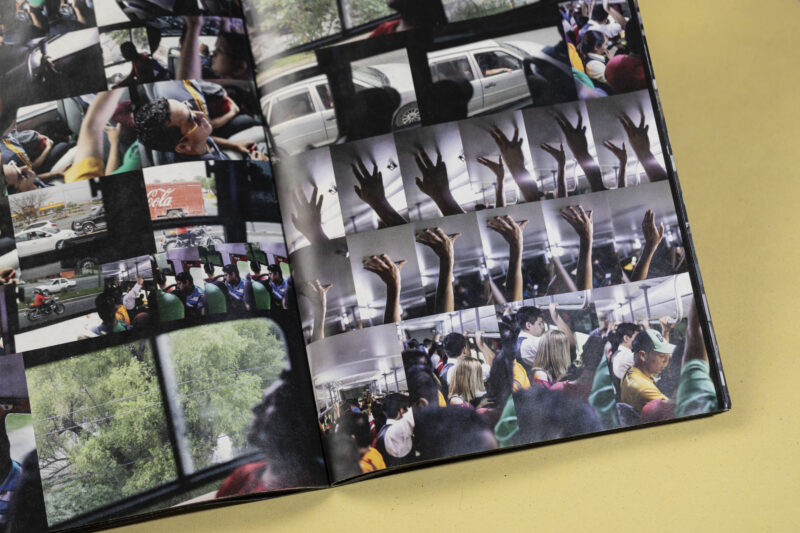
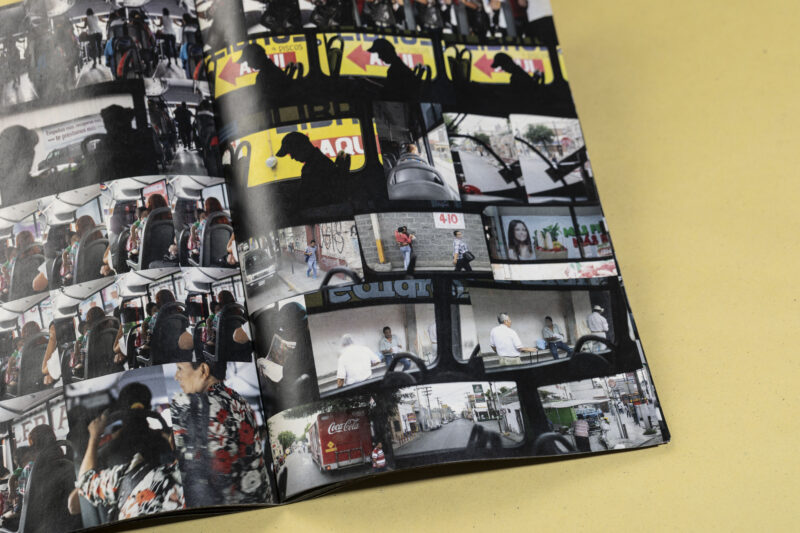
Alejandro Cartagena, pages from "Suburban Bus: The Archive" (2026), Photobook.
Alejandro Cartagena, pages from "Suburban Bus: The Archive" (2026), Photobook.
Alejandro Cartagena, pages from "Suburban Bus: The Archive" (2026), Photobook.
Alejandro Cartagena, pages from "Suburban Bus: The Archive" (2026), Photobook.
Alejandro Cartagena, pages from "Suburban Bus: The Archive" (2026), Photobook.
Alejandro Cartagena, pages from "Suburban Bus: The Archive" (2026), Photobook.
Alejandro Cartagena, pages from "Suburban Bus" (2021), Photobook.
Alejandro Cartagena, pages from "Carpoolers #4" (2025), Photobook.
Alejandro Cartagena, pages from "Carpoolers #4" (2025), Photobook.
Alejandro Cartagena, pages from "Carpoolers #4" (2025), Photobook.
Alejandro Cartagena, pages from "Carpoolers #4" (2025), Photobook.
Alejandro Cartagena, pages from "Carpoolers #4" (2025), Photobook.
Alejandro Cartagena, pages from "Carpoolers #4" (2025), Photobook.
Alejandro Cartagena, pages from "Fossils" (2026), Photobook.
Alejandro Cartagena, pages from "Fossils" (2026), Photobook.
Alejandro Cartagena, pages from "Fossils" (2026), Photobook.
Alejandro Cartagena, pages from "Fossils" (2026), Photobook.
Alejandro Cartagena, pages from "Fossils" (2026), Photobook.
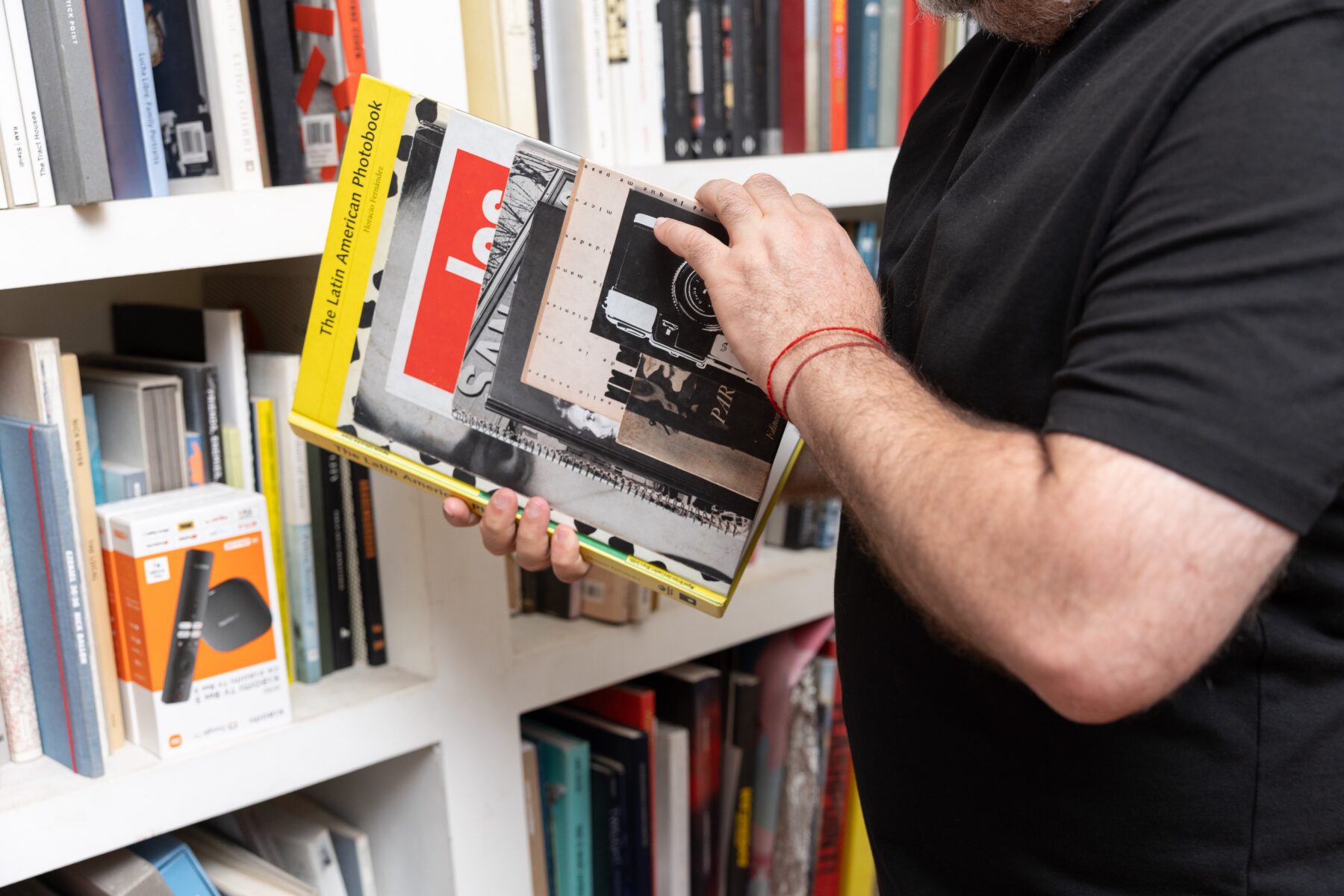
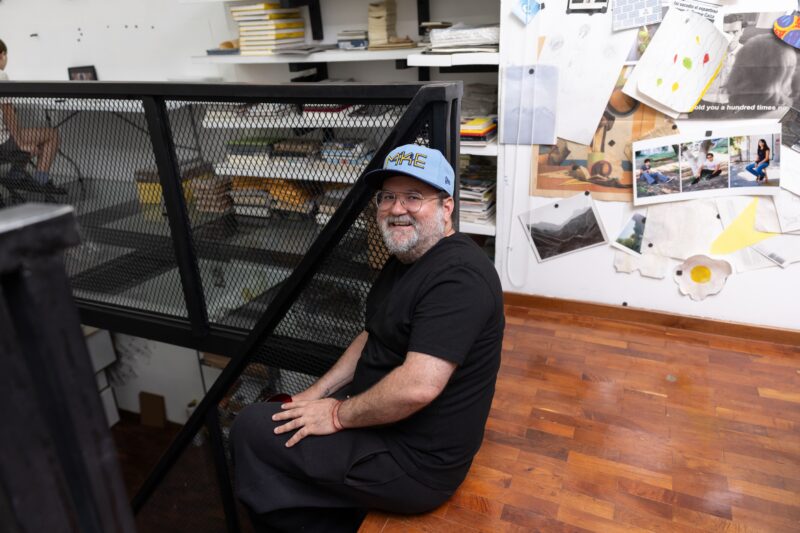
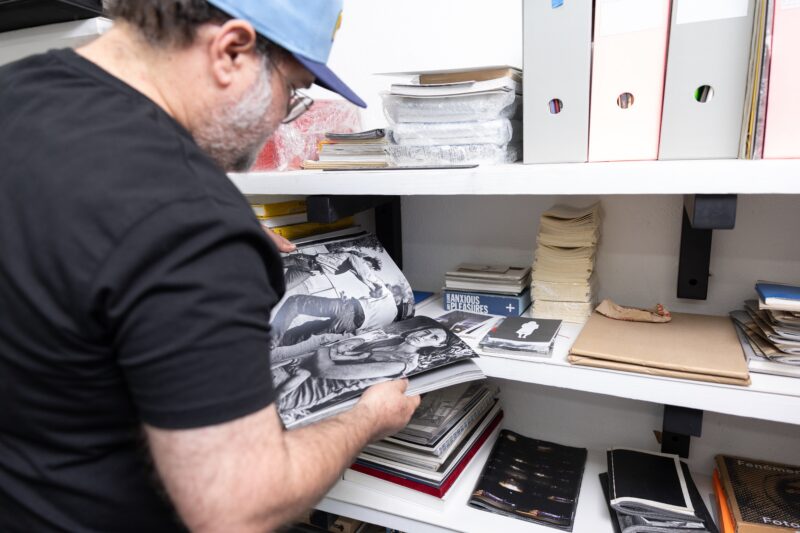
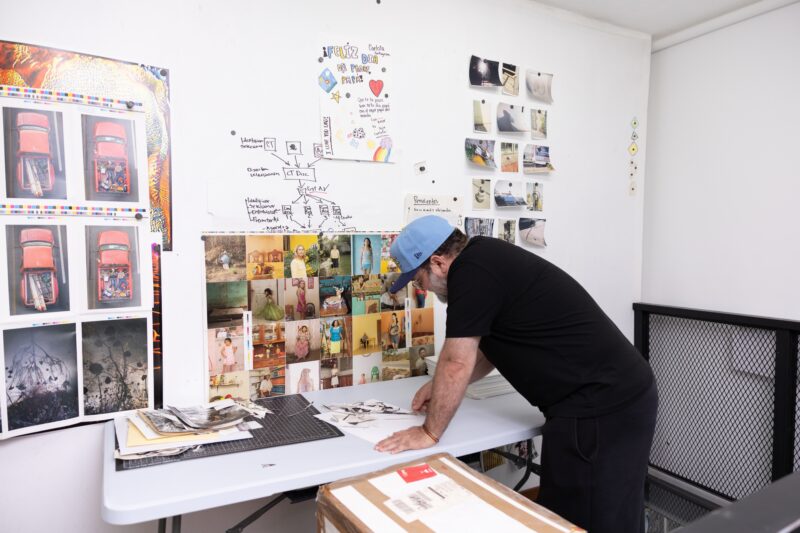
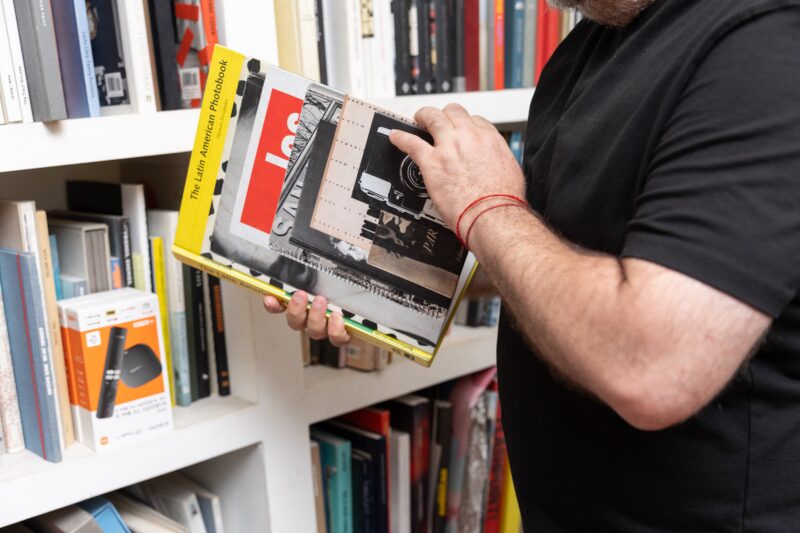
Alejandro Cartagena in his studio. Photographed for Art21 by Laura Malo.
Alejandro Cartagena in his studio. Photographed for Art21 by Laura Malo.
Alejandro Cartagena in his studio. Photographed for Art21 by Laura Malo.
Alejandro Cartagena in his studio. Photographed for Art21 by Laura Malo.
Alejandro Cartagena in his studio. Photographed for Art21 by Laura Malo.
Alejandro Cartagena in his studio. Photographed for Art21 by Laura Malo.
Alejandro Cartagena in his studio. Photographed for Art21 by Laura Malo.
Alejandro Cartagena's studio. Photographed for Art21 by Laura Malo.