In the Studio
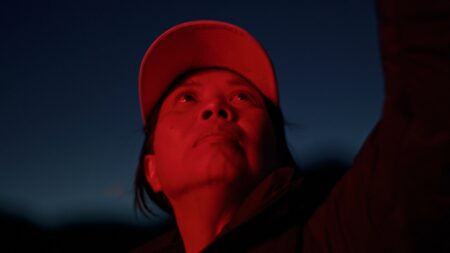
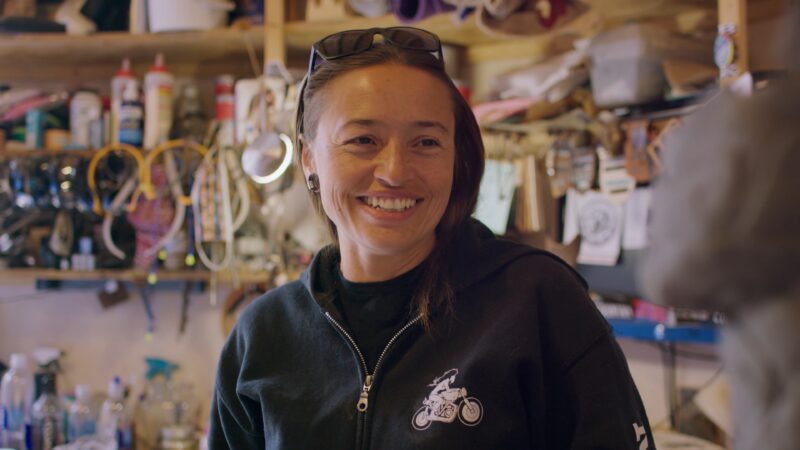
Rose B. Simpson watches and listens
Ian Forster—Could you tell me more about the “everyday” aspect of your work?
Rose B. Simpson—I would say—from my unique perspective, which is unique to the people that I come from—that my understanding of it is there is no separation between art and life. When we objectify things and put a value on them, saying this is more important than that, exotifying and stereotyping and objectifying, it makes us feel in control and we’re the boss and we’re the most important ones. You can start to transform that and say, “That rock is special. And that tree is special. And that piece of trash that’s blowing down the side of the road is just as important as anything else because it all has a reason.” Something that I discovered is that everything has a consciousness. Everything can see and hear and speak if you listen.
If everything right now has consciousness and is listening to me, how am I going to be? How am I going to act? What am I going to say? And am I going to be a little bit more aware of that when I think I’m alone?
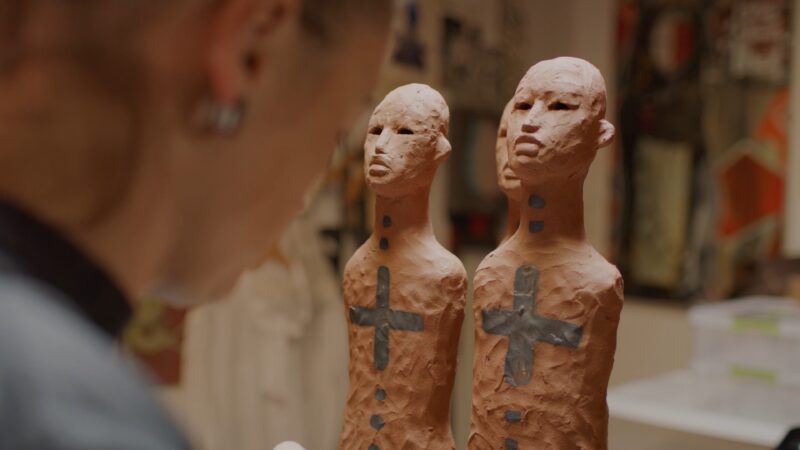
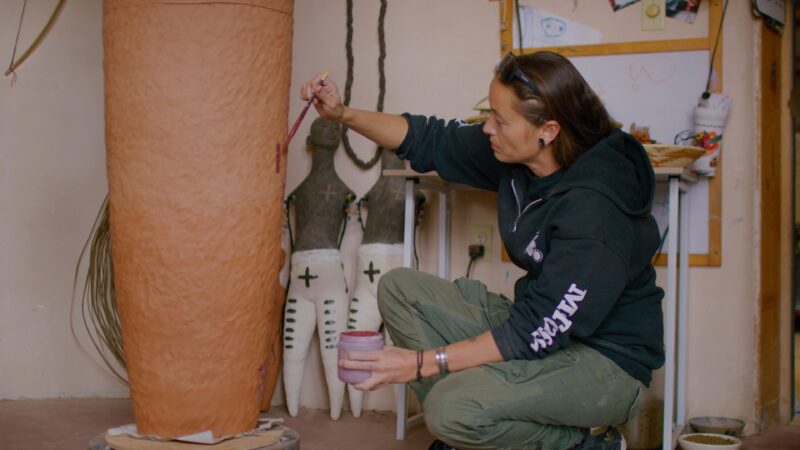
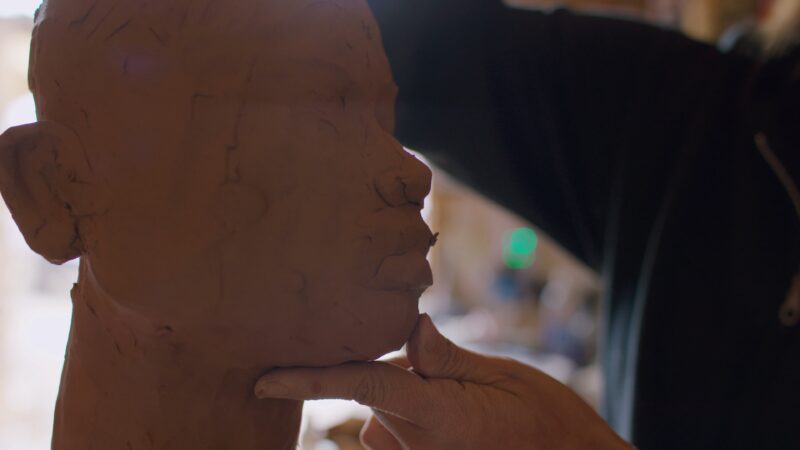
How do we try to become graceful with all that complicated experience of life? My art is basically taking a moment of that experience, it’s doing two things. One is it’s watching me. I’m building these beings that are reflecting my process back to me so that I can learn about it and honor it, right? The other thing my art is doing is going out into the world and watching in case we lose track of the fact that we need to be held accountable, responsible, or just be aware. We forget we’re being watched and we forget we’re being listened to. In case we forget there’s cause and effect and all kinds of things. Then these pieces may go out there and watch, do that watching, and remind people.
That can be a by-product of my own experience of making, and all I can do is be aware of that and my own internal process as I create. The idea of creating and manifesting that healing reflection, that goes out into the world.
I can’t know what each work’s job is because they’re each their own thing. They’re their own being. It’s better for me to watch them and listen and ask, “Hey, what are you doing? What do you want to do? Where are you going? Where’s your work?”
Maybe their work is here with me, and they’ll stay here with me, and we’ll do work together. Or maybe they have somewhere to go, they already have a plan. I have no idea where they’re going, what they’ll see, or what work they’ll do, or who they’ll affect, or who they’ll build conversation with or anger, or bring happiness to or that moment of release.
IF—I think you’ve used the term vessel for these works, and Maria (2014) as well. Can you tell me about that word and what it means to you?
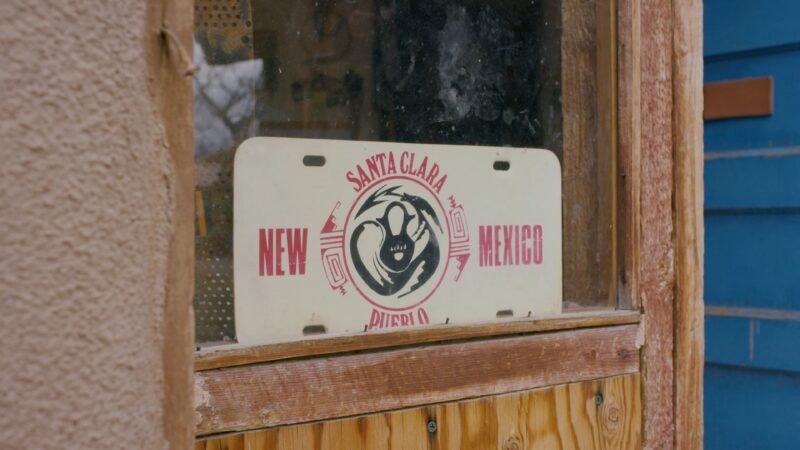
RBS—I started using that word when I was younger, when I started getting tattoos. Tattoos aren’t traditional for my people; Santa Clara Pueblo people historically did not have tattoos. There was this moment where I was like, “I’m not supposed to do this, but I really want to.” I thought about it for a long time.
I thought about myself as a vessel. Whether I’m holding energy or I’m a physical body that’s holding my three-dimensional self, I’m this vessel of containment that grows and expands and contracts and moves and changes color. Who am I to change that? I was made by the ancestors to look the way I am, who am I to go draw on it?
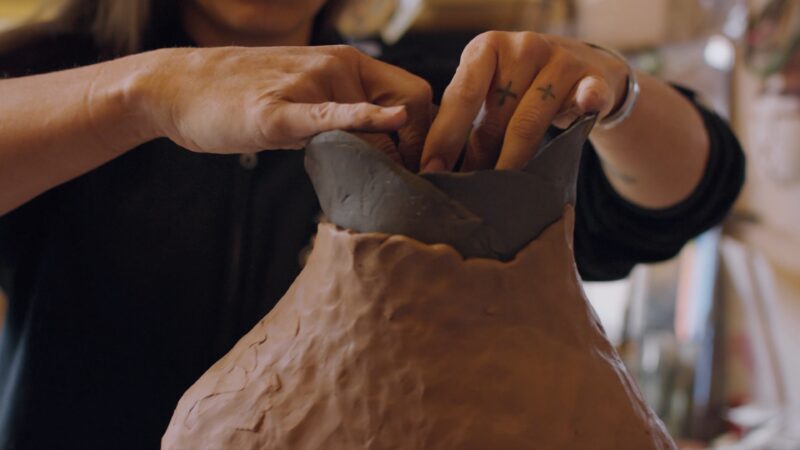
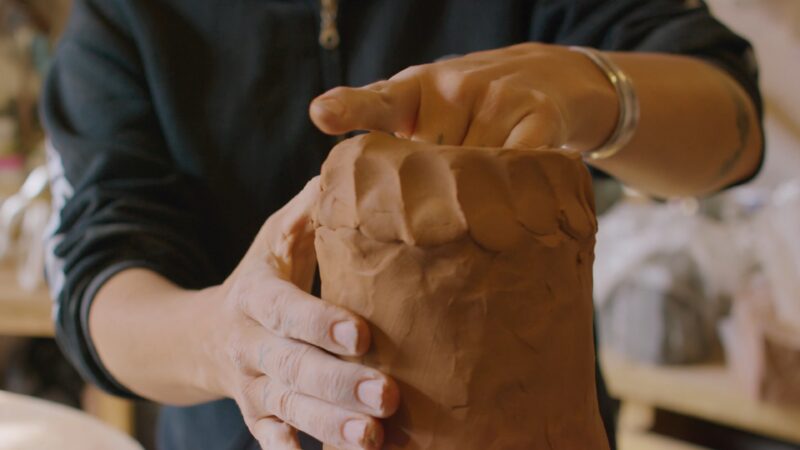
Then I thought, “But we make our pottery beautiful, right?” We draw and make these beautiful designs on our pottery. That has intention. That has story. That has prayer. It tells the story of our landscape. It tells the story of our history. It tells the story of our entire path. And it is love. What’s wrong with that? I started thinking of myself as this pot, “I am this clay vessel, and I’m going to paint myself.” That’s how I made it okay in my head. That was the beginning. I started thinking about all things as a vessel.
Right now, I’m building something with wood, and I look at that building and see the trees and it hurts. It physically hurts my body. It’s, like, almost dissociatively painful. Because I see the life; that whole being of the tree, where it came from, the whole experience it had. But I’m also telling myself, “How do I be aware of that and feel that hard thing but also know that this vessel is changing and it’s going to have a different story? And who am I to know what it wants or needs?”
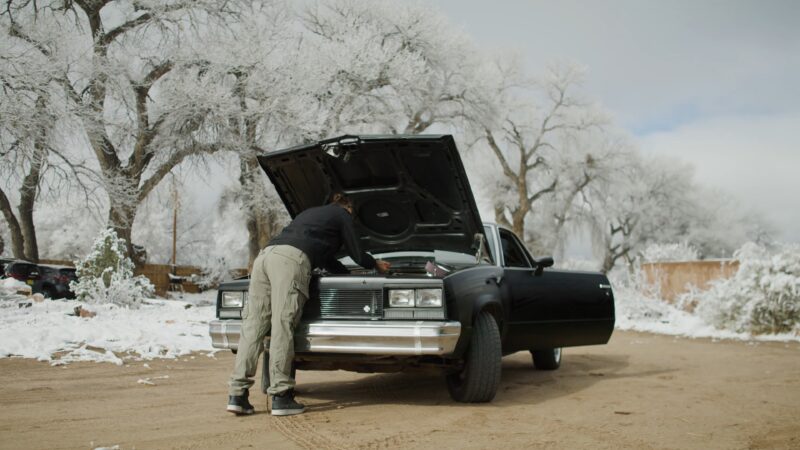
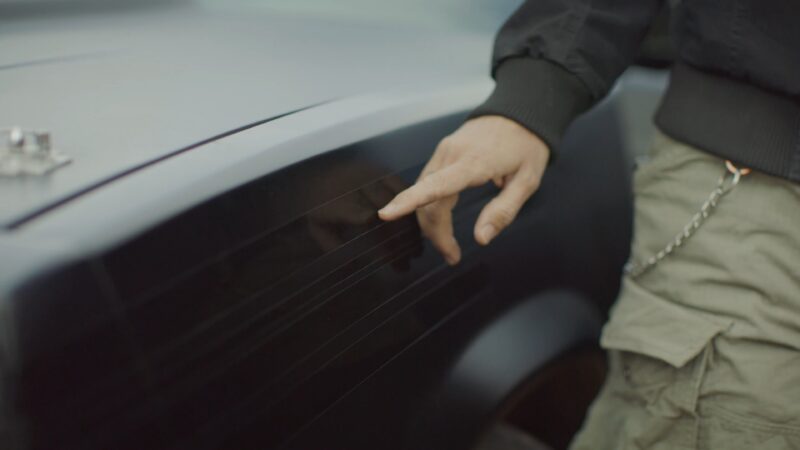
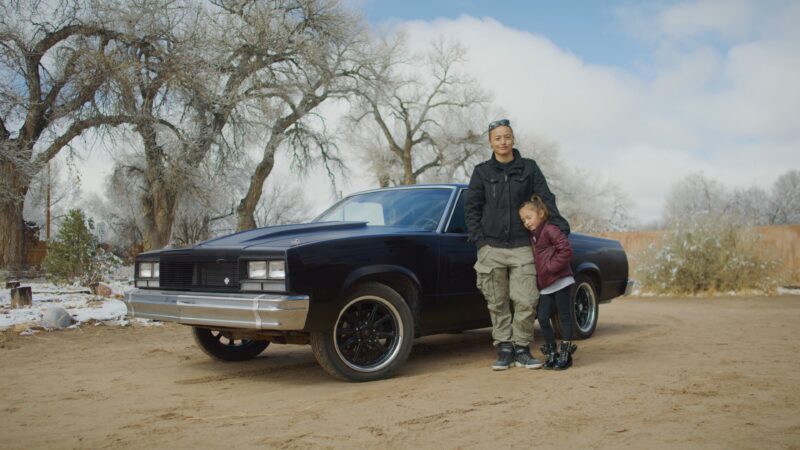
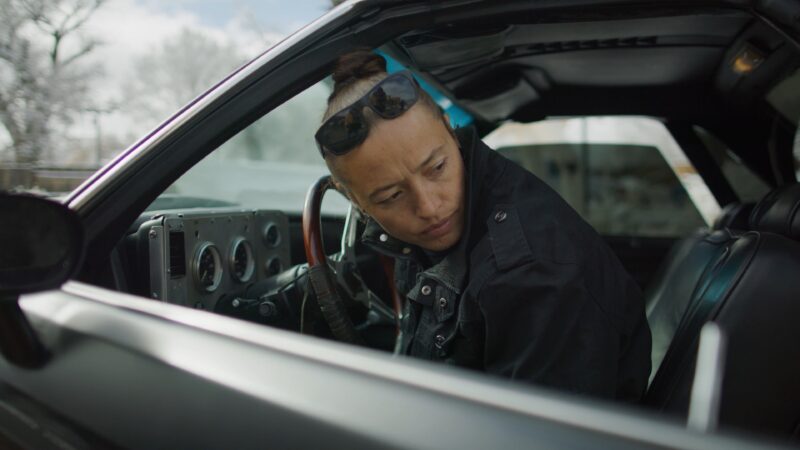
One of my favorite moments of “Aha!” was when I bought that 1985 El Camino that is now Maria. I wasn’t keeping the car, I was going to do the bodywork and then flip it. My mom really didn’t like that car. One day she was like, “Hey, bring that ugly car out to the field and we’ll use it to harvest.” Because the car was low to the ground and we had little kids, so they could put the harvest in the back of the car.
In that moment, I looked at it and was like, this is the basket that you carry your harvest in. It’s the pot that you put on your head to bring water back from the creek. It’s postcolonial. It’s this modern thing, but it’s changed. It was that moment where I was like, “This is a vessel, and I’m going to paint it like a pot.”
There’s layers of that experience, of seeing agency and honoring things. There was a while where I thought, “I didn’t paint this car. I didn’t do all that bodywork, these thousands of hours of work. It used me to make itself, just like I used the drill or the wrench or the pliers.” I am a tool of something else that’s just making. The car saw me on the side of the road and was like, “Hey, you, come here. Come get me. I need you to make me be what I need to be.” I think about that and wonder, “Was that another way for me to voice my own greatness?” Because I can’t handle the responsibility of it. I don’t know. It’s all complicated.
This interview took place in March 2022 at Rose B. Simpson’s studio in Santa Clara Pueblo, New Mexico. It was conducted by Ian Forster for the Art in the Twenty-First Century Season 11 episode “Everyday Icons” (2023), and edited by Jurrell Lewis in June 2025 for the Art21 publication Artists & the Unknown: Art21 Interviews with Artists.