In the Studio
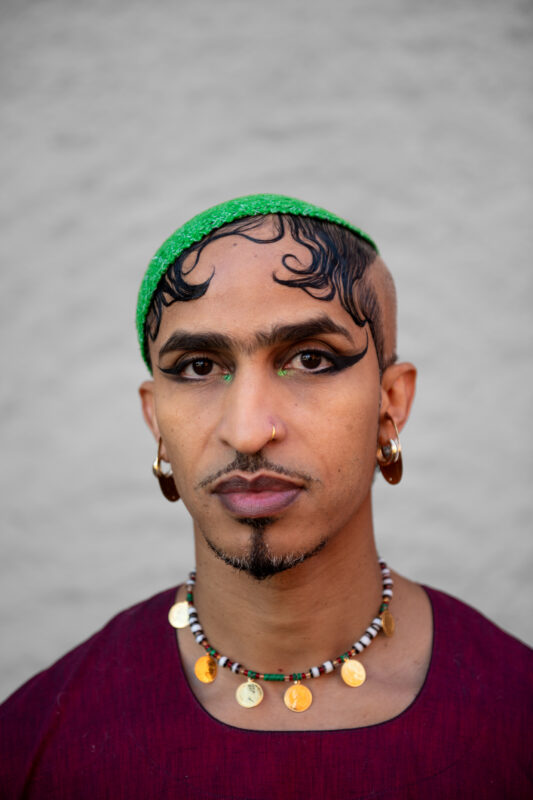
Ahmed Umar claims Sudanese history
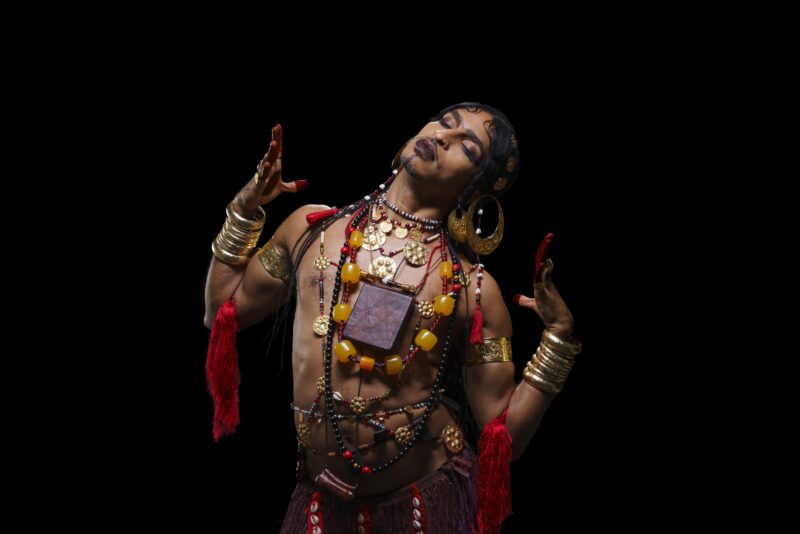
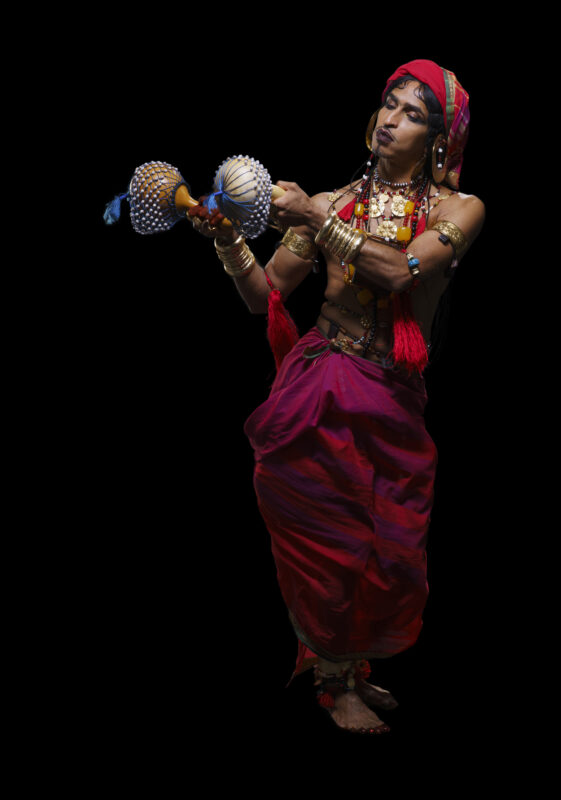
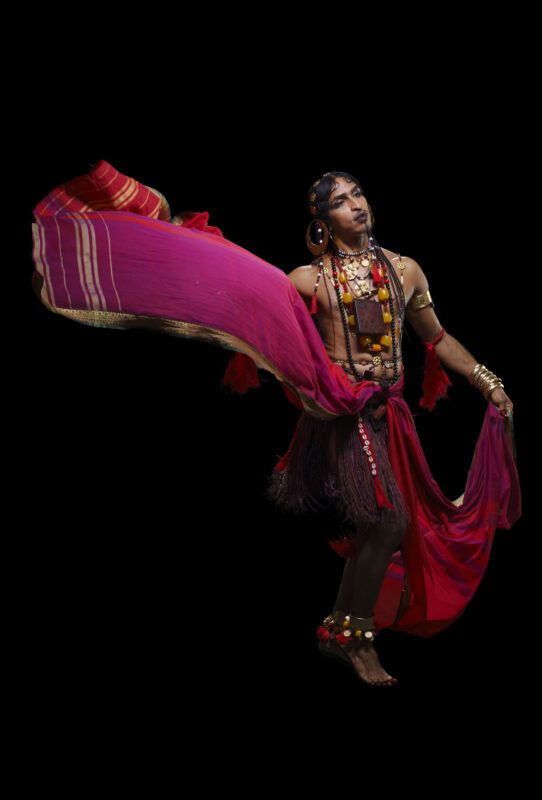
Ruba El Melik—Let’s start with Talitin, The Third (2024), an incredible performance piece in which you cover the Ragees Al-Aroos, the Sudanese bridal dance. Tell me about the conception of that piece and the story of its name.
Ahmed Umar—Talitin, meaning “the third,” as in “the third of the girls,” was an insult people had used towards me. It actually belongs to a phrase, ‘Talitin fil henna w al delka mkhalitin,’ meaning “their third who shares even in hennas and perfumed scrubs.” I heard ‘talitin’ a lot growing up, mainly because girls felt safe around me. I had found myself associated with that word since my childhood. Boys used to bully me with that word, but it also came from my mother, my father, and everyone else. I was bothered, but at the same time, they were right.
At around ten or eleven years old, my mother’s first cousin got married. It’s one of the most beautiful visual experiences I’ve had— the bride in her jertig attire, the sound of zaghareet (ululations), and the Adil w Al Zain processional song. After the wedding ceremony, my mom’s cousin danced the ragees aroos and at that point, I hadn’t seen a ragees aroos yet in my life. I eventually got kicked out of the room for being a boy, but I snuck off and ended up watching from the balcony. It was just so beautiful, so beautiful, so beautiful— the perfume, the zaghareet, the ‘Mashallahs!’
This memory is still so vivid inside me, it is also when I saw my mom dance ragaba. My mom wasn’t really a strict parent, but she was a hajja (a person who’d completed an Islamic pilgrimage), with social standing, equanimity, and a house that was open for hujjajs or pilgrims–a daughter of sheikhs. So I had never seen her dance much. When I saw her dance ragaba, my god, the experience was so beautiful. I was a short kid, and so my head came up to her hip. I would watch her body move, watch her looking up at the sky, her neck craning all the way back. It was so beautiful.
The ragees aroos are now very rare, and when they happen, there is no photography or documentation. It has been obstructed from the public sphere. Online, people often think this is not part of our Sudanese traditions, especially the younger generations who haven’t seen ragees much. The younger generation views it as a transgression of masculinity and our Sudanism. Historically, it was a public event— when my grandmother danced, the whole neighborhood attended, men, women, and children. She danced with her chest bare, wearing only the rahat, a Sudanese skirt. There used to be a tradition in which the groom would cut the rahat after the bride had danced, and immediately cover her with a piece of fabric. She would be completely naked for a fraction of a second, and this would be the transition ceremony from girl to wife.
These experiences stayed with me, and so when I heard of the Oslo World Festival, I wanted to present an international performance of bridal dance. I contacted a famous Sudanese singer who listened to my proposal, but soon afterward, her son prohibited her from going. After that, I tried to find another woman to film while she danced, but even that was very hard. I finally decided to do it myself, but I had a hard time finding a dance teacher to help me. People were even too ashamed to ask around for a dance teacher because they didn’t want to be associated with me, fearing others would say, “So-and-so brought me a gay guy to learn ragees.” It was really something.
REM—Did dancing alter your perspective of these women and traditions that you always felt a part of, but were forced to be away from? When performing Talitin, how did it feel to be in the center of a room, dancing for people, instead of having to watch from the balcony?
AU—I was so nervous, given all the background of the bridal dance and its cultural importance. Yes, I grew up surrounded by women, and I’m more in touch with my feminine side, but I’m not a female. Although I have some ownership of the tradition, it still had to be well thought out. There was a long period of thinking and discussing with the Sudanese musician Asia Madani, who taught me how to dance, alongside the Sudanese singer Alsarah. I was fully aware that after I danced publicly, I would face lots of consequences— how my position in Sudanese society would be affected, the opinions of my parents, and the online threats and danger that might come after. I haven’t spoken to my mom since the work went public.
But you know what? I had never believed Westerners when they said that they felt “connected to their ancestors” and all that until I danced. In that moment, I was completely connected to the singer, the music, the memories of older dancers, and my grandmother, who was really one of my favorite people. I felt this ancestral feeling. I feel it in every dance.
REM— I do feel like it’s difficult for your actual community, your audience, and your people to receive work that displays a level of freedom that people haven’t collectively arrived at yet. What actually sustains you to keep creating for an audience that could be upset with you when you create?
AU—I think with Talitin, I was really thinking of myself, my memories, and the question of, “Why did we get like this?” Our Sudanese identities are being eliminated. Most things that are pure Sudanese face hate because of Wahhabism¹ and the Islamism² of our culture. I know my Sudanese audience, what they think, and how they would respond. After premiering the work, I was looking for a specific comment, and I found it a lot— “He’s disgusting, but he’s one hell of a dancer.”
REM—There’s something almost erotic about the way that you create this juxtaposition within people. They’re watching something beautiful and are forced to acknowledge it, but at the same time, feel disgust or darkness.
In Truth Bears No Scandal (2024), you sing famous Sudanese songs to reassert their original queer context, which has been purposefully hidden over time. What compelled you to create this work and look into this archive of history and tradition?
AU—Truth Bears No Scandal is an Arabic saying, meaning something along the lines of what is clear and open has no shame. It is a very direct and truthful thing to say. So we have this proverb in our culture that everyone knows, but doesn’t really practice the message behind it, especially as it relates to queerness. Who hasn’t heard of queer songs, or of our existence as queer people in Sudanese society? We all know! Why do we pretend that we don’t? We know the cooks, the singers, and the neighborhood gay. We are present, but society is determined, with all its might, to eliminate our existence from the public sphere. Since I was a child, I noticed my father and older men saying, “This poet is… Oh, you know…” whenever they would talk about music. They’d hint at some sort of history they don’t want to talk about. When I grew up, I started hearing more and more phrases like, “Oh, did you know this singer was gay?” or “this poet wrote that song about a boy.”
Why are people enjoying our queer love with these songs? Men express their love to their women through our songs without crediting us or even seeing us as existing or worthy of existing. That was the idea behind Truth Bears No Scandal— we are here, what is the scandal with that? You’re enjoying our love and our love songs.
We landed on three popular Sudanese songs for me to sing. Actually, it’s very funny because the song ‘Mabrook Alaky il-leila Ya Naoomah’ (مبروك عليكي اليلة يا نعومة) was sung by a woman for a woman, and it’s widely considered part of Sudanese heritage, without many people knowing the history behind it. There is no archive for anything in Sudan, especially now that the television and radio infrastructure has been burned down. So this project was an interesting way to track and preserve some of that history.
Obviously, even after the work, you can’t say that this poet or this singer was a hundred percent gay, because their grandchildren today would get mad! So, we can say it is rumored that it’s queer, but sometimes it is very clear.
REM—I want to talk about the materials that you work with. What drew you to working with ceramics, sculptures, even textiles, and the materials that ended up becoming Glowing Phalanges (2023-ongoing)?
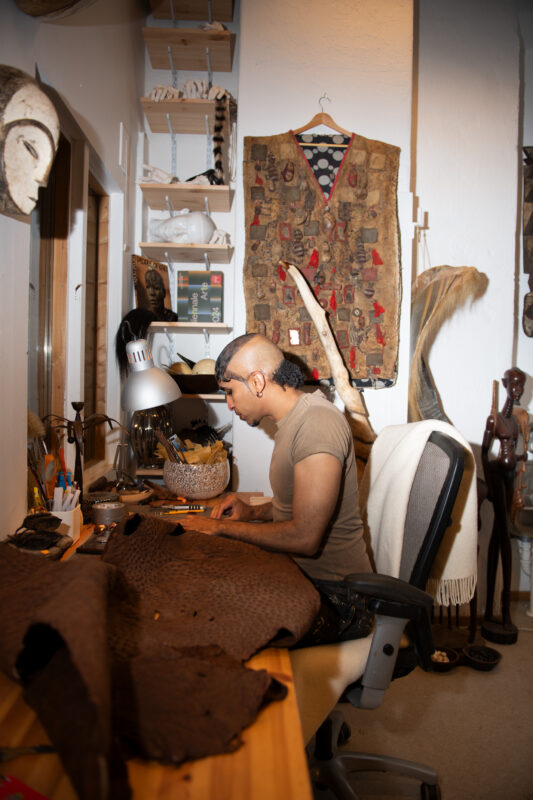
AU—My use of materials and everything I do has to go through a thousand “whys”— Why am I doing it? And what is the meaning of this material in this project, and why? What is the sense behind it? How does it help the story? I was never interested in specializing in a technique or a material; I was more interested in how to narrate my story in a sensible manner.
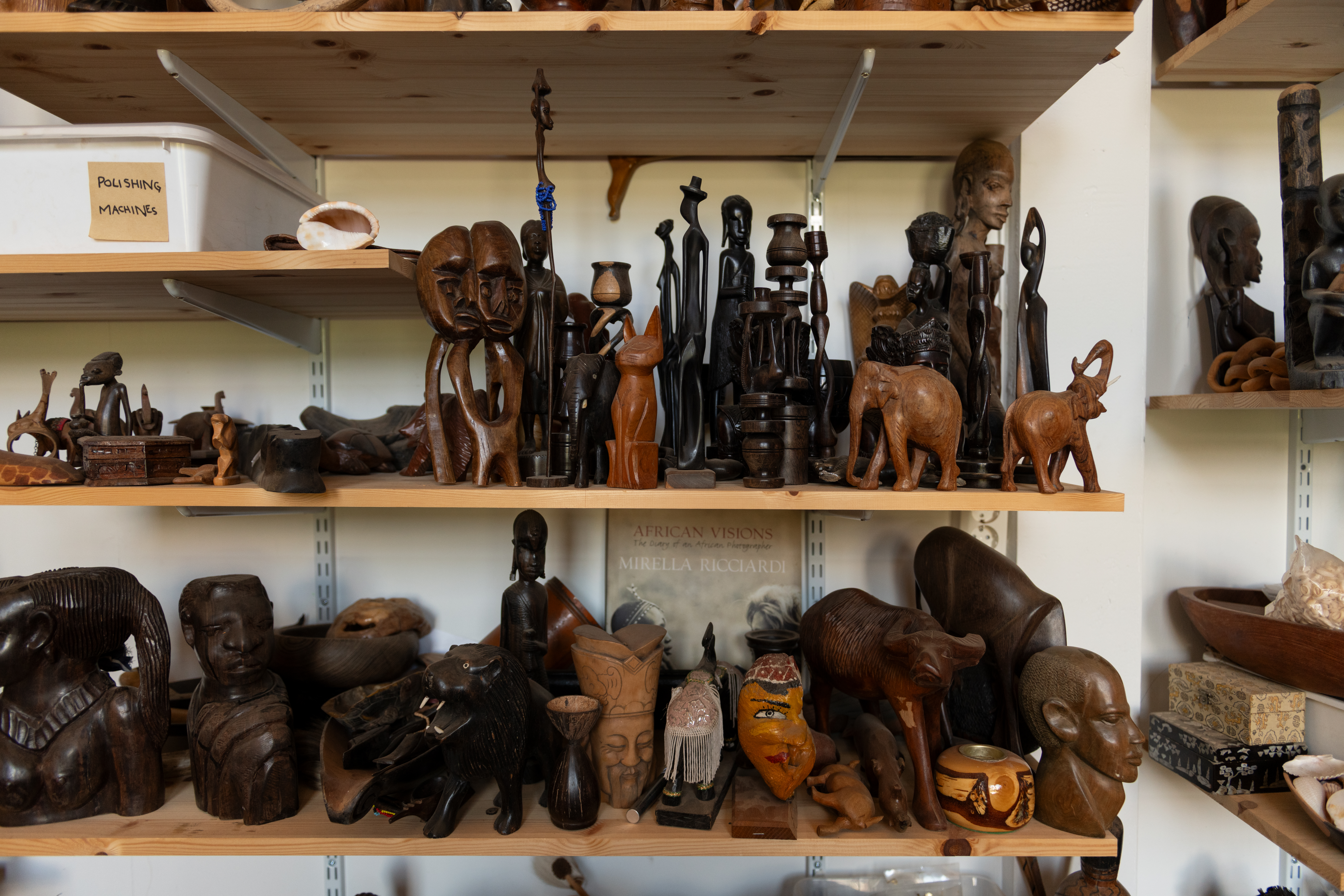
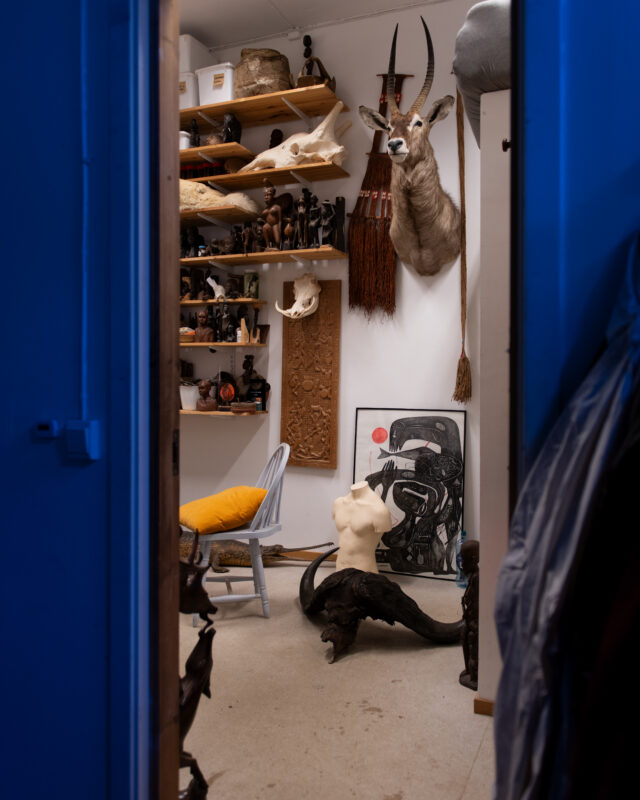
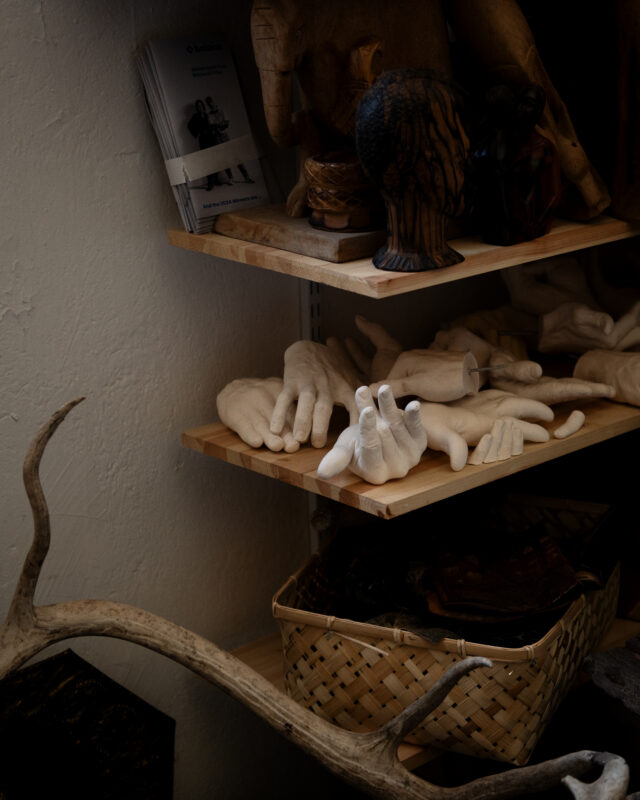
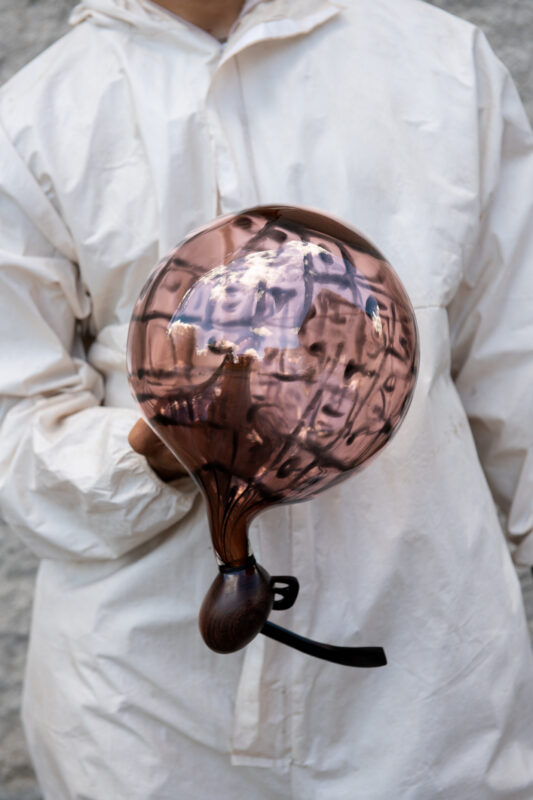
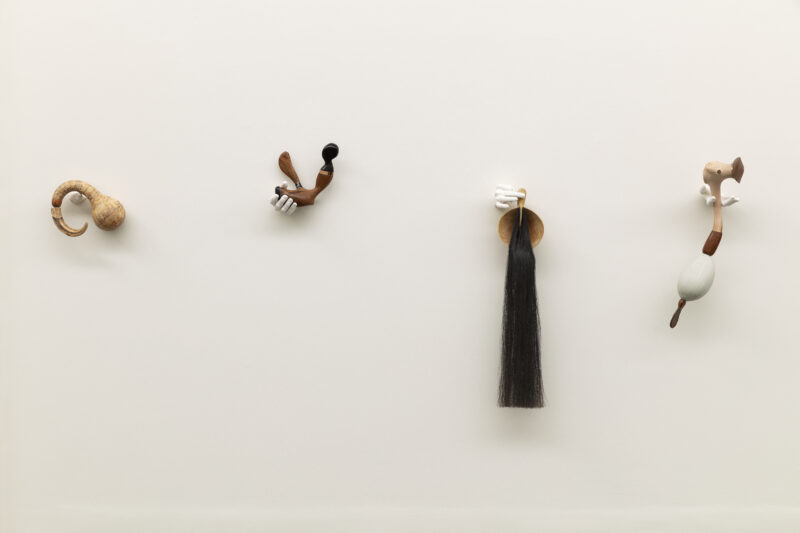
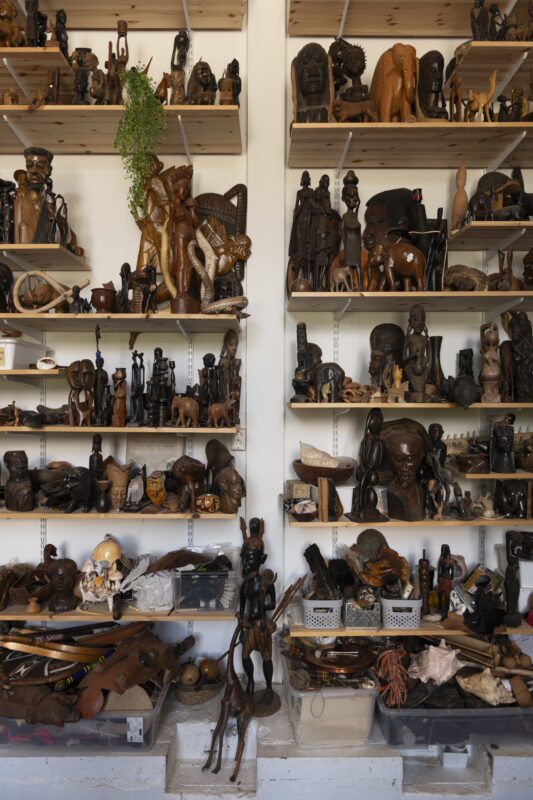
For Glowing Phalanges, my use of wooden sculptures began after I noticed ebony, ivory, and other valuable materials from Africa arriving in Norway as tourist souvenirs. I started buying these pieces one at a time, first for the sake of their material, like “this is ebony!” The same ebony that we use in Sudan to describe the beauty of dark-skinned women. It is so normalized that the wealthy come to Africa and hunt our wildlife without any regulations or consequences. This would never happen in any Western country. In Sudan, we used to have one of the biggest populations of African elephants. They’re almost gone now. The same with rhinos, the same with ebony.
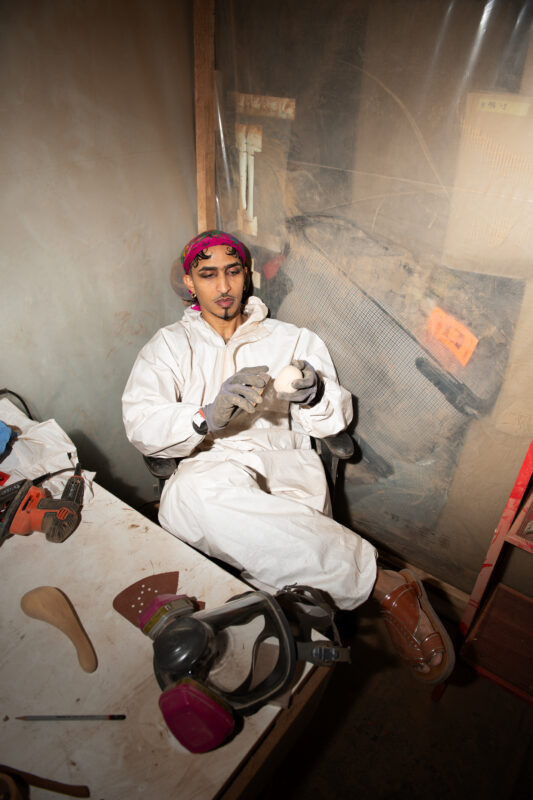
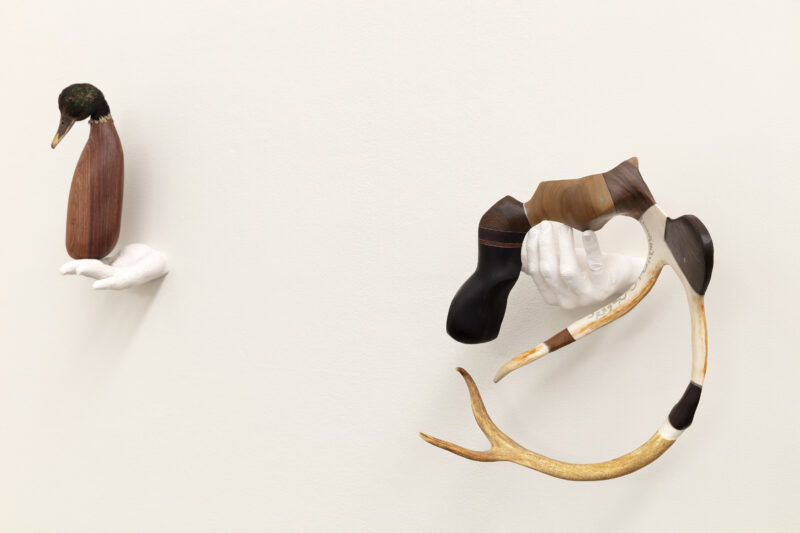
I formed a collection of these souvenirs and started thinking about how these mass-produced objects are a very inauthentic representation of us. In addition to harming the environment, they harm the artists who have to make the same shape over and over, and the pieces don’t carry any specific meaning. They are made suitcase-sized and fed by the gaze of how the West wants to see us, women carrying pots in their heads with exaggerated features. Through a process I call “reauthentication,” I remove every trace of the past that these souvenirs have gone through and transform them into mediums of prayer, like Sufi prayer beads, in Glowing Phalanges.
REM—What do you feel like you’re reaching for when you create? Are you reaching for some kind of personal truth? Is it a goal of expression? Is it communicating to people?
AU—I am not someone who wants to live outside of Sudan. The more I live outside, the more I don’t think anybody deserves to leave home to feel comfortable, to live a comfortable life. I don’t like hypocrisy, but our society is based on it, and this hypocrisy is dangerous for us, our lives, and our freedoms. We could have just lived with our mutual existences, both of us, without me needing to leave to live abroad, without me having to be hurt, and without you having to experience anguish within yourself because a man loves another man, for example. I want to live in peace. It’s so cliché to say I want to live in peace. There are so many things where, if you just dig a little deeper, you’ll find that we are all the same. This world can take us all. Especially our Sudan, she can handle us all.
¹ Adopting a purist approach to spiritual practice, Wahhabism is a movement within the Sunni sect of Islam heavily favored in Saudi Arabia. The strict spiritual lessons imparted upon Umar in his childhood in Saudi Arabia, such as the denigration of practices like amulets or prayer beads, were often at odds with the Sufism practiced by the majority of his family in Sudan, and this became the source of a deep spiritual tension.
² Islamism was a political strategy practiced by the National Congress Party, the party responsible for Sudan’s 1989 military coup and the ousted president Omar Al Bashir. After the coup of 1989, the Sudanese population’s sentiments towards art slowly began to reflect the government-supported ideology that art was frivolous, distasteful, blasphemous, and the antithesis of religiosity or morality.
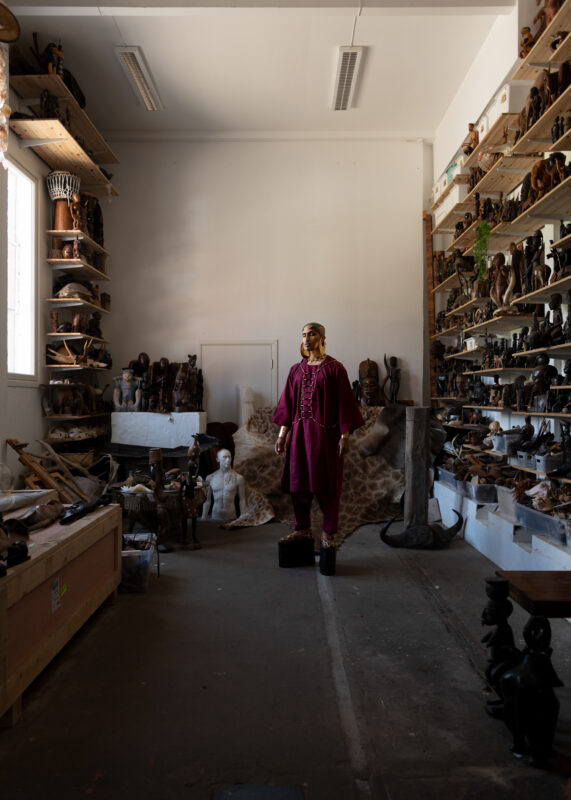
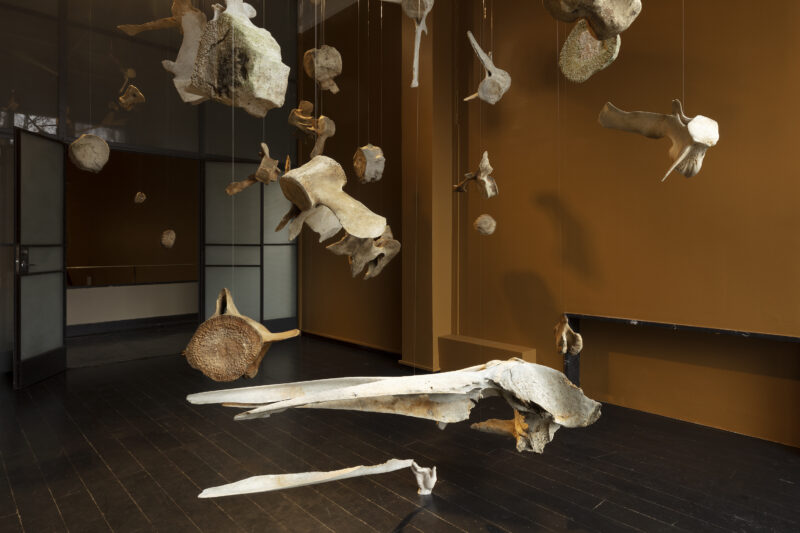
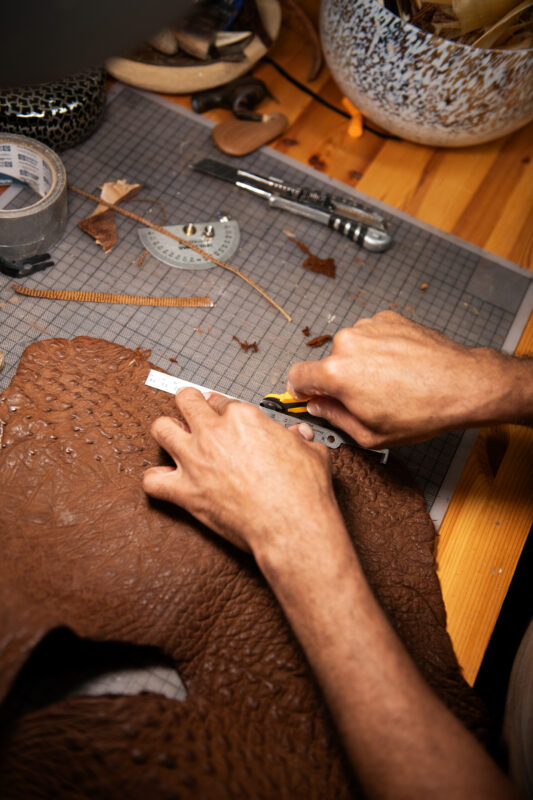
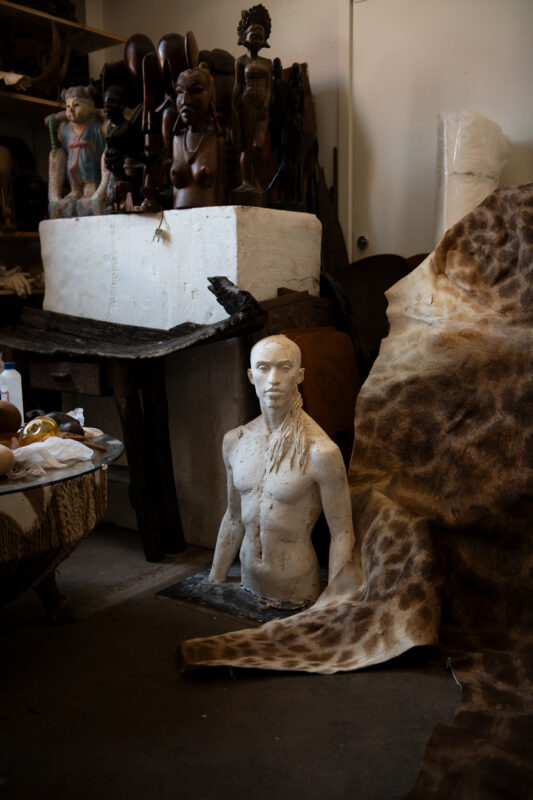
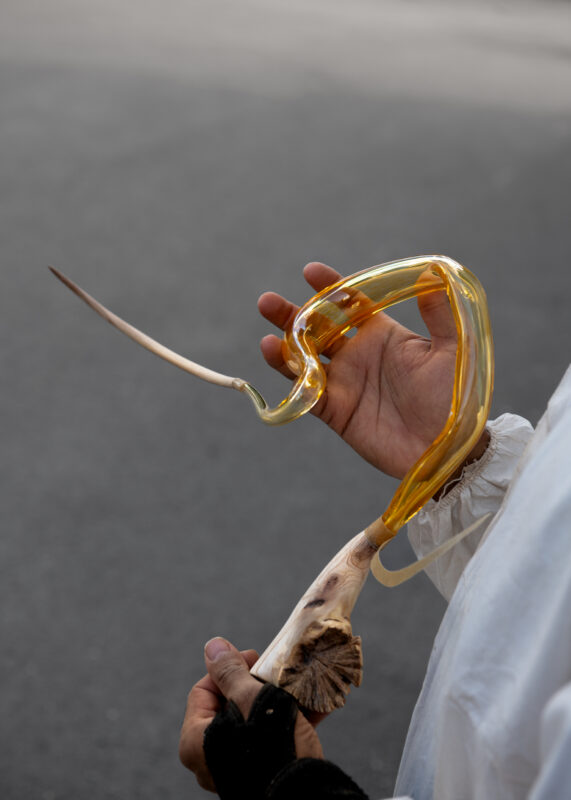
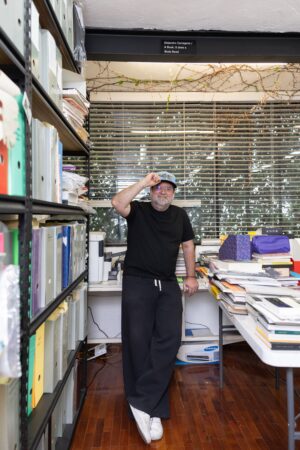
Ahmed Umar in his studio. Photographed for Art21 by Ivar Kvaal in June 2026.
Ahmed Umar in his studio. Photographed for Art21 by Ivar Kvaal in June 2026.
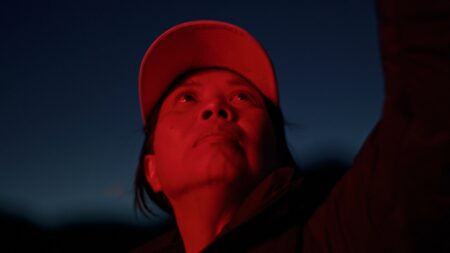
Documentation of performance Talitin, The Third at the Venice Biennale. Image courtesy of the artist.
Documentation of performance Talitin, The Third at the Venice Biennale. Image courtesy of the artist.
Exhibition documentation of Glowing Phalanges. Courtesy of the artist and Uli Holz.
Ahmed Umar in his studio. Photographed for Art21 by Ivar Kvaal in June 2026.
Ahmed Umar's studio. Photographed for Art21 by Ivar Kvaal in June 2026.
Exhibition documentation of Glowing Phalanges. Courtesy of the artist and Uli Holz.
Ahmed Umar in his studio. Photographed for Art21 by Ivar Kvaal in June 2026.
Ahmed Umar's studio. Photographed for Art21 by Ivar Kvaal in June 2026.
Support for Art21’s READ comes from the Fleischner Family Charitable Foundation.
Interview conducted by Ruba El Melik for Art21 in April 2026. Original photography for Art21 by Ivar Kvaal, all additional photography courtesy of the artist.
Ruba El Melik is a writer from Sudan. Her writing is published in Africa Is Now, Acacia Magazine, Mizna, SAND Journal, and LOLWE. She is the author of (Un)Doing Resistance: Authoritarianism and Attacks on the Arts in Sudan’s 30 Years of Islamist Rule (Andariya, 2022).