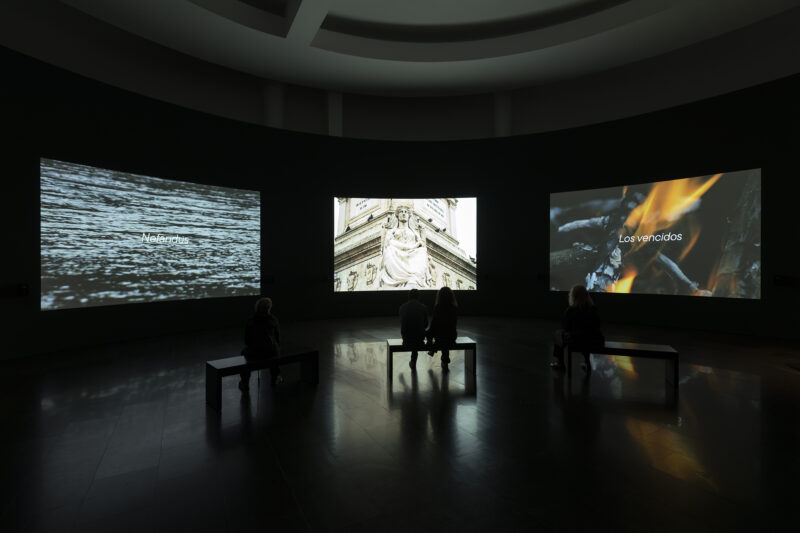
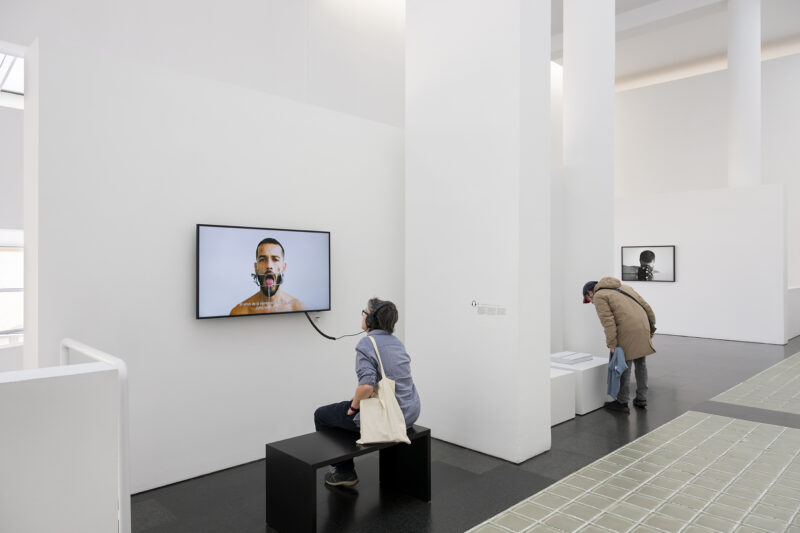
Phillip Pyle—Pleas of Resistance, your 2025 survey exhibition at MACBA spanned nearly 30 years of work. I’m sure that organizing the show brought up a lot of forgotten materials or repressed memories. What was the process of conceptualizing that show? Did new things come to light?
Carlos Motta—It began as an invitation from Agustin Pérez Rubio—co-curator of the exhibition with María Berrios—with whom I had worked a few times in the past. He thought that I had come to an age and had a body of work that merited looking back and producing a mid-career survey exhibition.
It has been a privilege and a beautiful exercise to walk this path guided by somebody else’s hand. I hadn’t really paid close attention to making sense of my complete body of work in the way that a curator does. It has been interesting to realize that, ultimately, I have been concerned with a few key topics and ideas throughout my whole production, and I have deployed them in the work in different ways, over and over again.
PP—The way that you look at history is very particular–you’re often looking at the falsity of dominant historical accounts. Your mode of historiography is also quite hauntological at times—the past never just belongs to the past in your work, and there’s always this recursiveness to time. Did your particular way of looking at history impact how you organized the material in the exhibition?
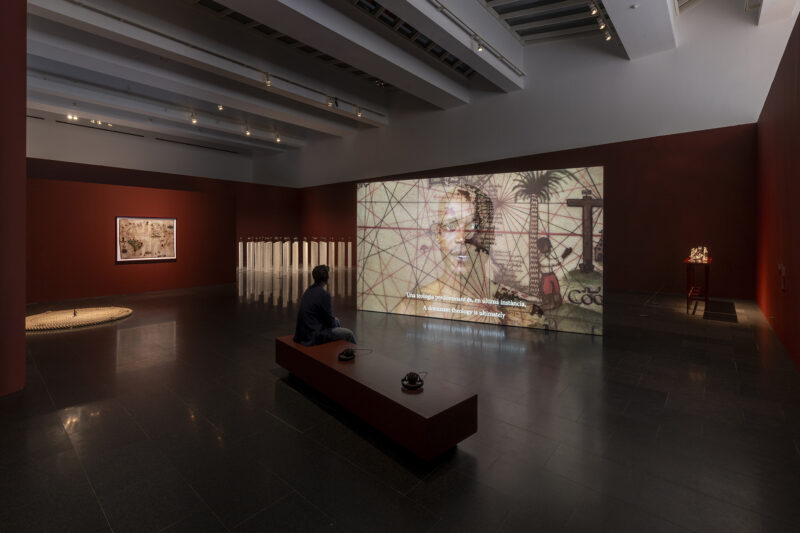
CM— I think there’s something Benjaminian in my thinking about the role and representation of history, and in the cyclical nature in which history features in my work. Each curatorial chapter in the exhibition is anchored around a historical theme. The first chapter, for example, is called “Queering Colonial Narratives,” and it presents the works that I have done looking at pre-Hispanic Indigenous artifacts and colonial archives. This chapter anchors itself in the pre-modern era, thinking about how it became a definitive moment for the creation of restrictive identity categories that are reproduced in the present.
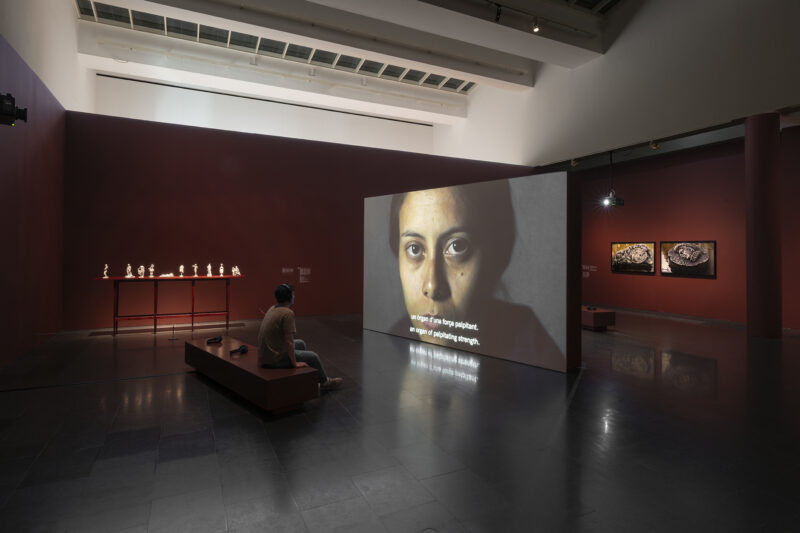
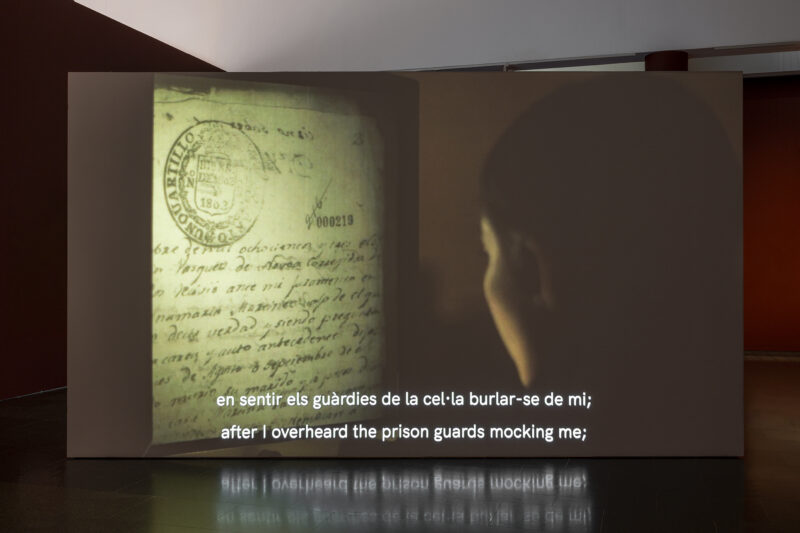
Those works present figures that have entered historical records through abjection and repression. For example, one of the characters in my film Deseos / رغبات [Desires] (2015) is Martina Parra, whose story entered the colonial archive at the beginning of the 19th century because she was denounced by her employer when she was working as a maid. Her boss claimed that, even though she had a female body, she got an erection when she was aroused. That was an aberration in her mind and also in the eyes of the law, which merited scrutiny.
This archival record immortalizes Martina as a “hermaphrodite” and narrates her encounters with colonial institutions: the Church, Medicine, and the Law. The case tells of her experience with medical doctors who examine her body, take measurements of her breasts and clitoris, and determine that the latter is larger than it “should be” based on the standards medicine has come up with to think about what bodies should be labeled male or female. She had interactions with lawyers who, again, apply specific frameworks around sex and gender, and dump them onto her. She also faces Catholic priests who find her sinful because her body defies the religious idea of sexuality as only a vehicle for procreation. All of the ways in which this character is built in the legal case are never about who Martina Parra actually was, as a subject, but through the institutional lenses that turn her into an example.
In my pieces, I work against that colonial construction of knowledge(s) but, simultaneously, I work with ghosts. Hauntology makes sense to me because working with the ghost of Martina, for instance, counteracts the way in which she exists in the public imagination, not as a person, but only as a historical account. From that perspective, different filmic strategies or forms of storytelling emerge.
Martina speaks out of sync with time. She doesn’t exist within a linear narrative. She’s self-critical and self-reflective of her own history. She can step in and out of her body as it is inspected and judged by men. She becomes a free agent through being “liberated” from the constraint of the archive. You would ask, “Who are you to liberate this ghost from the archive?” The short answer is, I made a pact with the ghost. At some point, in a dream, I was given permission to work with these stories and I took the liberty to do it.
This has been a key strategy for my work, to expose how the normative accounts that we deem “History” are mere fabrications—and we have the right to dismantle the apparatus that created those accounts.
PP—How do you balance the imperative to bear witness versus the desire to produce new representations?
CM—The desire to look back was not central for me at the beginning. In many of my projects I deal with present-day LGBTQI+ issues politics and work with living activists. At some point however, I needed to understand how discrimination around sex and gender developed, which is when I understood that I had to look back in time. I wanted to understand the genesis of ingrained categories of oppression in society.
For example, I became interested in specifically learning about the genesis of the category of the Sodomite. Where did it come from? Where was it first enunciated? How did it become a legal tool in history? In the present, there are over 60 countries in the world where it continues to be illegal to practice sodomy. So, I needed to go way back, because these histories began, in the case of sodomy, in the 11th-century with the fascinating and troublesome figure of Saint Peter Damien.
At this stage, I started to understand that, arguably, the struggle for LGBTQI+ rights and representation began many centuries ago and looking back critically was important to understand these processes. My work took a U-turn, and I stopped working specifically with contemporary issues. I allowed myself to look and feel backwards, which meant that I had to make decisions in terms of my methodology and choice of medium. At first, I was working most intently with documentary and interview-based work. Since I couldn’t interview people from the 11th-century, I turned towards other filmic strategies, such as film essays, fiction, character building, etc., to engage the past.
We are constantly bearing witness to the atrocities that happen in the world today. And my responsibility as a maker leads me to believe that bearing witness is not enough. So, I have chosen to work diligently with things where I think my involvement can result in some productive engagement and produce critical ways to think about history.
PP—On the other hand, some of your past works addressed historical injustices with a more active sense of activism or even militancy.
CM—One thing you realize as you age is that artists have many lives and engage with things differently at different moments of their life. The question of militancy and a more direct form of activism was urgent for me in my twenties. I resisted being identified only as an artist and I was also actively engaged in a personal and communal conversation around what political art could do.
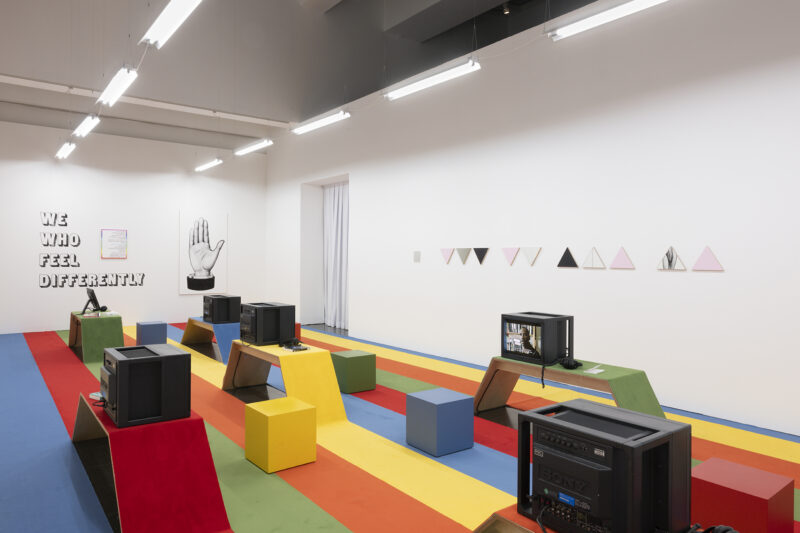
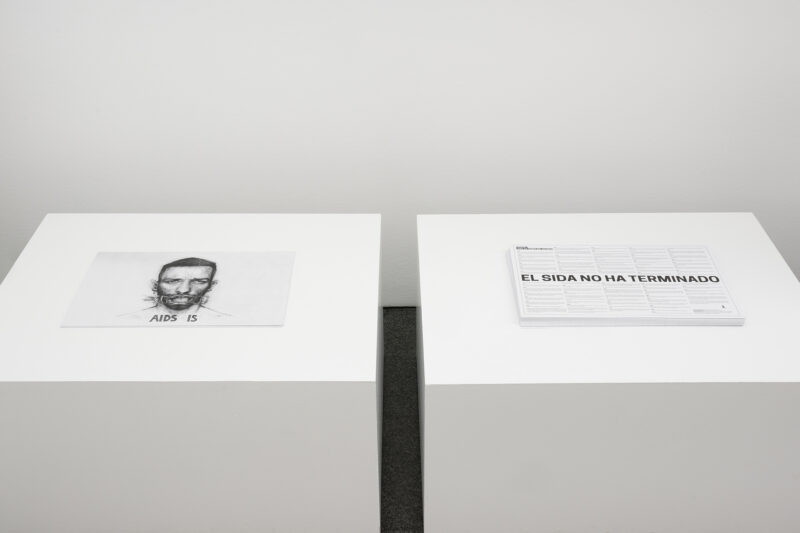
For example, my 2006 piece A Brief History of U.S. Interventions in Latin America since 1946—which has become very relevant again today because of the rampant U.S. interventionism in the present—was an attempt at having a conversation with practices that were pushing the boundaries of the discipline and its institutionality. A Brief History is a poster—freely distributed inside and outside of art institutions—that revisited histories of U.S. interventionism in Latin America. It departed from the work developed by Artists Call Against U.S. Intervention in Central America and Group Material in the 1980s and centered cultural production in tandem with historical revisionism and institutional critique.
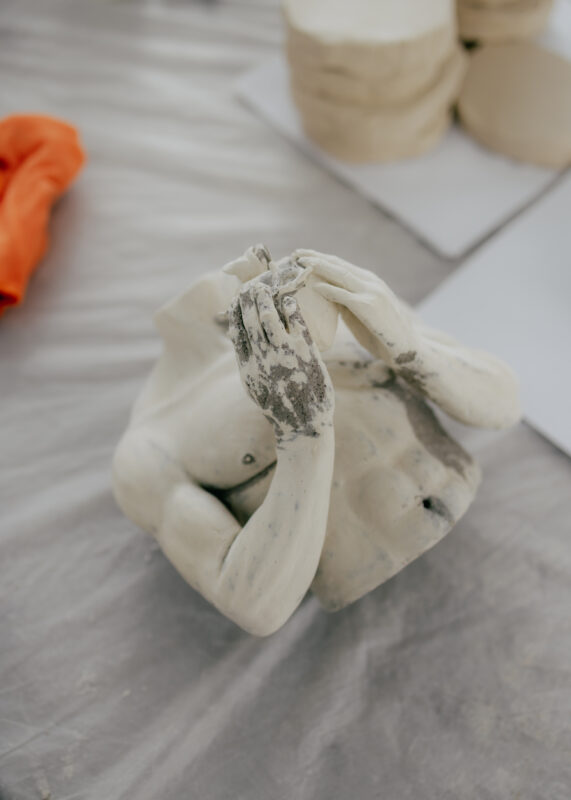
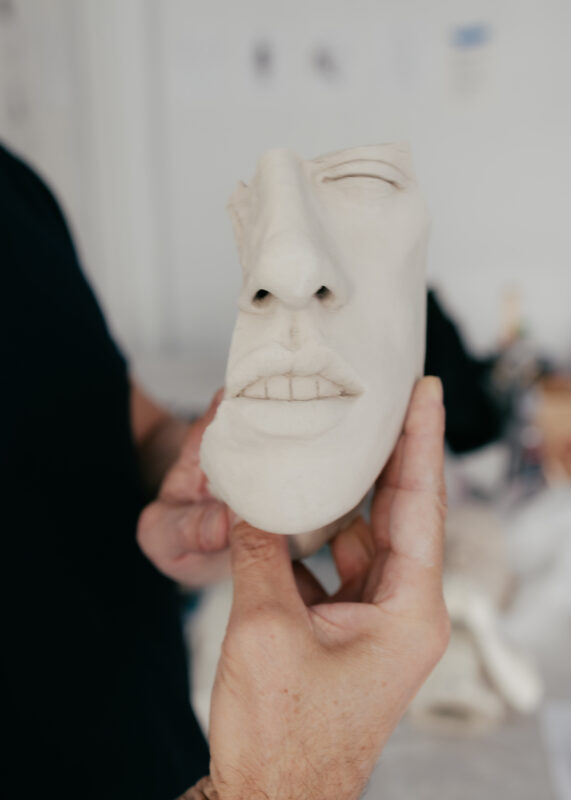
I had grown disillusioned with the ways in which art could, or could not, have a political function of effect—given the profound contradictions that define its institutions and their relationship to neoliberal capitalism and the forms of inequality it perpetuates. This led me to produce works that reflected upon this and I embraced a shift toward engaging with histories of film, producing self-reflective video essays, sculpture, and installation, and understanding that museums and exhibition spaces are never neutral. The ways in which I engaged with institutional spaces were not to simply to come in the space and say, “My work is political,” but, rather, to engage the politics of (art) sites and spaces through the politics of medium, discipline, and form. At that point, my work took a turn, and I stopped prioritizing only the political drive. I got engaged more broadly with issues of political history and representation in art and cultural practice.
PP—Did this shift in interest to the politics of form and aesthetics precipitate you to look directly at your artistic antecedents?
CM—Yes, definitely. Once I found new foundational ground and had less of the urgency to burn everything down and change everything now, I started to have a conversation with my own lineage. I’ve had a long conversation, both privately and in some of my works, with Goya, for example, Goya was an activist artist whose work changed the political imagination, but also documented atrocities in documentary ways—while pushing the medium of drawing and painting, and art in general, to a very heightened place. I had a similar rapport with Mapplethorpe, too. When I was a gay teenager coming to terms with my interest in becoming a gay man who lived amongst kink subcultures in New York City, I idealized Mapplethorpe until I confronted him for his issues. Other key figures in my world include David Wojnarowicz, Harun Farocki, Pedro Lemebel, Rainer Werner Fassbinder, and Pier Paolo Pasolini.
PP—It’s interesting that you describe your older interest in political art as a desire to burn things down, because I do still sense this iconoclastic streak—but in a way of pushing form—in your newer works, too. Does a polemical or critical position feel like the only natural option for you?
CM—As a critical artist trying to justify making work in this perfectly fraught system that is the art world, you need to find ways to endure. Losing criticality would mean losing oneself to a system that is just there for profit and capitalist exploitation.
There’s very little substantial change that I can affect with the work—if by change, one means changing structures, altering institutions, etc. But the great political potential in the work is actually speaking to an audience. In order to do that, tools of propaganda don’t work. Rhetoric doesn’t work. Slogans don’t work. In order to engage somebody and really be able to influence the way they think about certain issues, their involvement with those issues, there has to be an engagement with form and history. That is where political art is at its most successful. It is, as Walter Benjamin says in “The Author as Producer” in 1934, “An author who teaches writers nothing, teaches no one.”