Results 30–40 of 66


Printmaking and Natural History Artists
Walton Ford
Artist Walton Ford discusses his printmaking process, and the story behind his 2002 print Compromised.
William Wegman
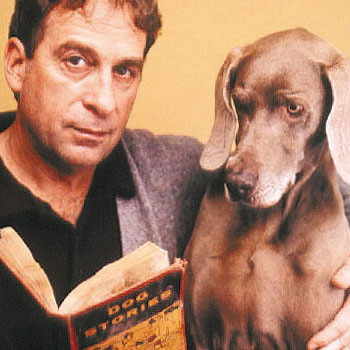
William Wegman’s interests in areas beyond painting led him to photography and the then-infant medium of video. A central figure in his photography and videos, Wegman’s dog Man Ray became known in the art world and beyond for his endearing, deadpan presence. In 1972, Wegman and Man Ray moved to New York. In 1986, a new dog, Fay Ray, came into Wegman’s life; and soon thereafter another famous collaboration began, marked by Wegman’s use of the Polaroid 20-by-24-inch camera. With the birth of Fay’s litter in 1989 and her daughter’s litter in 1995, Wegman’s cast of characters grew.

“Blueprint for a Landscape”
Sarah Sze
Artist Sarah Sze shares the process behind her immersive installation Blueprint for a Landscape (2016) at the Second Avenue Subway’s 96th Street station. This text is excerpted from an interview conducted with the artist in February 2016, just prior to the installation of the work.

Beauty & Memory
Fred Wilson
Fred Wilson discusses the power of beauty, and the conceptual matrices behind each of his works.

Family History and the History of Objects
Kiki Smith
Kiki Smith talks about the roles that her family, domesticity, and death play in her work.

Christian Marclay
Christian Marclay was born in 1955 in San Rafael, California, and raised in Geneva, Switzerland. For more than thirty years, Marclay has explored the relationship between the visual and the audible through a variety of media, including sculpture, video, performance, collage, and music.


Louise Bourgeois
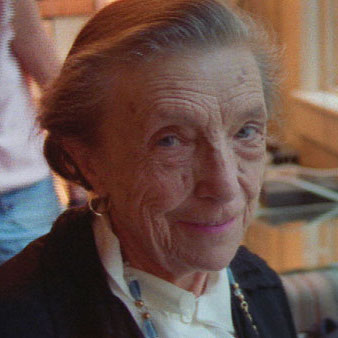
Louise Bourgeois was born in Paris in 1911. She first studied mathematics at Sorbonne University before pursuing a degree in arts at various schools around Paris, including the Ecole du Louvre, Académie des Beaux-Arts, Académie Julian, and Atelier Fernand Léger. In 1938, she immigrated to the United States, continued her studies at the Art Students League in New York, and began making sculptures on the roof of her apartment. Bourgeois’s early sculptures were composed of groupings of abstract shapes, often carved from wood. By the 1960s, the artist began to execute her work in rubber, bronze, and stone, and the pieces themselves became larger and more referential to what has become the dominant themes of her work: her childhood, familial trauma, and loneliness.