Interview conducted for Art21 in May of 2025 by Jurrell Lewis. Original photography for Art21 by Timothy O’Connell. All production stills from the Art in the Twenty-First Century Season 12 episode “Between Worlds.” © Art21, Inc. 2025.
In the Studio
Meerkat Media Cooperative tackles challenges in community


Jurrell Lewis—What is Meerkat Media Cooperative? How did it come together, and how do you describe it to someone who doesn’t know what you do?
Eric Phillips-Horst—Meerkat Media is an organization made up of people who share an artistic vision, values, ethos, equipment, brains, and creativity.
Bryan Chang—We started twenty years ago as a loosely defined collective of folks trying to share resources to make films and art together. Since then, it’s developed into these two components: the cooperative which produces films for hire, and the collective which is a space for artists to workshop projects and share knowledge and resources.
We are trying to make a space so that we can all be sustainable filmmakers, artists, and creators in a world where it’s hard to do that for a living.
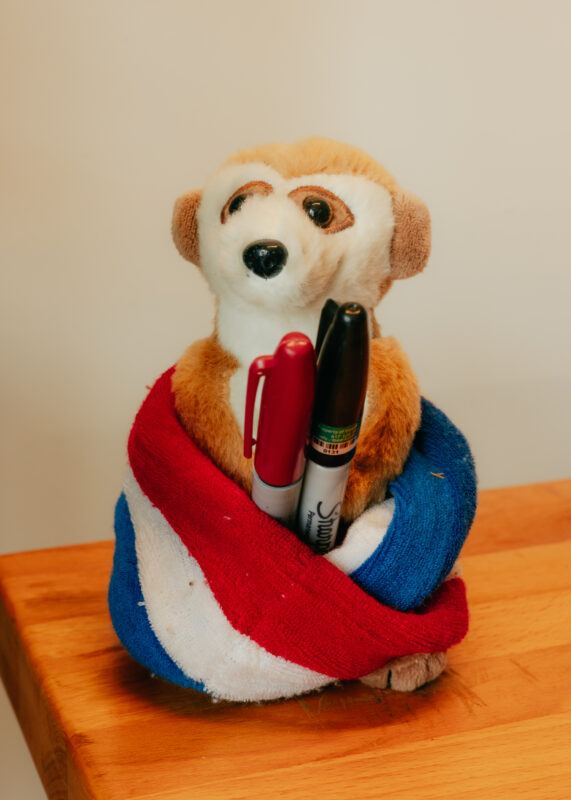
EPH—Another thing that we do at Meerkat is work with each other in different contexts on all of the projects we do. One of the reasons we’re named Meerkat Media is that, in the wild, meerkats switch jobs all the time.
JL—In many artist collectives, the final works are authored collectively and the collective is united by a shared aesthetic or artistic vision. I’m curious if this is the same for Meerkat?
Zara Serabian-Arthur—When we started, we were enamored by the idea of a collective vision and voice. A big part of our growth over the last twenty years has been exploring the space between the individual and the group and asking how the group can support all of us as individuals in developing and refining our own unique voices. Where do we want to step aside as a group to support an individual voice and ensure that they have space to grow and express themselves? Where are the places of strength in our shared authorship and ownership?
The Art in the Twenty-First Century episode is a great example of the strengths of both of these approaches. Each of the artist segments is directed by individual directors and crews who came to that piece with their own set of ideas and then were aided by Bryan, the episode director, who was responsible for the overall vision. Through the brain trust of the group, we were able to develop a cohesive aesthetic and style that allows our individual voices to exist in a space where it is legible for an audience.
JL—Since you’ve brought up “Between Worlds,” I’m curious to know how the cooperative approached the first conversations around taking on this project?
BC—We’ve now had a long, fruitful partnership with Art21, and it’s always been a real pleasure to work on Art21 films. Working with Art21, we’ve found that each artist presents their own unique vision, world, and creative space. With four distinct artists in a single hour, “Between Worlds” seemed like a good opportunity to exercise our strengths here at Meerkat.
It was fun to discuss the artist–director pairings and see what made sense. We had particular strengths in different parts of the crew, like different languages spoken and different parts of the world that people are connected to. The pairings really felt natural, and each segment director, DP, and crew member was able to foster a close relationship with each artist as we went through production.
One of the coolest things about Art21’s pieces is that you’re tracking an artist as they work over a year. So, the opportunity to build a personal relationship, check in with them, and deepen that relationship as we filmed was really fruitful.
JL—The intimate relationships you developed with the artists and their practices are clear in the episode, but I’m curious to know how you approached translating or conveying these artists’ personalities, practices, and works in a documentary film.
Jeff Sterrenberg—It was slightly different for each artist because their works and personalities are so different.
Working on Tuan Andrew Nguyen’s segment was interesting because he’s a filmmaker. I was curious to see how we could work with that material and process in an interesting way. However, he’s also a sculptor, and that aspect of his practice made it possible to get all this other material and process footage.
Miasarah Lai—We focused on spending time with Tuan, we let him and the city he lived in dictate what and how to film. I personally was struck by scooter culture when we arrived in Vietnam: scooters dominate the streets, so I knew we would have to capture Tuan on his scooter! In a pack of scooters bungeed to Tuan’s assistant, we hit the streets and glided around him as I held a camera on a gimbal, capturing my favorite shot of the film.
Later, when we followed him down to New Orleans for his production of Amongst the Disquiet (2024), we similarly were following him around town and the dock where Vietnamese shrimp farmers process their catches for the day.
Leah Galant—When it comes to each of the artists, we’re asking, “What is the best way to elevate this work?” We’re really leaning on everybody’s strength as a crew member to tell the story in the best way possible.
For Sophie Calle, the work was conceptual and text-based, which was a really fun creative challenge to work with, and Sophie’s incredible personality made it really easy. Eric, the DP on that segment, as well as Bryan and Zara who edited the episode, helped me think about the best way to translate Sophie’s practice to film.
It was exciting to be inspired by Sophie’s work as an artist myself. I know that an ethos for Art21 is pairing artists with artists, and as filmmakers, we’re all artists and we’re learning from other types of art and other mediums. Engaging with Sophie’s world has meant a lot and made its way into my own work as a filmmaker.
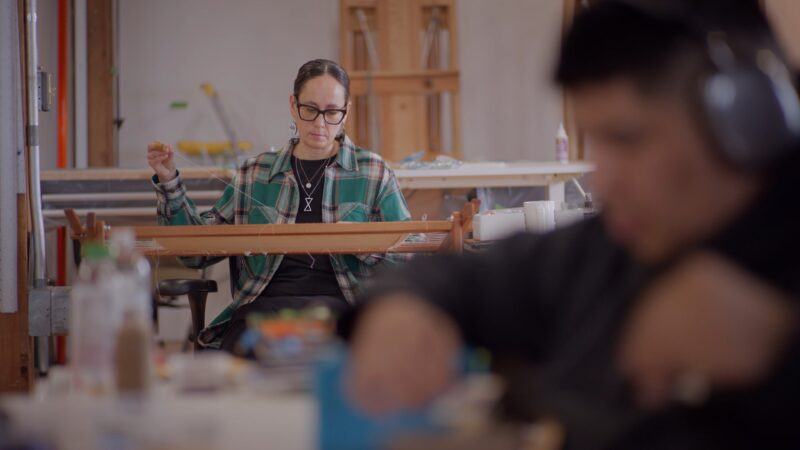
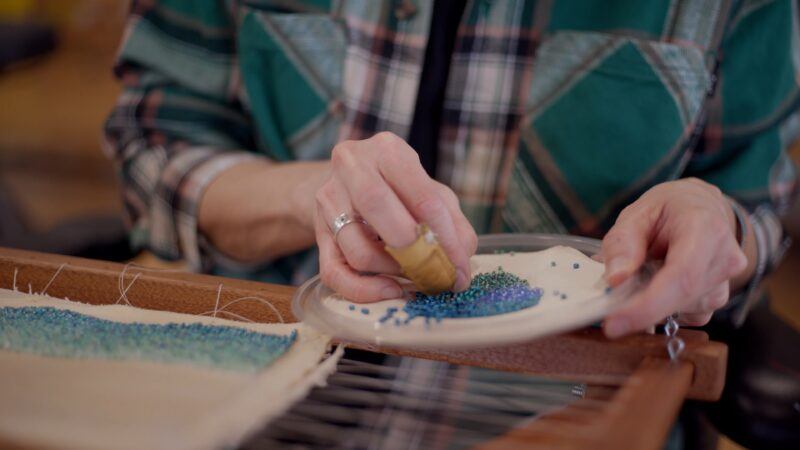
Travis Wood—With Dyani White Hawk, she gave us incredible access to her studio and world. When we started, we started small: we saw her do some beadwork, and then we got to see the piece unfold in the studio before it ever went to a museum. Then, there were little things I noticed when I finally saw it in an exhibition, like the way the light from people’s shadows and reflections really brought the work to life.
I’m hoping the viewer might see that in the way that I got to see it. When you see a bead up close, you don’t really get that much out of it, but then when you really get to see the whole thing and step back, it is so much more awesome. I wanted to get that sense of play and change in the segment, to really feel the texture of her work, and see all these little beads come to life.
Dyani lives in Minnesota where I was born and raised, but the filming process was eye-opening. I know a little bit about the Native community, but I really didn’t know that much. It was cool to see that, even at home, you can learn so much more. There are things happening right under your nose that you’re completely unaware of.
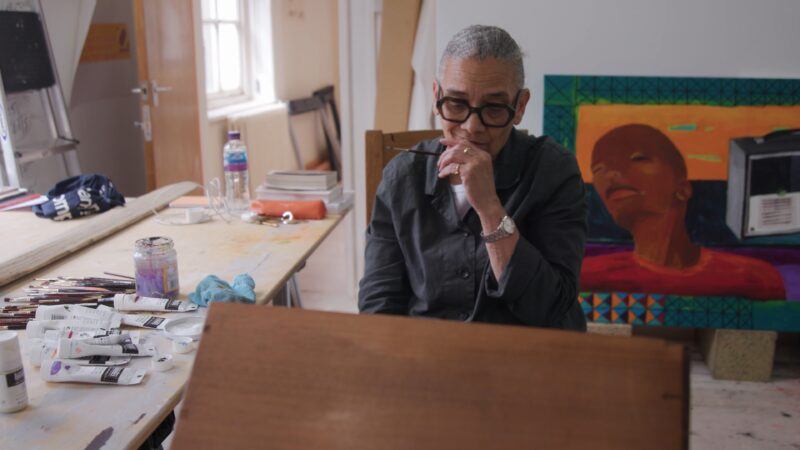
Sana Malik—I remembered seeing Lubaina Himid’s solo show at the Tate Modern following her Turner Prize win in 2017 and being transported by the worlds she creates. When I found out she was one of the artists for the episode, I was really excited to take a deeper dive into her expansive body of work.
I was drawn to how Lubaina’s work engages the audience and how she creates pieces that sit between “a question and an answer,” – they become stages for active participation. Her theater background and work on found objects bring these pieces into the site of encounter, and help people feel more connected to what she’s depicting: small daily activities, unseen labor, and vivid inner lives. I wanted the film to center on how she depicts daily experiences while also speaking to our own inner worlds. I really loved having the chance to see how she works, the process with which she selects her found objects and the relationships she builds. I found a care and tenderness in that when we were with her that I wanted to show in the film.
I also wanted the care she showed in her early work as a curator and convener of other Black and Women of Color artists in the UK in the 1980s to be a part of the work. I’m grateful for how much Lubaina shared on that and also allowed access to her archive.
JL—As we’ve discussed, each of the four artists in this hour have different bodies of work, have worked over different periods of time, and are in very different locales. Taking all of this into account, I’m curious how you decided what bodies of work and what kinds of work to focus on in these 13 to 15 minute segments?
BC—The exciting thing about these films is that you’re seeing these artists in action, you’re really seeing them at work, and hearing in their own words how they’re thinking about their practices. To that end, the starting place for us was what they are actually working on right now. What are they actually excited about, and what can we film that is real and present, that can come to life for an audience member?
When an artist has had a long and celebrated career with tons of work, we’ll certainly want to clue the audience into that back catalog and their seminal works. However, naturally, our filming will focus on what is happening for them right now.
TW—I got one of Dyani’s catalogs and I was a little overwhelmed, because there was so much good stuff. I had pages and pages of notes and questions. Then we had a call with Art21, and someone said, “It doesn’t have to be everything. It can just be right now.” Going in with that mentality just made the process feel less daunting, and hopefully more exciting for Dyani.
During the interview, we would naturally get to a conversation where I could tell Dyani was excited. She wasn’t having to repeat herself, I could kind of see that twinkle in her eye, and I knew that was a more exciting thread to follow.
JS—A lot of the choices made in the edit were deciding which parts of which of Tuan’s films we were going to show. He spoke about a lot of different films, but we were lucky he had two current in-progress projects and we got to go behind the scenes on his latest film, shot in New Orleans.
The fact that he has so many films of varying lengths meant that there was more than enough to use for the segment. And, since every film has physical objects associated with it, there was a ton of sculptural work for us to integrate into the film. His studio was filled with all kinds of things from different films; it didn’t feel like we had to dig around for anything.
Through the interview, we chose which pieces to go into detail about, which included both newer and older pieces, and ultimately it came down to which ones were the most thematically relevant and aesthetically interesting to consider in the film.
ML—I naturally gravitated to Tuan’s work because of the colonial critiques and how he was transforming colonial objects and histories into new narratives through his films and installations. As a co-founder of another group, Ethnocine Collective, we spent a lot of our time and work reflecting on colonial remnants in documentaries and anthropology, so I was excited to dive into another artist’s work and see how he grappled with that. His work tangibly speaks about the collision of culture and space between the living and their ancestors so there was so much to work with. Tuan is a fellow filmmaker, so I was selfishly excited to be on set with him to see how he works with his collaborators.
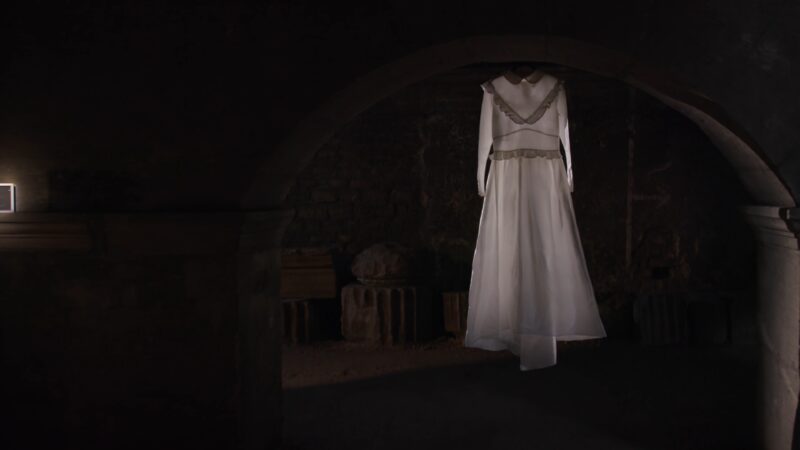
LG—Sophie is extremely prolific and has been doing this for so long, but we were lucky to capture this project in Arles, France, where she was conceptualizing a new work. The project in the Cryptoportique of Arles consisted of burying damaged artworks that she didn’t want to sell, throw out, or give away. Instead, she gave them a “proper funeral”.
She expressed vulnerability that you wouldn’t expect from someone so prolific, which is a testament to the fact that no matter how accomplished you are, if you’re doing something new or unexpected, you’re still putting yourself in a vulnerable position. It was a privilege for us to experience that with Sophie and for her to allow us in as she was building this new body of work.
That stood in contrast to her retrospective surveys at museums like the Walker Art Center and the Musée Picasso. Seeing the gravity of her work, while also witnessing her experimenting with a new project, was really interesting and exciting.
SM—Much of the decision-making depended on Lubaina’s upcoming shows, what she would be focusing on, and how that would tie into her larger body of work. We chose to focus on her most current exhibitions. Make Do and Mend was created specifically with The Contemporary Austin in mind, and the “strategy” paintings are really central to that show, showcasing how the audience can “strategize” around what’s being seen. Lost Threads was so expansive and disruptive in the space it was exhibited in, so it felt important to convey how her work disrupts the spaces it often exists in.
JL—Is there a next big project for the collective? Are there things that folks are excited about, that they are working on personally or with other members of the collective?
LG—We are all independently working on our own films all the time, which are supported by the group. I’m working on a feature documentary about memory and memory weaponization called Landscapes of Memory, and I’m editing that with Jeff.
We’re editing in our offices nearly every day and being able to work on that together while also getting the group support through camaraderie and community goes such a long way. Even though it’s very, very hard to be an independent filmmaker now when funding is evaporating, being in a community with people who are also doing it and who are encouraging and helpful is so important.
TW—I just made my debut narrative feature called Travel Companion, and this group definitely played a big part in that. Bryan edited the film, which was huge, and Eric was on set helping in a variety of ways. It’s not just about who’s working on the film, but being around other people doing things and seeing other people’s work get made that’s really helpful. In the Summers, Alessandra’s film was the first big narrative film of the group, and when you hear about a project and think “Oh, someone’s writing something,” that’s cool. Then it gets into Sundance and wins, which is incredible.
Just being in the same circle as these other projects, you absorb some of that energy through osmosis and you see that certain things are possible.
SM—I’m personally currently in development on a documentary about restitution through the eyes of a Nigerian-British poet in London, and am working on a feature fiction film about land theft and coastal development in Senegal. There’s a focus on post-colonial memory and complicated histories in my work, so it’s fitting that Lubaina was the artist I was able to work with on the episode!
Finding a collaborative project that we can all work on collectively is the dream and we are so grateful to have been able to collaboratively create this episode for Art21!
EPH—Artists need community. That’s one of the reasons we founded Meerkat, because we didn’t want to be alone, and you’re not as good of an artist when you’re isolated. You learn so much just from being around another person, whether it’s a skillset, confidence, or inspiration. That’s how we sustain ourselves as artists.
ZSA—Another project that we’re all working on is trying to figure out how we will survive in this industry at this current moment. I am grateful to have this cohort of folks to collaborate with because it’s a scary time for independent filmmakers and for almost all of our clients that we work with on our commissions.
Being able to figure out how to face these challenges in community with shared resources and support is a boon: it transforms the existential dread of an unsolvable problem to a shared project that we are collaborating on and bringing all of our diverse skill sets, experiences, and resources to.
BC—So, whoever’s reading this, hire us!


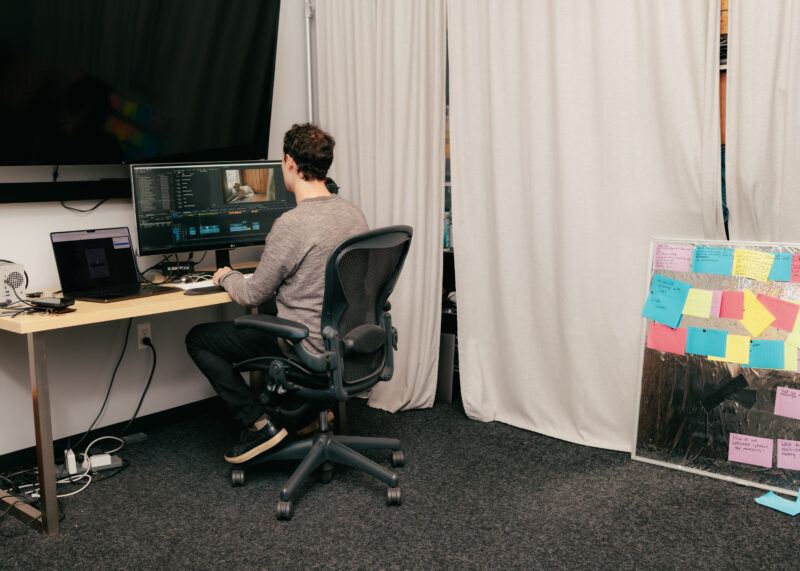
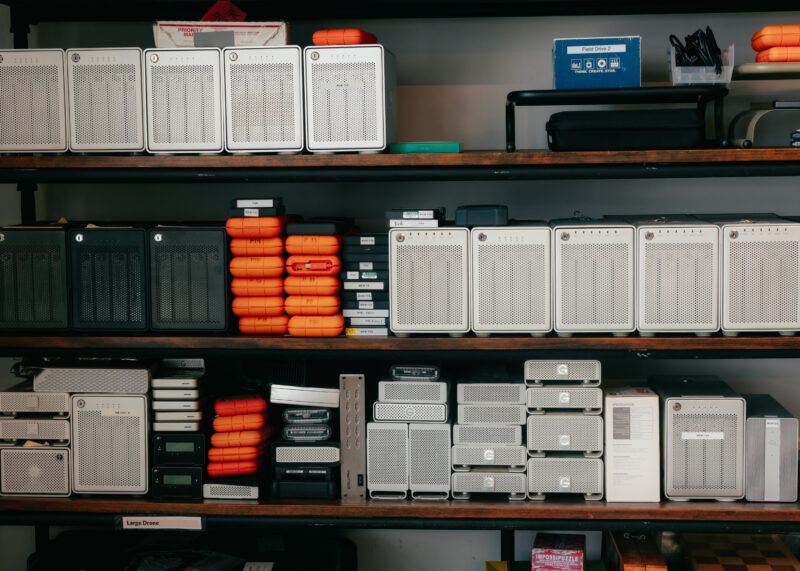




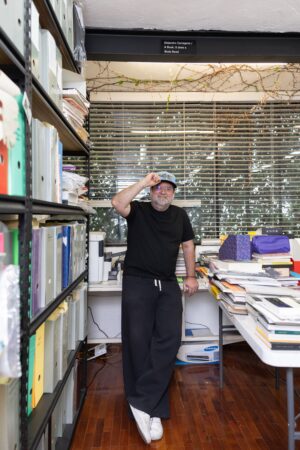
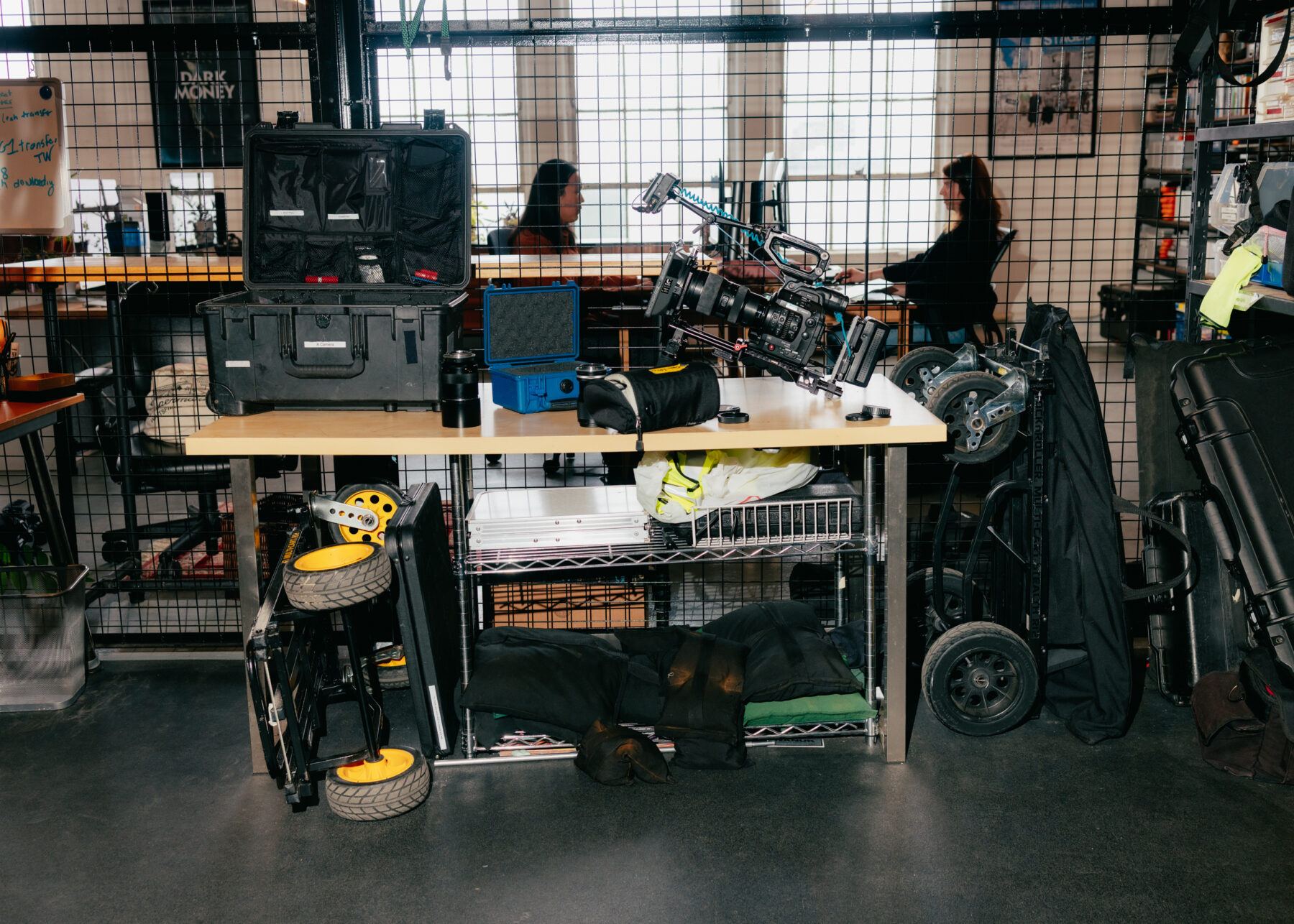
Meerkat Media offices, photographed by Timothy O'Connell for Art21 in May 2025.
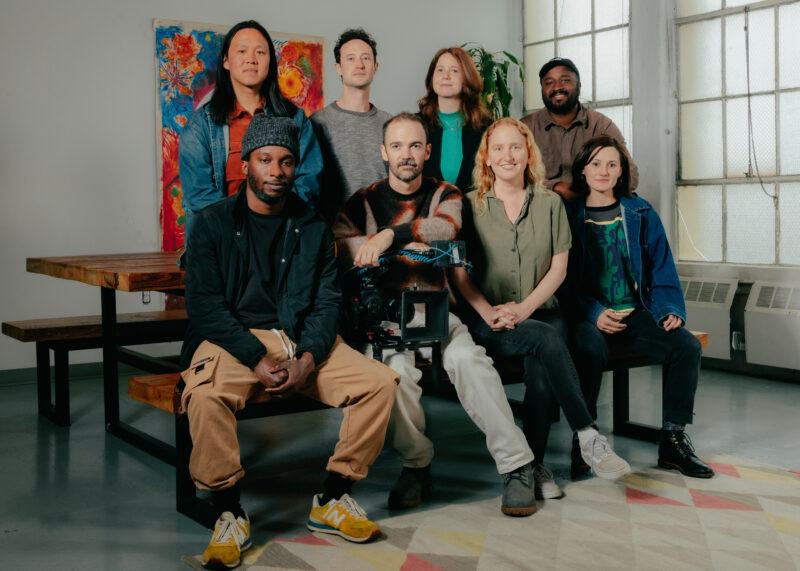
(L to R, Top to Bottom) Tristan Daley, Leah Galant, Jeff Sterrenberg, Bryan Chang, Eric Phillips-Horst, and Zara Serabian-Arthur, members of Meerkat Media Cooperative, photographed in their offices by Timothy O'Connell for Art21 in May 2025.
Meerkat Media Cooperative offices, photographed by Timothy O'Connell for Art21 in May 2025.
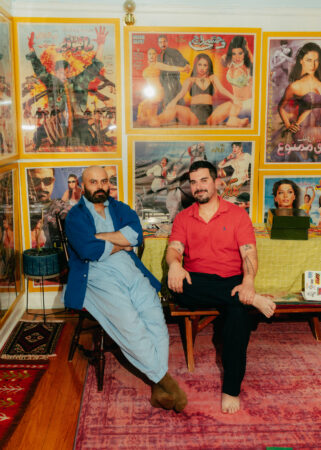
Bryan Chang and Leah Galant, members of Meerkat Media Cooperative, in their offices, photographed by Timothy O'Connel for Art21 in May 2025.
Meerkat Media Cooperative offices, photographed by Timothy O'Connell for Art21 in May 2025.
Eric Phillips-Horst, member of Meerkat Media Cooperative, in their offices, photographed by Timothy O'Connell for Art21 in May 2025.
Jeff Sterrenberg, member of Meerkat Media Cooperative, in their offices, photographed by Timothy O'Connell for Art21 in May 2025.
Meerkat Media Cooperative offices, photographed by Timothy O'Connell for Art21 in May 2025.
Eric Phillips-Horst, member of Meerkat Media Cooperative, in their offices, photographed by Timothy O'Connell for Art21 in May 2025.
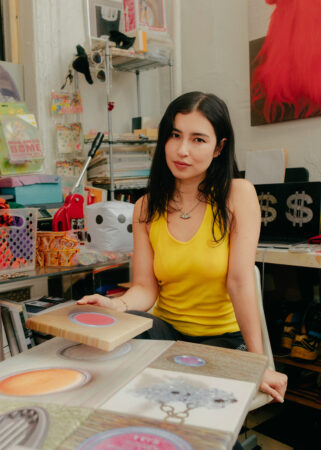
Zara Serabian Arthur, member of Meerkat Media Cooperative, photographed in their offices by Timothy O'Connell for Art21 in May 2025.
Tristan Daley, member of Meerkat Media Cooperative, photographed in their offices by Timothy O'Connell for Art21 in May 2025.
Production still featuring Dyani White Hawk, from the Art in the Twenty-First Century Season 12 episode “Between Worlds.” © Art21, Inc. 2025.
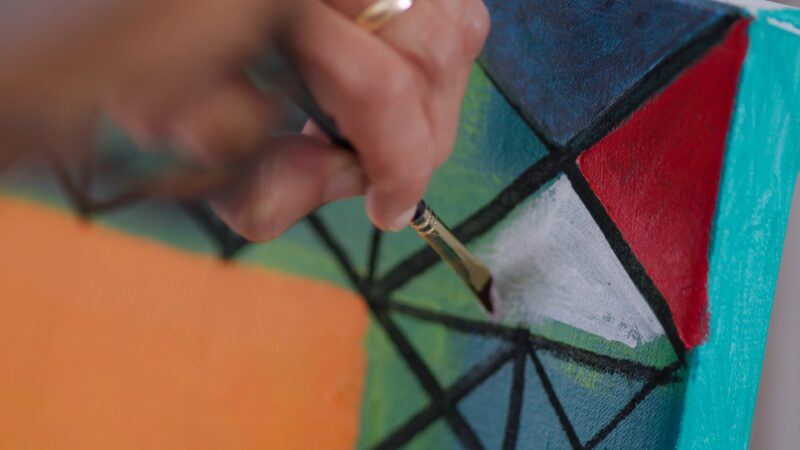
Production still from the Art in the Twenty-First Century Season 12 episode “Between Worlds.” © Art21, Inc. 2025.
Production still from the Art in the Twenty-First Century Season 12 episode “Between Worlds.” © Art21, Inc. 2025.
Production still featuring Lubaina Himid from the Art in the Twenty-First Century Season 12 episode “Between Worlds.” © Art21, Inc. 2025.
Production still from the Art in the Twenty-First Century Season 12 episode “Between Worlds.” © Art21, Inc. 2025.
Production still featuring Sophie Calle from the Art in the Twenty-First Century Season 12 episode “Between Worlds.” © Art21, Inc. 2025.
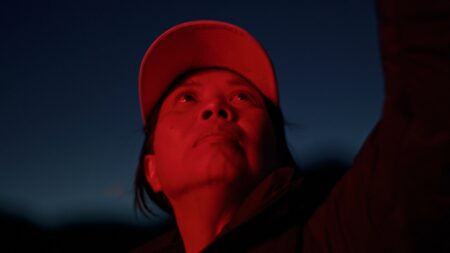
Production still featuring Tuan Andrew Nguyen from the Art in the Twenty-First Century Season 12 episode “Between Worlds.” © Art21, Inc. 2025.
Production still featuring Tuan Andrew Nguyen from the Art in the Twenty-First Century Season 12 episode “Between Worlds.” © Art21, Inc. 2025.