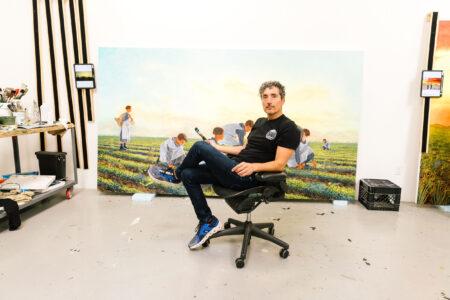
Ian Forster—Let’s start at the beginning. Where are we? Tell me about Loíza. What makes it special?
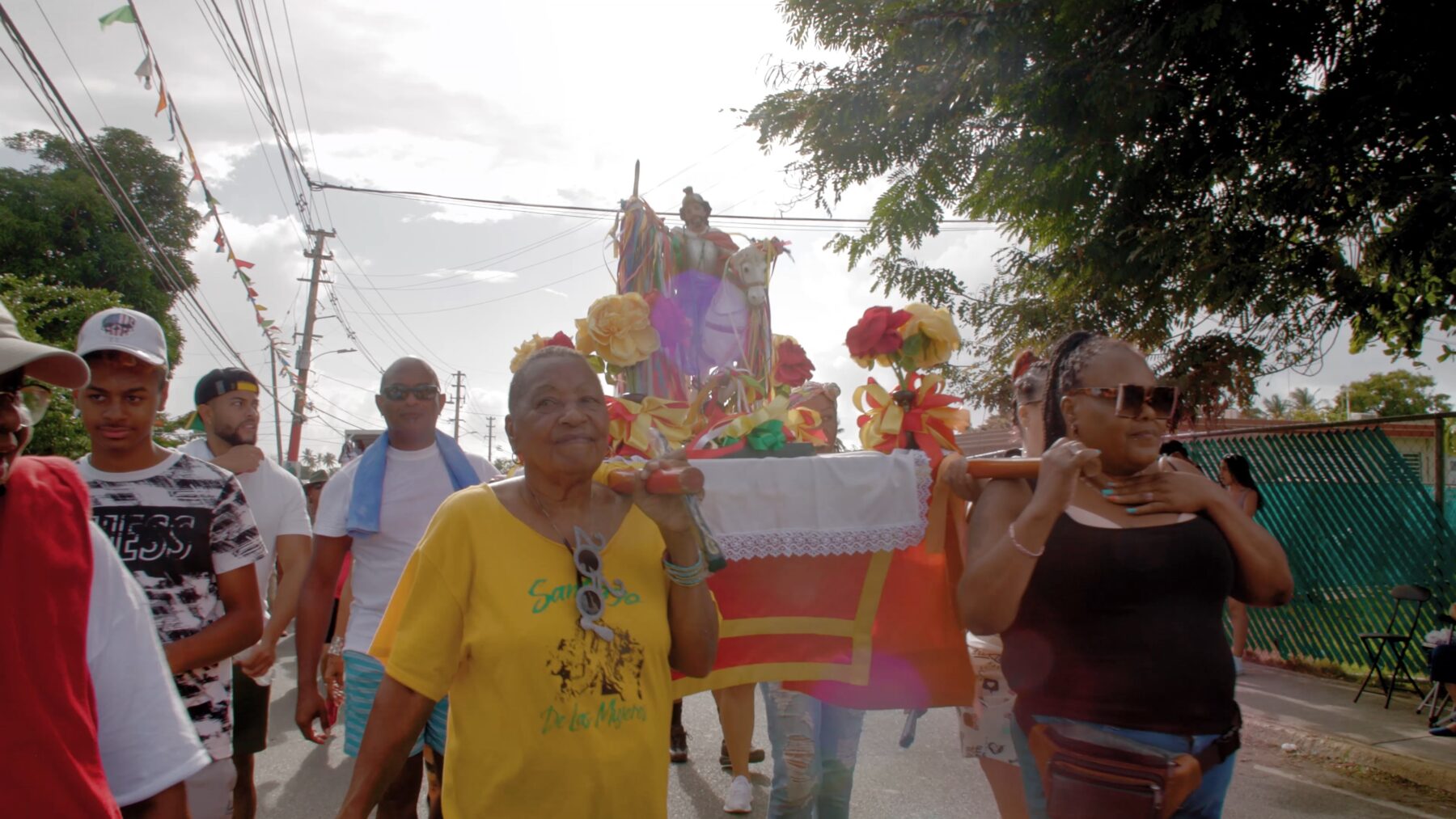
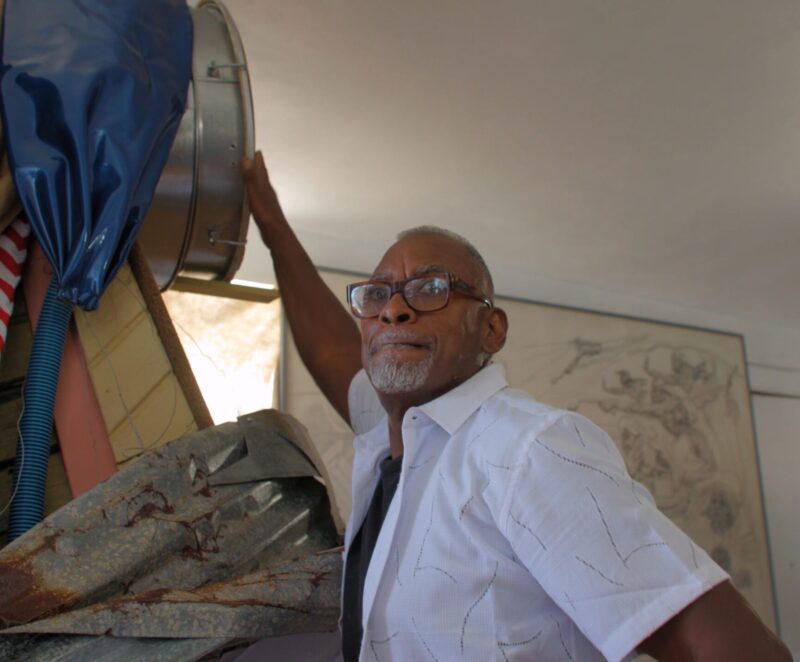
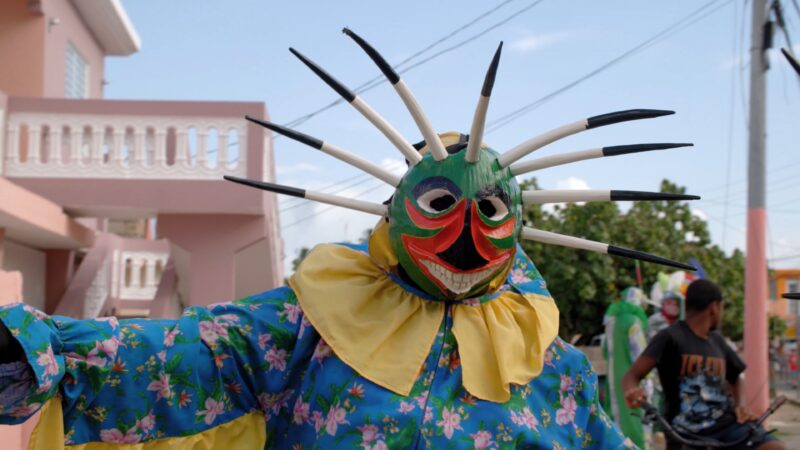
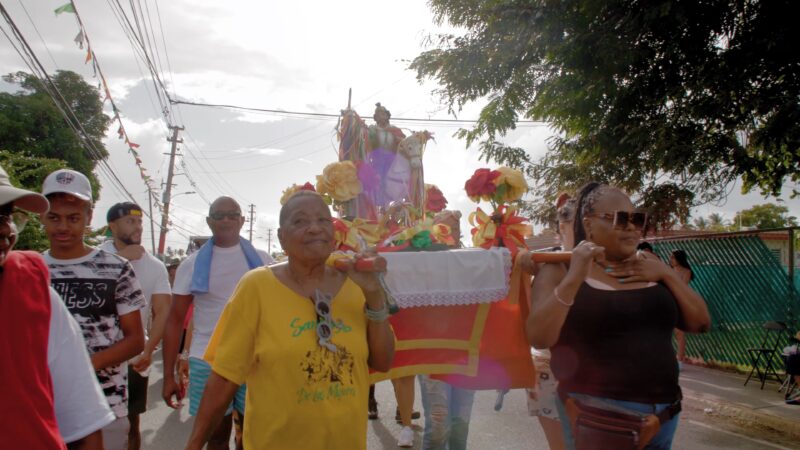
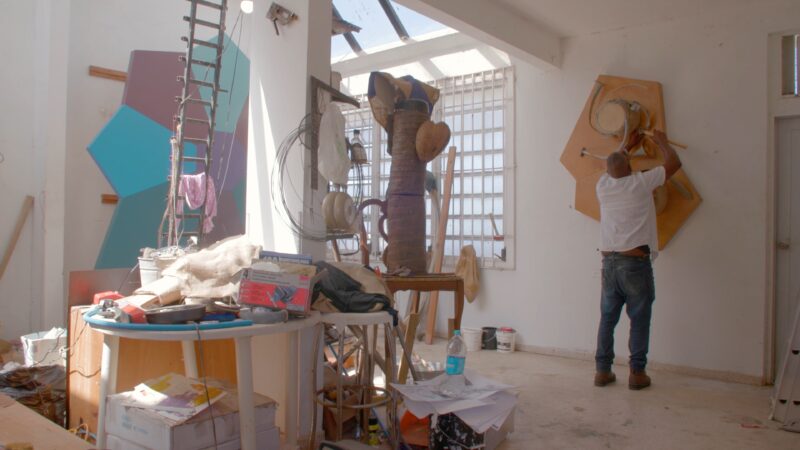
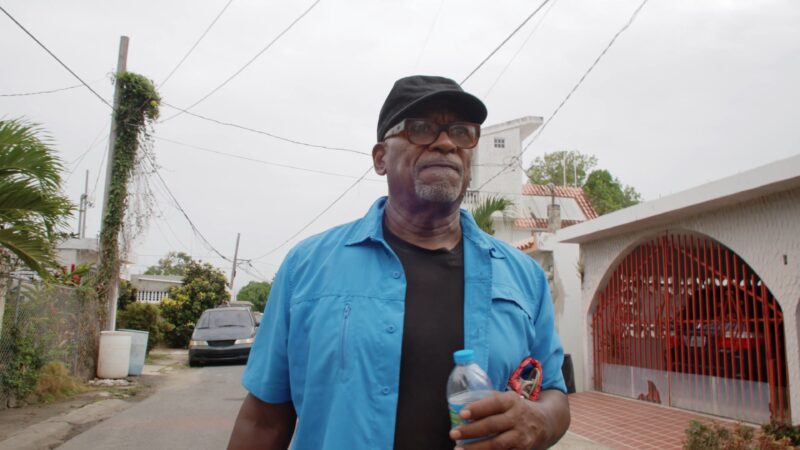
Daniel Lind-Ramos—I was born here in Loíza, Puerto Rico, which is the community where I work and live today. We are currently in the house where I was born. Now I use it as a studio for creating work, but also as a space where I invite people from my community to develop artistic projects. We are Afro-descendants, and our shared culture is very important. We have a very important festival called Fiestas Tradicionales en honor a Santiago Apostol, which includes processions where we wear costumes. The most notorious are the Vejigantes, las Locas, los Viejos, and the Mascaritas o Caballeros. These characters have specific African, European, and Indigenous influences. I would say that African heritage is particularly important here and can still be seen in the way these celebrations manifest. I like to play with that; it gives me opportunities to manifest them symbolically as visual expressions.
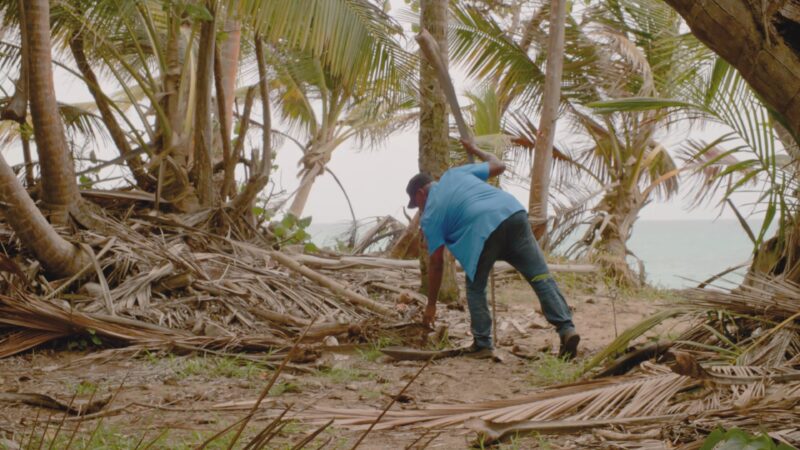
Loíza is also near the beach, which has become a desired destination for developers who are interested in building along its beautiful coast. Communities living in these areas have organized themselves to stay alert against actions that could affect their interests. At the same time, every year, we have, one way or another, an experience with the forces of the natural world. Hurricanes visit this region, often with their devastating consequences. We had Hurricane Maria, of course, and we are now experiencing erosion. The beach of Corovo, where I have my studio, used to be 20 or 25 feet long, and now there is no beach. There are cases where houses and roads have been destroyed by rising sea levels. That’s part of our life. These facts, among others, are always a theme of conversation, and in my art practice, they are, formally and narratively, a constant influence.
IF—What was it like growing up in this house?
DLR—Everybody in my house was doing something with their hands. My grandmother was a seamstress, my uncle Luis was a mask maker, and my other uncle was a cabinet maker. I remember that when I would wake up, everybody was in action. I wanted to do something too, and because the walls of my house were made of cardboard, I started drawing. Everybody was happy because I was participating. It was as if my family knew that if you did something with your hands, regardless of what that was, it was great. It was with my uncle that I had my first experience with brushes, paint, and pigment, learning to make masks.
IF—Since your first experiences with art were in your home and community, rather than in a museum, how do you think that impacts your artistic approach?
DLR—Being exposed to the variety of activities that took place in my house, which were all very common in our community, influenced my interdisciplinary approach to art practice. I do not limit myself to working within the walls of my studio; I also find materials on the beach, or walking around the streets, or sometimes a neighbor brings me something because they know I would use it. Many of these objects carry what I consider a “shared memory.” And I continue to construct my visual language that way.
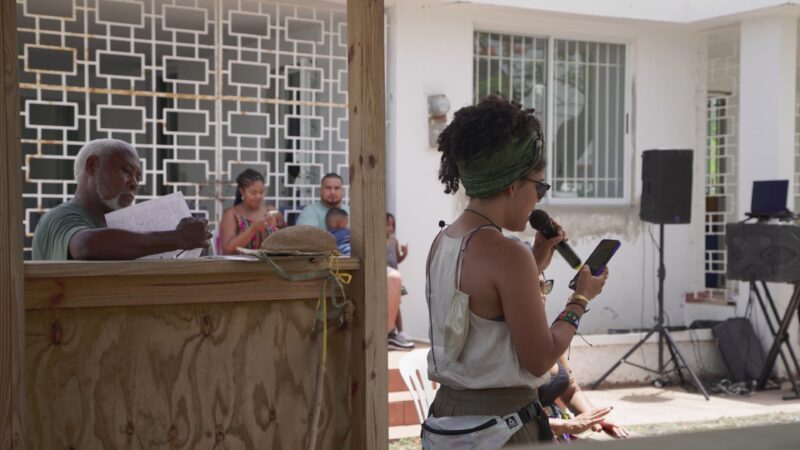
The community is an extension of my studio. Now that I have acquired this house, I have invited friends and family to showcase their talents. The idea is to utilize the place where I grew up and spent my childhood as a space for inspiration. For example, because I know many good chefs from Loíza, I once invited one to cook here and share his talent, alongside people who danced, sang, read poetry, or told stories. Different people, each creating art in their own way, gathered in one space.
IF—It seems that the work that you make now harkens back to early experiences of your childhood and community. Can you elaborate on that?
DLR—My intention with my practice is to remember.
When I’m making art, I am preserving those memories. I am finding a language, finding a process, finding materials that talk about those experiences, and somehow bringing something not new, but authentic in terms of what I was experiencing. Objects, combined with these experiences, do that.
IF—Your practice involves assemblage, sourcing, and piecing together different materials and mediums from your surrounding environment. How do you select the materials that you use in your artworks? Do the materials you choose have meaning to you before you assemble them with other objects, or do you create meaning once you join them with other objects?
DLR—I would say both. First, I have an idea based on an experience. It doesn’t necessarily have to be my experience. It could be the experience of a community member, or a collective experience related to Puerto Rico and the region. And then, somehow, I find an object, or the object finds me, and I incorporate that object into the idea. It’s a very organic way of organizing.
The materials I scavenge for have a colonial past. Everything with Puerto Rico is political. Coconuts were brought here from the Cabo Verde Islands in Africa by the Spaniards. Similarly, Hurricane Maria comes from that area. The palm trees and coconuts I use are often tied to a narrative related to the hurricane, as well as to the larger story of Puerto Rico and its relationship to colonialism.
It takes time for all the connections to form, because sometimes other meanings start to arise, and you have to keep on synthesizing, trying to get the meaning that you want. You have to be there all the time. You have to live with the work. Sometimes you’re sleeping when an idea comes. Now, I literally sleep with a notebook and pencil in bed with me so I can trap that idea.
IF—What is the role of beauty in your work?
DLR—I like to construct objects that have unity, because the way that something is constructed might provoke beauty. Even though I am using diverse materials, which may appear incongruent at first, in the end, that taste of unity is very important to me.
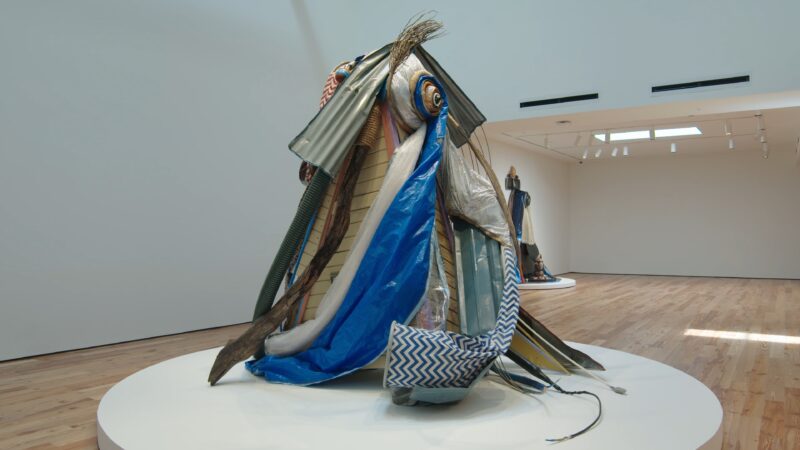
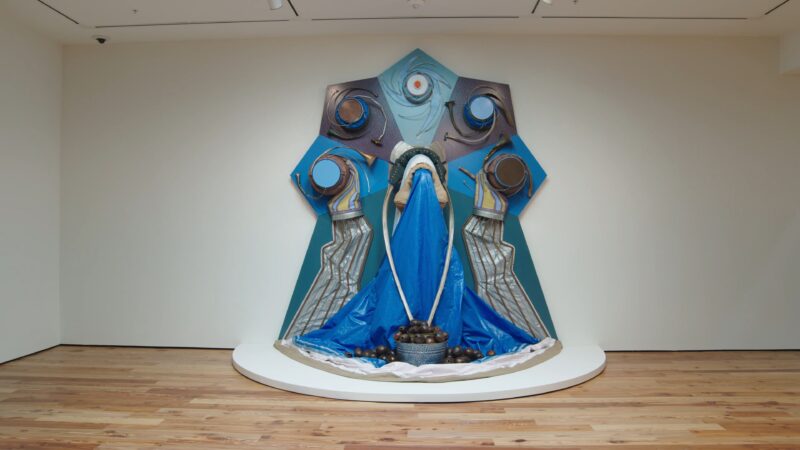
In my recent sculptures, the use of color as an element or symbol is very important. You could see a cool blue, a warm blue, and then a primary blue. After that, you might see a tertiary green-blue and then the shade of warm blue again. I chose to work in blue because it was the primary color I saw after Hurricane Maria, both from the sea and later from the blue FEMA (Federal Emergency Management Agency) tarps.
Even though these sculptures might look unfinished, the way I arrange them and play with them creates a sense of unity. There is beauty in that for me.
IF—In many of your works, such as Baño de María (Bain-marie/The Cleansing) (2018-2022), and Maria Guabancex (2018-2022), you make very specific references. Talk to me about them.
DLR—When Hurricane Maria hit, it changed Puerto Rico forever. I began collecting parts of fallen roofs and other debris because I knew I would do something with them. I collected FEMA tarps, which were very important because, at the time, everyone was curious about what FEMA would do to help. I also collected burlap to represent the sand and have incorporated palm fronds and coconuts because those were the first objects I saw after the hurricane.
Using these materials, I began working on a series of sculptures called Las Tres Marías (2018-2022). It was an experiment in making the same structure three times to investigate the possibilities of my practice. I was thinking about the name Maria in several different ways. First, after the hurricane, but also, as Mary, the mother of Christ.
For works like María Guabancex, I wanted to pair the religious with the natural. The word Guabancex originates from something I read by Ramón Pané, who cited it as the name the pre-Columbian people in this area used to refer to the natural force of a hurricane, which they considered to be a female force. So, Guabancex was a female force. Maria, the mother of Christ, was also a female force. When making this work, I wanted to show the contradiction, as well as the connection across time.
In Baño de María (Bain-marie/The Cleansing), I was thinking about the hurricane system in relation to global warming. They say that as the water gets hotter, our hurricanes will be stronger. That is why there were many baby hurricanes surrounding the mother hurricane, Maria.
I was also thinking about “Baño de María,” which is both a cooking process that uses indirect heat and a spiritual cleansing bath. The woman who invented “Baño de María” was a lady named Maria de la Andrea, from Africa, where Hurricane Maria originated. So I was thinking about the origins of everything, from hurricanes to global warming, and humanity, and how all that ties into the name Maria.
I kept thinking, “Oh, look at how nature creates and destroys.” I, too, am part of nature. I am creating with the destruction, and participating in destroying, because I have to take my materials from somewhere. That’s what I had in mind with these three sculptures.
IF—Your work travels all over the world, from places like Nottingham, UK, to Sarasota, Florida, and New York, but still remains in dialogue with Puerto Rico. How does your work respond to and connect with both local and universal experiences?
DLR—Regardless of where you live in this world, we all live in a community. We can all speak from that experience and connect with others that way. In my work, yes, I want to filter everything through the aesthetic of Loíza. At the same time, I do not only want to talk about that. I also want to talk about politics, immigration, and the relationship between Puerto Rico and the United States. There are still so many untold stories related to these islands, especially regarding immigration, and I think that’s something I have to respond to.
The experience of the hurricane, housing, or immigration, are not exclusive to Puerto Ricans. The experience of catastrophe and your reaction to it, there is a universality in that.