Support for Art21’s READ comes from the Fleischner Family Charitable Foundation.
Interview conducted for Art21 in February 2026 by Noor Tamari. Original photography for Art21 by Crista Leonard. All additional photography courtesy of the artist.
February 11, 2026
Look for the plus icon next to videos throughout the site to add them here.
Save videos to watch later, or make a selection to play back-to-back using the autoplay feature.
Alia Farid looks inside a hall of mirrors
Noor Tamari—Your work exists on the borders between two things: the Iraq/Kuwait border, artificiality and reality, personal and public, oil and water, past and present, even your two identities as a Kuwaiti and a Puerto Rican. How do these dichotomies drive your work conceptually?
Alia Farid: The world is obsessed with borders, but in my practice, and in general, I prefer to think of things as a continuum. I’m neither bound to nor averse to making work that relates to the places I am from. More importantly, I’m interested in making my own connections and readings of places and things, and practicing a way of being in the world by cultivating a sense of belonging vaster than anything prescribed.
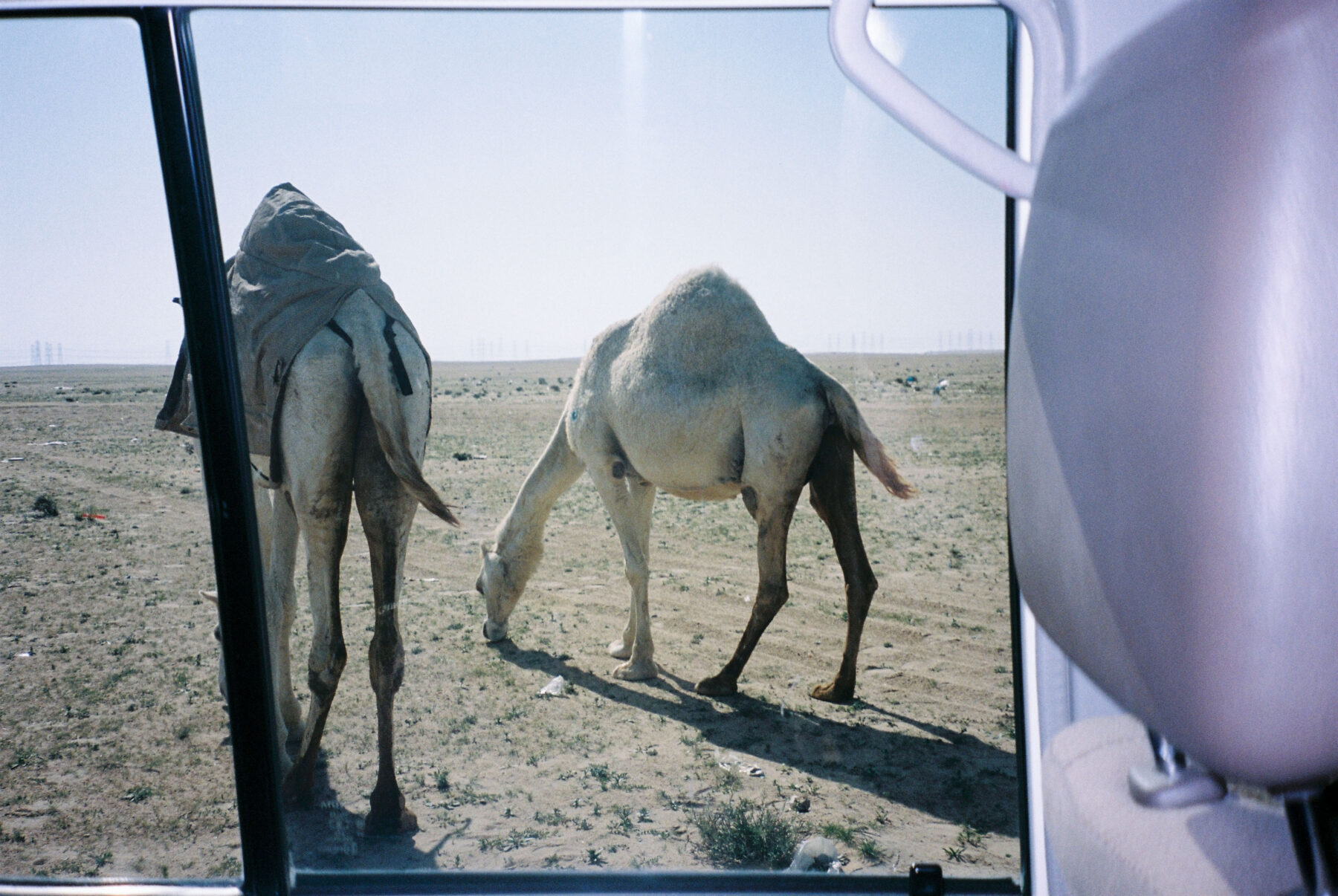
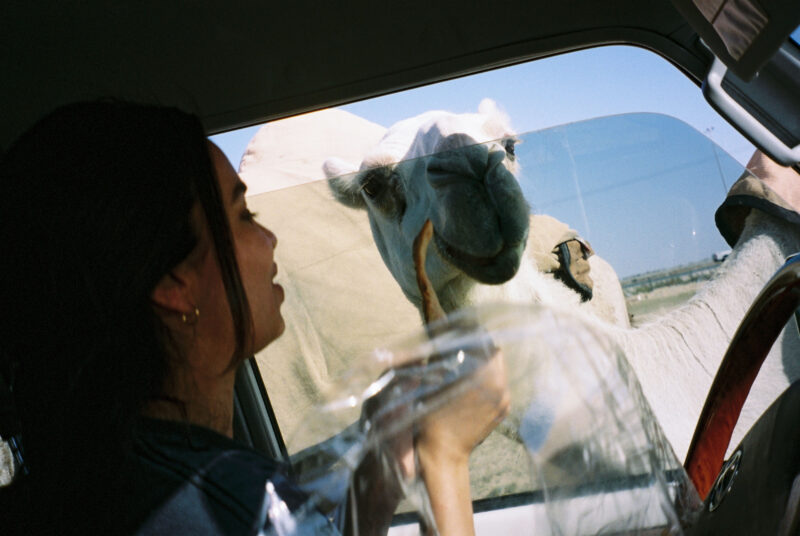
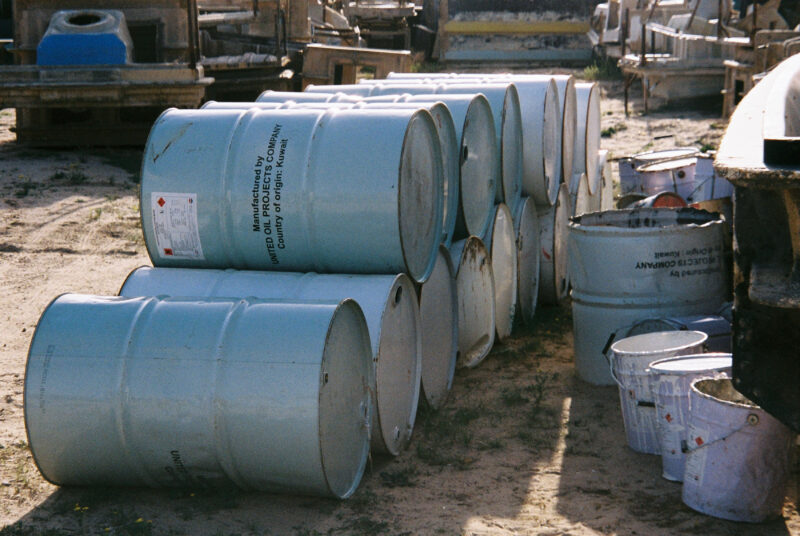
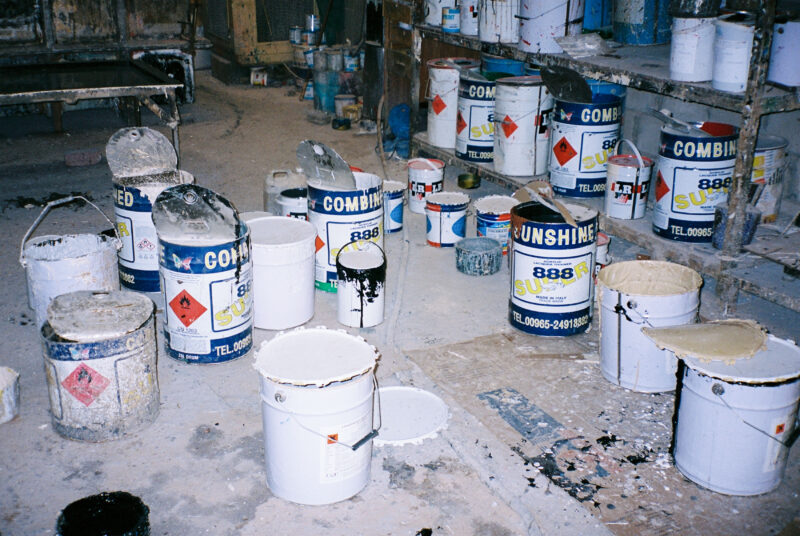
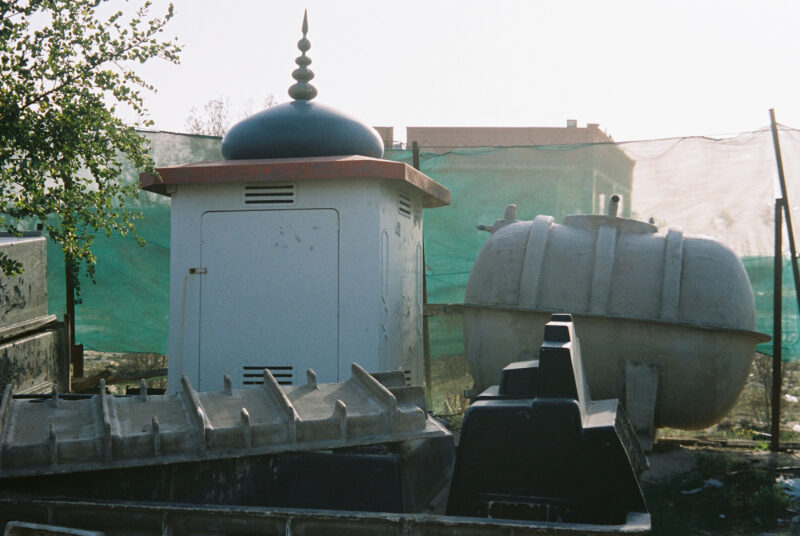
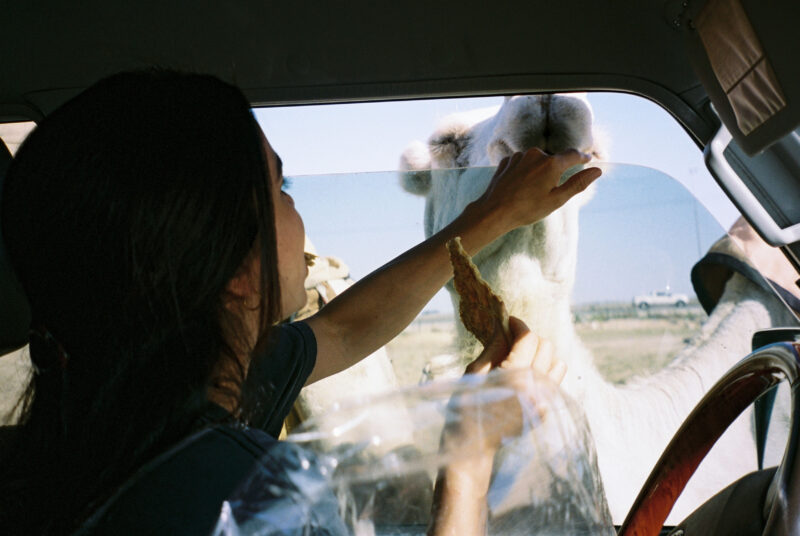
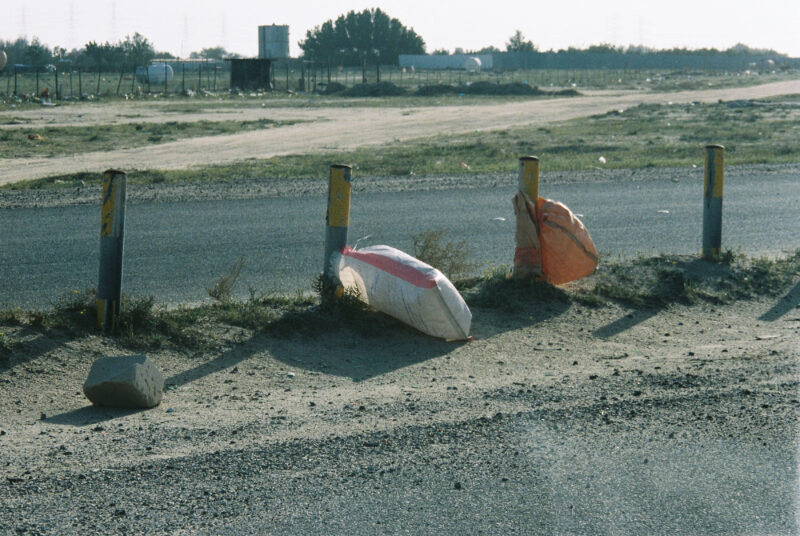
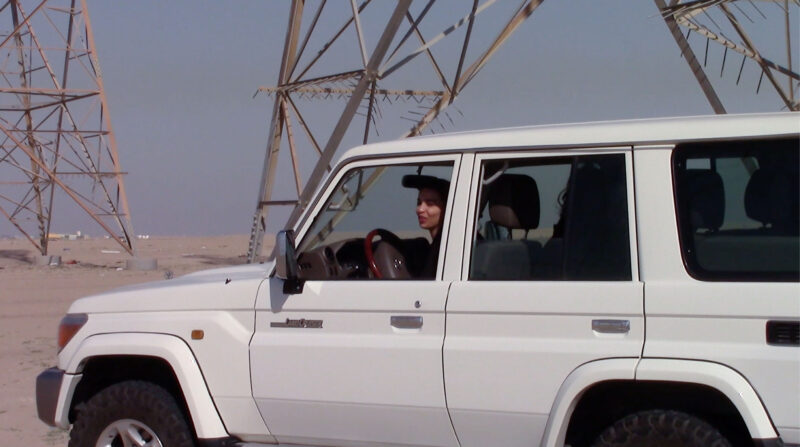
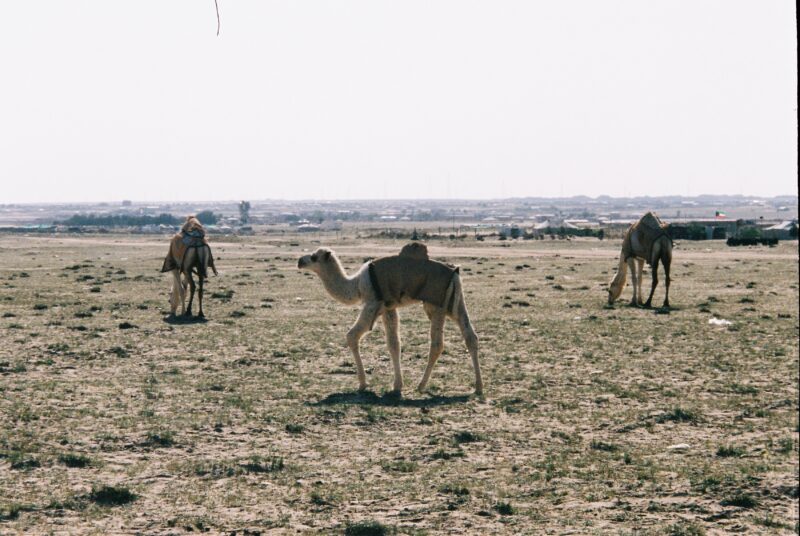
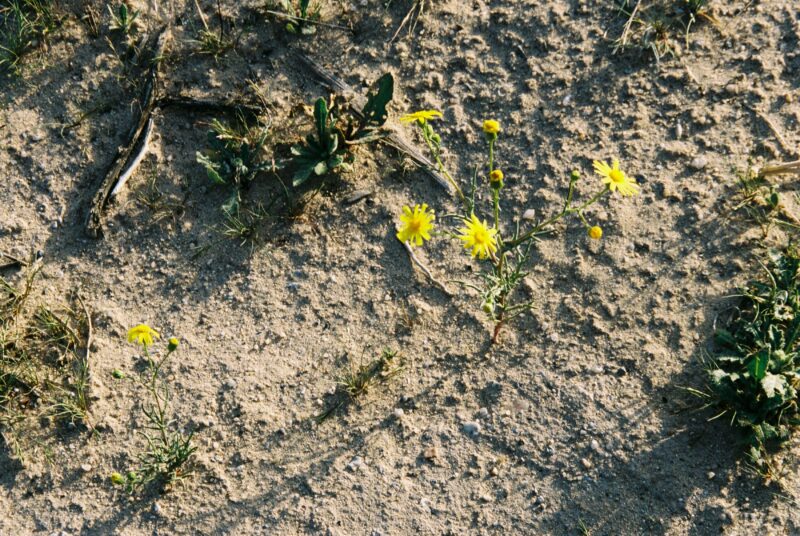
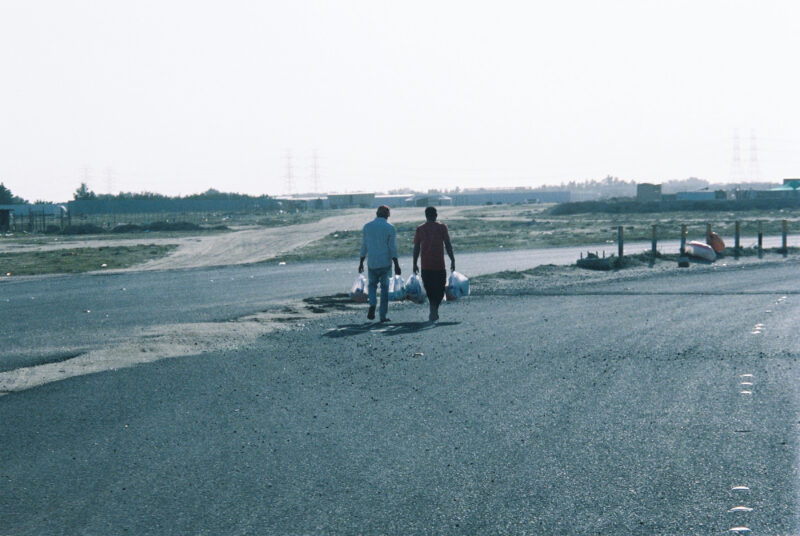
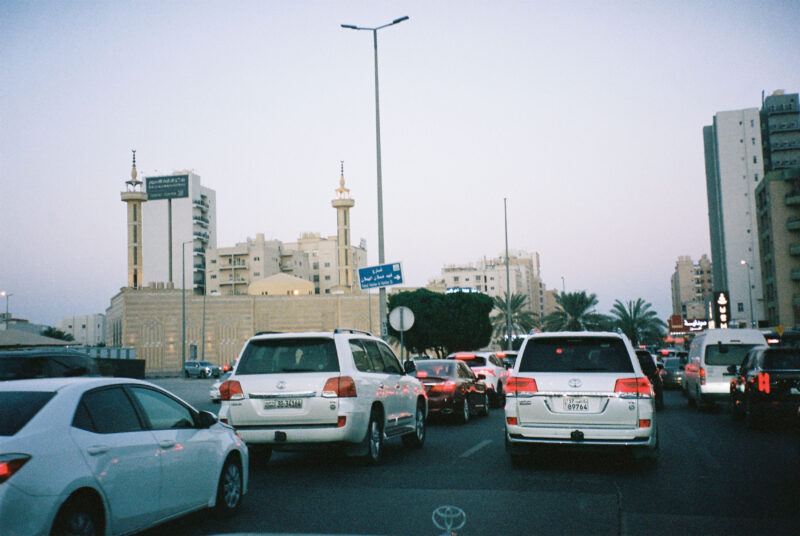
I spend a lot of time driving when I am in Kuwait. It feels like the back end of the world. I like to go into the desert and see things, look at camels, and collect industrial leftovers from around the oil refineries and adjacent facilities. Lots of sun-baked plastic, lifting slings, barrels, ossified bones, shredded tires, broken furniture. I try not to have a preconceived idea of what I am looking for or what I want to make, but rather let myself be guided by the things I come across.
NT—Elsewhere (2013-ongoing) is a series of textile works with layers of history and research behind it. Can you tell me how the project started? Who do you collaborate with? Where is this project going?
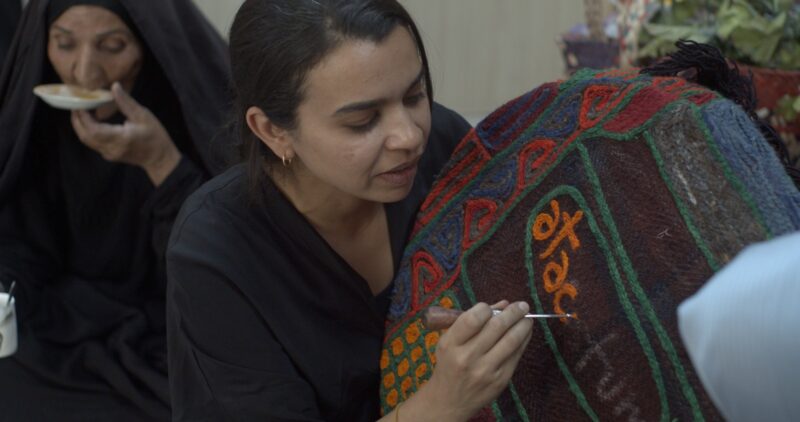
AF—Elsewhere is a long-term social engagement project that traces Arab and South Asian migration to Latin America and the Caribbean. The result of the work, which brings specific geographies and inheritances into an artistic context, is an ever-expanding series of tapestries. I make these with a cooperative of 80 weavers in Nasiriyah in southern Iraq, through a process that involves workshopping, storytelling, drawing, dyeing yarn, and embroidery. The tapestries depict places and ephemera that are the result of Arab and South Asian migrations to Latin America at the turn of the 20th century—political communities, the southern Mahjar, third world solidarity networks, but also everyday people.
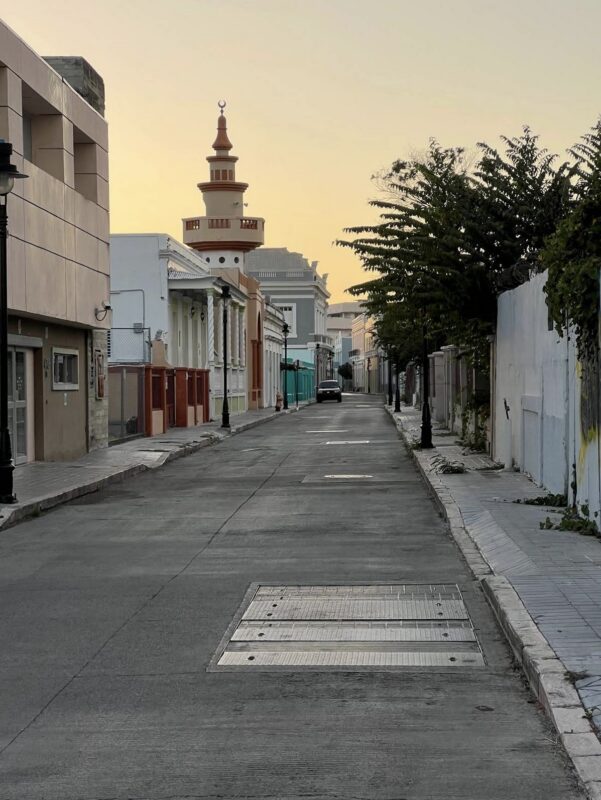
The project began in Puerto Rico as an inchoate idea in 2012. There is a mosque in the south of the island, in Ponce, where my mother is from, that is an adapted Spanish colonial building with cartoon-like Arab-Islamic features—a massive arched entrance with a wicket door and oversized minaret. I’ve always been drawn to it. It’s distorted in a way that feels very weird and satisfying.
When I first started this project, I was interested in the migration of forms and how the atmosphere of one geography is preserved inside another. I was seeing domes, arches, minarets, and endless permutations of architectural elements often referred to as Moorish, Oriental, Islamic, Latin, and Mediterranean. Some of these blended with modernist forms (La Plaza de Los Perros en Ponce, Puerto Rico, is an example of orientalism in modernism), while others were more flamboyant. Later, I was given grant money to develop the project, which afforded me the time to study the social history, from the transnational links and networks formed as a result of these waves of migration to the fluid back-and-forth movements of people, ideas, and texts across continents.
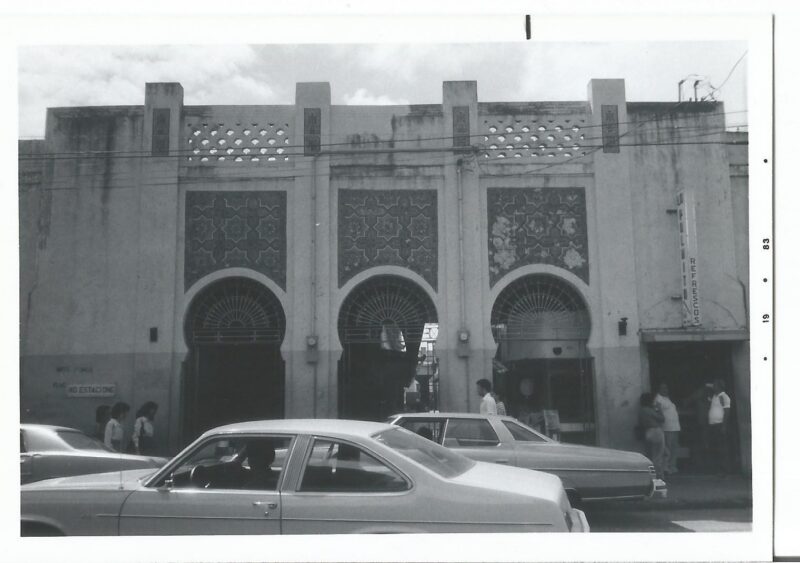
La Plaza de los Perros in Ponce, Puerto Rico photographed by the artist’s father in 1982. Courtesy of Alia Farid.
So far, I have covered locations in Puerto Rico, Cuba, Mexico, and the Dominican Republic. It’s a never-ending project and perhaps the most time-consuming part of my studio practice. It involves all this fieldwork in Latin America with people who open up their homes and share their histories, from travel documents, business registration forms, licenses, and ledgers to personal letters. Some people are very organized about their past and where they’re from, while others just want to forget. It’s delicate work. And every time it’s time to wrap up, more starts coming in.
NT—Can you talk to me about the choice to make the work in textiles?
AF—I love carpets. I grew up looking at them. There is no tradition of landscape painting in the Arab world. I mean, there are illustrated manuscripts and that sort of thing. But people here look at carpets the way others might look at paintings. Materially speaking, the information that can be gleaned from studying a woven work, the types of fibers that went into making it, where the dyes are from, and what plants were used, is all connected to the landscape. In addition to the tapestries, I’m building a collection of printed materials, sound recordings (voice letters on cassette tapes mailed across the Atlantic), and photos. The idea is to make both the tapestries and the research materials available for people to engage with in the future, whether because of an interest in textiles and craft, social history, psychology, or cultural studies. It’s an archive in the making.
NT—The work reads to me as a multi-fold translation. You are translating networks of solidarity between the Arab world and Latin America. On the other hand, you are translating across media, taking architecture and making it textile. On a third level, you are translating your ideas to your collaborators. What is generated in this gap of translation?
AF—It’s in Iraq that an Arab reinterpretation of a Latin American copy of an Arabesque style emerges. The tapestries are impressions not only of the archival information then, but the movement of visual style and culture that accompany and often contradict the larger historical narratives of economic and political encounter.
We live in the region most affected by war. To reference the words of anthropologist Munira Khayyat, war is not an exotic or exceptional space. War is actually a space that is coherent with modernity and one of the founding pillars of modernity, alongside other extractive processes such as capitalism and the nation-state.
So the textiles sit between these registers: the long historical effects of empire and extraction, the hall of mirrors of cultural contact and exchange, and the continuity of daily life despite fragmentation.
NT—Material exploration is an important aspect of your work, whether you are working in textiles, plastic, polyester resin, or blue faience. How do you select the materials you are interested in using? How does this material interaction bring the historical into the present?
AF—My work isn’t medium-specific. I am interested in ideas, and those ideas are expressed in different formats. Sometimes it’s a sculptural outcome of the thinking, sometimes it’s moving image, sometimes it’s sound, and sometimes it’s found objects.
My most recent work, 5ASHABA (2026), is a project based on field recordings. I wanted to have the sounds engraved on an LP made from melted-down plastic debris I collected on the banks of the lower Euphrates, where I was filming and recording. They are mostly buffalo calls, but also some khashaba. The khashaba is a small drum specific to southern Iraq that makes a loud, explosive, almost electronic sound. Like a drum machine but analog. It also sounds like munition, which is, I think, a subtle way to convey the soundscape of war that’s been the reality in Iraq for the last 40 years. I asked musician friends to listen and respond to these sounds with their own music.
Often, my work is less about the constituent parts themselves than it is about the manner in which they come together to make a new whole, something I find in music as well.
Having various ways of representing helps me wrap my head around some of the questions I have. The videos, for example, represent the same concerns about how resources are being harnessed and how the introduction of fake borders has affected the social atmosphere of the Gulf and disrupted the once-continuous landscape. I think of the work as multilayered. I don’t know how many layers of the work people might engage with, but I hope that at some point, they are drawn in and compelled to think about the material selection, the compositions, the images, and the meaning of the work being put forward.
NT—Works like In Lieu of What Was (2019) and In Lieu of What Is (2022) give us a visual history of the infrastructure of public drinking fountains and water distribution in the Gulf before and after the advent of oil extraction. Can you discuss the intersecting histories of water and oil that animate much of your work? How does this series glitch time to suggest an overlooked social and cultural transformation in the region?
AF—The first time I did something related to these was in 2014 at la Biennale di Venezia. I was intrigued by the format of the biennale, which allows supposedly developed countries permanent representation in the Giardini and charges developing countries rent in the Arsenale. The entire thing is kind of presumptuous and absurd. I was also thinking about form and infrastructure, and the iconic towers designed by Swedish architects Malene Bjørn and Süne Lindstrom to distribute desalinated water in Kuwait. So much of the culture after the discovery of oil was based on the state’s buying power. A lot was imported very quickly, and I’ve always found it fascinating how endogenous and exogenous forms coexist or influence each other, and how elements of imported architecture began to appear in the vernacular.
One such example is this tradition known as sabeel, or public offering. Across the Islamic world, it’s long been a tradition of piety to have a public drinking fountain available on your property. I approached the Nordic Pavilion about installing one of these, made in a design replicating the original Bjorn and Lindstrom towers, in front of their space in the Giardini. They declined, but the international curator that year, Rem Koolhaas, loved the idea and ordered the fountain to be installed immediately. For six months, the sabeel provided free drinking water to visitors, and a bit of Kuwait infiltrated the Giardini. Like the tapestries, I am interested in the back-and-forth movements of people, ideas, and forms across continents.
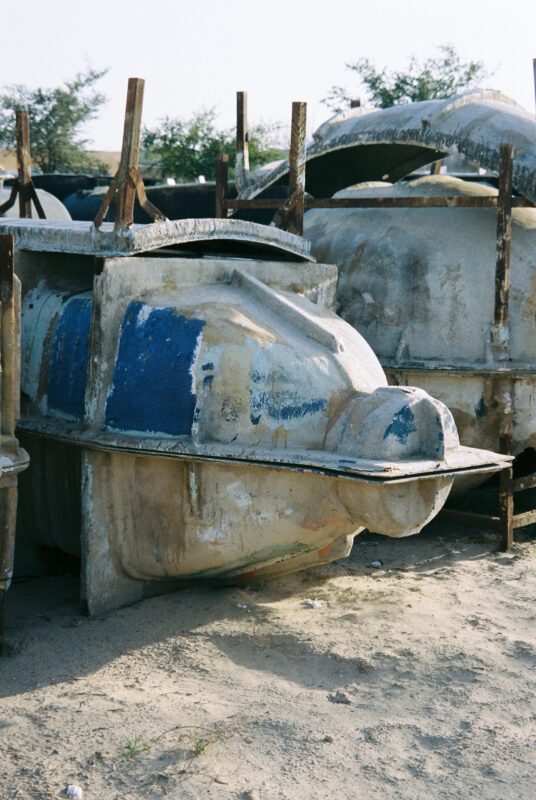
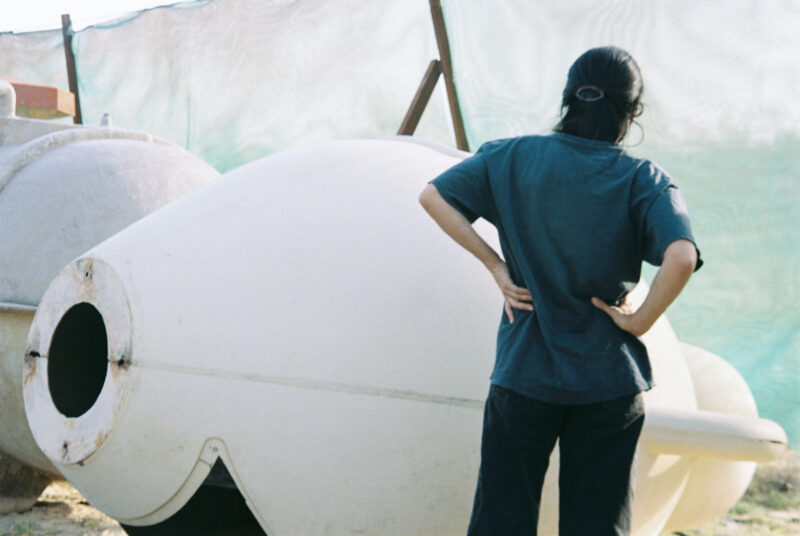
In 2019, I made and showed five drinking fountains at Portikus, all from existing molds and all of water receptacles. In 2022, I exhibited another five shapes that I drew and fabricated in the same logic. The sculptures are deliberately tautological; they are inspired by fountains and assume the form of oversized water vessels. Historically, vessels mark the locations of human habitation. Vessels are found everywhere, in every culture, era, and type of settlement, among every social group. They are the most common finds at archaeological sites worldwide.
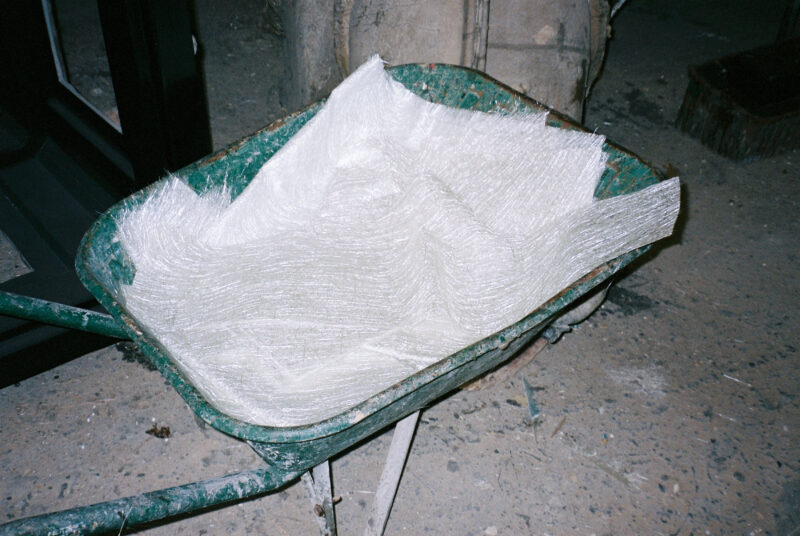
In these works, I used natural resin. Viewers who are not familiar with resin often confuse it with alabaster or stone, and I like the ambiguity it creates. Because material also relates to time, it invites people to ask what era the work belongs to.
Before the discovery of oil in Kuwait, water was brought from the Shatt al-Arab in southern Iraq. Once Kuwait could afford its own water and the first desalination plants were introduced, there was both a huge strain on the environment and on social relations. It affected Kuwait’s relationship with southern Iraq and distanced communities that had previously viewed each other as one and the same. We are also now a generation that doesn’t have direct contact with the source. We have water and don’t know which body of water it is sourced from, or we have a fruit and don’t know what the rest of the plant looks like. I guess for me, studying vessel shapes was a way to trace connections.
NT—I want to end by talking about your Talisman series (2025), which foregrounds the questions of borders, translation, and culture that we’ve been discussing.
AF—The Talismans series began while I was in Iraq doing a weaving session for Elsewhere. One of the weavers gave me a protective talisman that was a black and white photocopy of a drawing of 2 circles on either side of an upside-down pear, three grids, and loads of coded information, letters, and numbers. It was very striking to look at and was also a beautiful gesture. Soon afterwards, it was taken away from me at the land border on my way back into Kuwait, and I was made to sign an oath saying I would not do it again. I wasn’t sure what I had done, nor did I understand why the talisman was problematic. What about it was so threatening that it had been criminalized by law? I started reading about the function of talismans in Arab social and cultural life, and the type of information embedded in them. Often, they contain Arabic words written backwards, or display the corresponding numerical values of certain Arabic letters through magic squares, what are essentially math riddles. There is something really special about how talismans obfuscate meaning. It is precisely what frustrates authority.
Support for Art21’s READ comes from the Fleischner Family Charitable Foundation.
Interview conducted for Art21 in February 2026 by Noor Tamari. Original photography for Art21 by Crista Leonard. All additional photography courtesy of the artist.