Nathan Asplund is a visual artist and educator based in Long Beach, California. He is originally from the city of Santa Clarita, where sprawling suburban landscapes and hardcore punk music first informed his art practice. He received his BA from CSU Channel Islands, where he studied art—primarily illustration, painting, and After Effects animation. He now teaches studio art classes at Bell High School in Southeast Los Angeles.
Teaching with Contemporary Art
Combatting Boredom
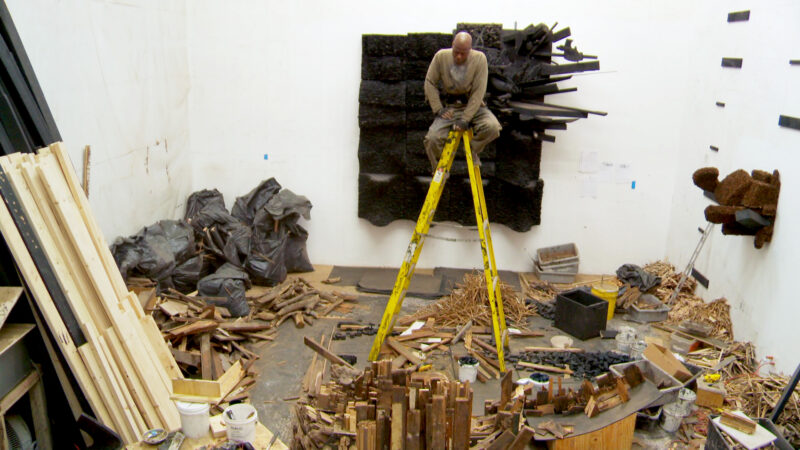
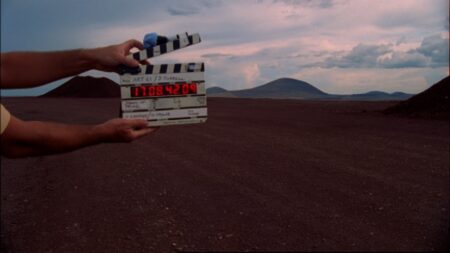
Production still from the Art in the Twenty-First Century Season 7 episode “Investigation.” © Art21, Inc. 2014.
Last year, I was working on a project with my high school drawing students in which they were asked to redesign an album cover for a favorite artist or musician. Working with teenagers in Southeast Los Angeles, this project was always well received and a great way to learn about their interests as they brought in an eclectic mix of music: heavy metal, corridos, indie rock, oldies, and pop, to name a few. Most recently, the students drew their album covers using pen, ink, and colored pencils. I had been teaching this project for years. I knew exactly how to teach it, what lessons we were learning, what problems to anticipate, and how the artworks would probably look when we finished. Last year while I was teaching the lesson, I realized that I was bored with the entire process. Despite the project’s refinement and success, I was walking into the classroom every morning completely unenthusiastic.
There are many parallels between teaching and making art: risk-taking, creative thinking, and craftsmanship through hours of practice. When I got bored with my pen and ink album cover project, I was faced with the same problems that many contemporary artists face. What do artists do when they finally master a process to perfection? Many artists reach that plateau, look around, and ask, “What’s next?”
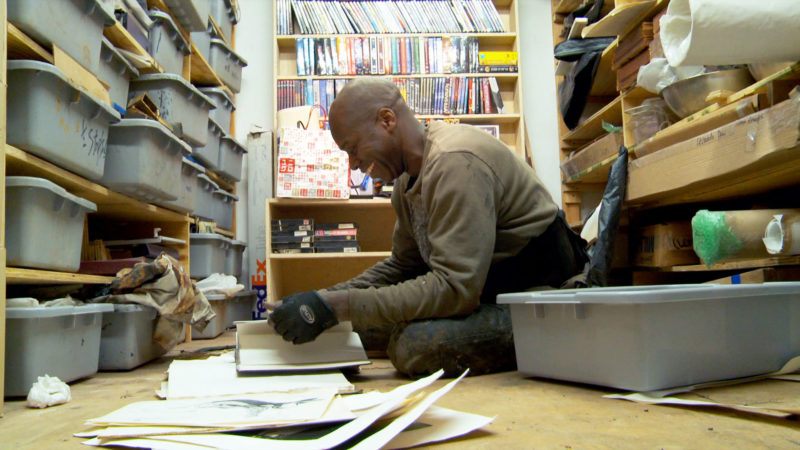
Production still from the Art in the Twenty-First Century Season 7 episode “Investigation.” © Art21, Inc. 2014.
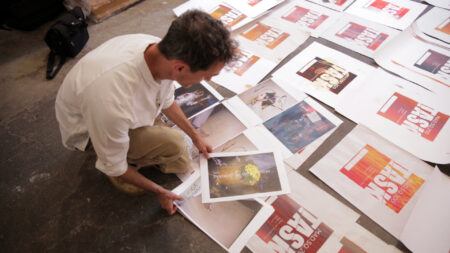
In Leonardo Drew’s segment in “Investigation,” Drew describes his decision to abandon his beautifully rendered comic book drawings in favor of abstract assemblage sculptures. In the film, Drew sits on his studio floor and flips through old sketchbooks full of fantastical pen and ink drawings. He says, “My ability to be able to draw and paint well actually was getting in the way of me realizing something larger.” It seems that Drew wanted to find new problems to solve, despite how beautiful his drawings were. I’m sure a lot of new and exciting questions came up when Drew changed up his process, choosing to weather, rust, entangle, and stack different objects together. His work is now almost entirely different from those early sketchbooks. Leonardo Drew’s decision to take a risk and try something new is inspiring to me as an art teacher. I try to ask myself: Is it possible for a lesson to be too perfect, too beautiful, and ultimately too predictable?
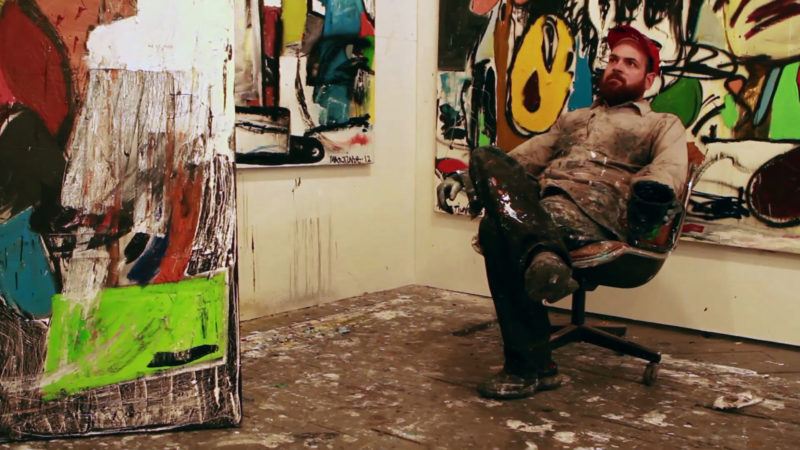
Production still from the New York Close Up film “Eddie Martinez’s Risky Business.” © Art21, Inc. 2013.
The film “Eddie Martinez’s Risky Business,” shows Martinez problem-solving in real time, moving away from his signature cartoony figures and forms towards abstract compositions. In the film, Martinez seems frustrated as he paces back and forth in the studio—scraping canvases, laying down thick blobs of paint, sighing, whistling, leaning back in his chair, adjusting his hat. Martinez talks about his new paintings and states, “It’s something I don’t know how to do which is exciting and terrifying at the same time.” In the classroom, new things can be terrifying, but also rewarding. When I start something new or unfamiliar with students, I always challenge myself to work through that nervous energy and embrace the unpredictability.
Last fall my students and I created a haunted house in one of the empty classrooms on campus—something I’ve never done before. It was my personal favorite project from last year, and many of my students felt the same way. There was a lot of excitement and unpredictability while building the structures, painting the floating bats, and papier-mâché-ing the pumpkins. Students worked in teams and collaborated in ways I’ve never seen before. The rowdy, outgoing students made themselves useful as classroom security, and the shy, withdrawn students swept debris and organized supplies. We made plenty of mistakes and I hardly gave the students enough time to finish before Halloween Day, when we anticipated walk-throughs from other students and staff. I think I liked this project so much because it required us to take big risks. Every decision we made was new.
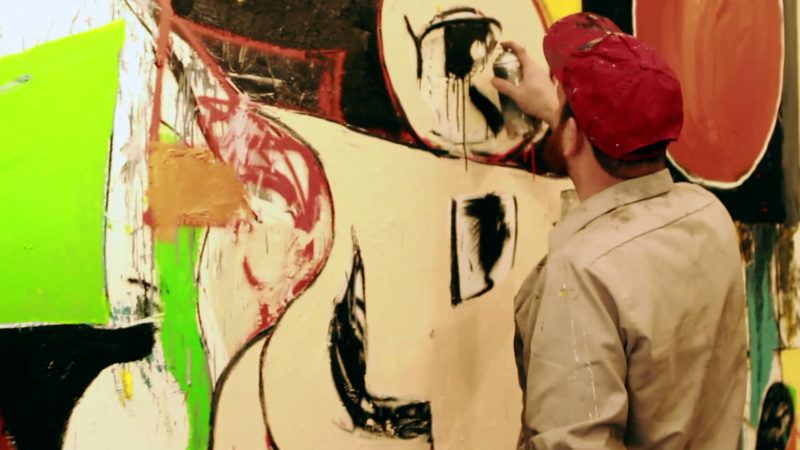
Production still from the New York Close Up film “Eddie Martinez’s Risky Business.” © Art21, Inc. 2013.
This year I plan on abandoning my pen-and-ink album cover project. I may return to it later, but I doubt I will approach it the same way. When I do a project that I feel too comfortable with, I start to ask myself, “What’s next?” just like many contemporary artists do. Sometimes that means abandoning an entire project, similar to Leonardo Drew “tying his hands” and giving up drawing and painting completely. Other times I’ll make changes that are more subtle, much like Eddie Martinez refining what he already knows how to do. I might ask: what if we tried the same project but with a new medium? What if we finished our paintings and then cut them up and collaged them? If the project is black and white, what if we tried it with color? If we’ve mastered drawing something, what if we tried it again with linoleum cuts? What happens once the work is done? Can changes happen in the critique or presentation of the artworks? Jasper Johns once wrote in his sketchbook, “Take an object, do something to it, do something else to it (repeat).” The same idea can go for lessons. I really love to tinker with lessons year after year. Once there’s nothing left to tinker with, I give myself permission to move on.
Watch Nathan’s playlist, “Combatting Boredom.”