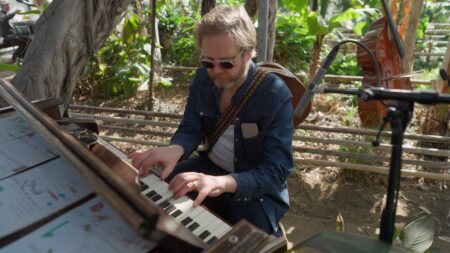
Julien Creuzet
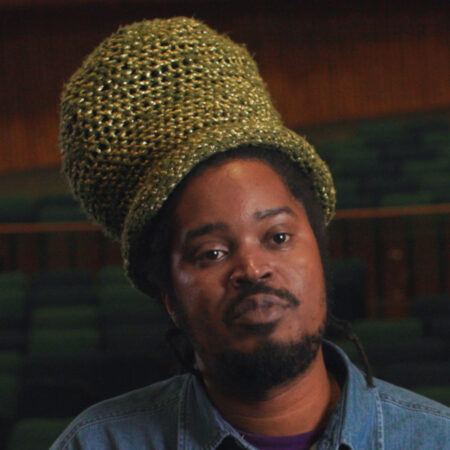
Julien Creuzet was born in 1986 in Blanc-Mesnil, France, and lives and works in Montreuil, France. He graduated from the Ecole des Beaux-Arts in Caen, the Beaux-Arts in Lyon, and the Fresnoy-Studio National des Arts Contemporains. Through sculpture, video, animation, performance, and poetry, Creuzet’s practice highlights Afro-Diasporic experiences and postcolonial relationships between peoples, cultures, and nations. The artist draws upon the symbols, histories, and foundational myths of his ancestral home, Martinique, and the wider Caribbean, creating immersive experiences that give form to ideas like emancipation, decolonization, and modernity.
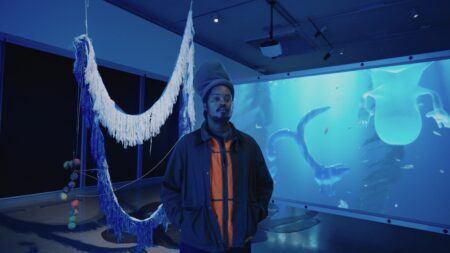
Creuzet uses water as a symbol in his practice, representing both a collective site of historical trauma and the possibility of emancipatory futures. In his work Playlist for a Colonial Monument (2020), the artist considers the role of sea travel in colonial and imperial rule, staging a performance on the ornate staircase of the Gare de Marseille-Saint-Charles in Marseille, France—a key port during French colonial rule. Creuzet also considers the ways water can serve as a site of reinvention and connection, as in his installation for the French Pavilion in the 60th Venice Biennale, Attila cataract your source at the feet of the green peaks will end up in the great sea blue abyss we drowned in the tidal tears of the moon (2024). Across a four-channel video work with computer-animated anthropomorphic underwater beings, hanging sculptures that resemble oceanic detritus, and a musical dirge that honors those who have lost their lives in the ocean during the Trans-Atlantic Slave Trade, the artist considers what new possibilities might be birthed from the ocean’s depths. “My idea was to rethink and make a new reading of mythology about the ocean,” says Creuzet.
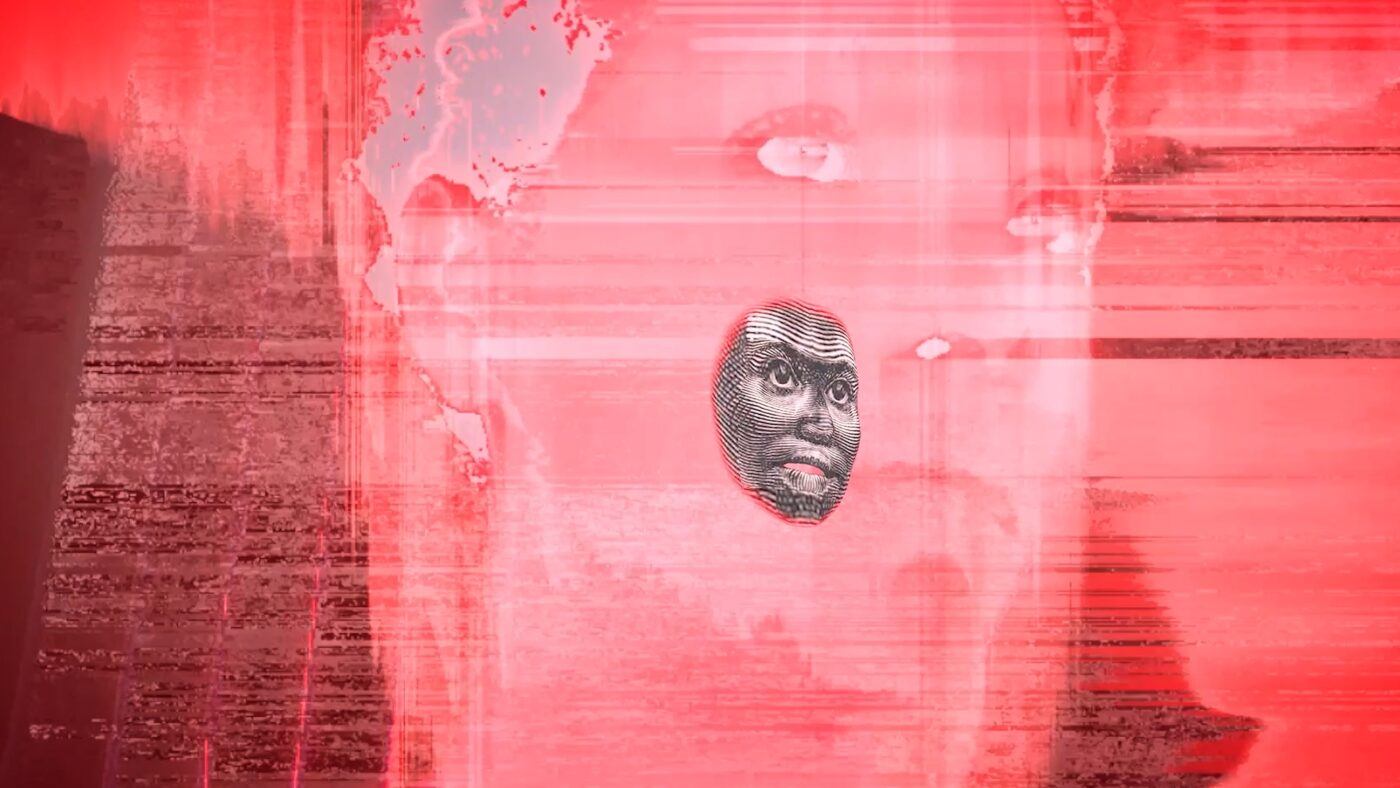
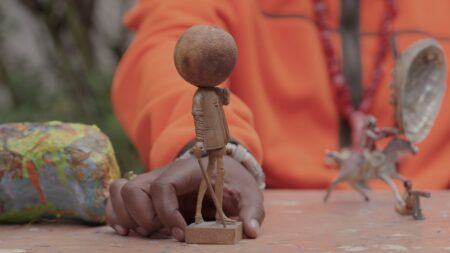
Recombining and reconfiguring ancient mythology, Afro-Diasporic deities, and Caribbean figures, the artist questions the role of foundational myths in shaping collective imaginations, narratives, and histories. “Artworks have a responsibility to not be one point of view, to be a crossroad or perspective of possibility.” In Nos diables rouges, nos dérives commotions (2025), the artist brings the myths of distinct cultures into conversation, comparing the Greek myth of Andromeda with the Red Devil of Martinique, and the trident of Neptune with that of the Red Devil, reimagining the static meaning behind the myths. Other works, such as Zumbi Zumbi Eterno (2020), weds Haitian Vodou practices, African water deities, and Brazilian maroon history to highlight the intersecting symbols that persist across the Afro-Caribbean diaspora. Creuzet also activates these symbols and myths into the physical world through song and dance, lending his voice to the ancestral Yoruba god in his video work Ogun, Ogoun, ou Ogou, ou Gou, mon Dragon (2020) and bringing sacred Bagongo sculptures to life alongside his dance collaborator Ana Pi in Quatuor & Quantum—Larmes marées de la lune (2025). Across his practice, Creuzet evades a singular meaning, offering multidimensional and multilayered works that question accepted narratives and invite reflection and self-interpretation.
Videos 5
-
Julien Creuzet
Julien Creuzet
Julien Creuzet
Julien Creuzet
Trailer
“Artworks have a responsibility to not be one point of view, to be a crossroad or perspective of possibility.”
Julien Creuzet