José de Jesús Rodríguez
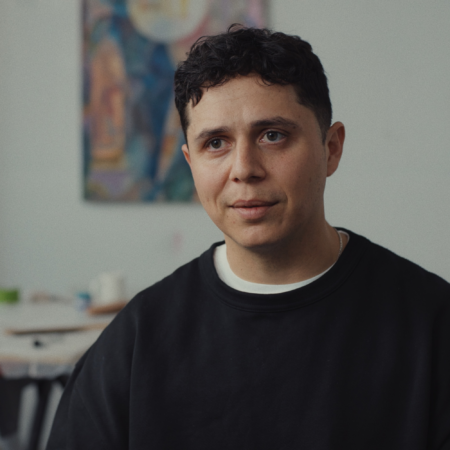
Jose de Jesús Rodríguez was born in 1991 in Salinas, CA, and lives and works in New York City. He received a BFA from the University of California, Santa Cruz, in 2013 and an MFA from Yale University School of Art in 2020. Working across painting, fresco, and mosaic, Rodríguez reinterprets existing symbols and styles: from Mexican muralism to catholic imagery, pop culture, and family photos, in order to challenge how we create and acquire meaning. Drawing on both personal and collective experience, the artist offers a multidimensional interpretation of shared histories, cultural narratives, and identity.
In his works, Rodríguez complicates reductive understandings of identity by placing disparate historical and personal references within a single work. “We sometimes end up creating systems to understand ourselves and others,” the artist says, “[which] also become the things we always have to push against.” In I’m not a burning man, I’m a burning, man (2021) and Death to the Fascist Insect (2024), Rodríguez draws on Mexican muralist José Clemente Orozco’s Man on Fire (1939). Using a variety of media, the artist paints fragments of portals and windows onto his canvas, illustrating his multifaceted, diaristic approach to understanding the world around him. In Move Over, Denzel (2024), Rodríguez depicts Denzel Washington from the 2004 film Man on Fire. The artwork’s design and bristling figurative imagery mimics the artist’s conflicted feelings about the film: his frustration with stereotypical depictions of Mexicans on one hand, and his personal enjoyment of the film on the other. Also referenced in the painting is Diego Rivera’s Partition of the Land (1924), which represents the redistribution of land to the impoverished after the Mexican Revolution. All of Rodríguez’s myriad imagery combines to reflect the competing and unresolved visions of Mexican identity and culture.
Materiality is crucial to Rodríguez’s practice, from his early training as a community muralist to his use of fresco and recent explorations in mosaic, wood, and scagliola plaster technique. Through fresco, the artist translates his questions on identity and narrative to a more material space. “Fresco being incorporated into these acrylic oil paintings really shifted how I think about painting. It spoke to the brittleness of things, a brittleness of history, but also image and having that capacity to both crumble but also be rock solid.” Works such as Thursday (2023) or City Living (2024) use chicken wire, sand, and lime putty to reflect this more deliberate relationship to artmaking. In recent works, Rodríguez has shifted away from detailed image-making toward a slower, more tactile method of production. “I was thinking a lot about my mom and prayer and how she sort of grounds herself in that. I needed something repetitive that felt materially focused,” the artist says. Across his practice, Rodríguez finds inspiration in both material and culture, creating a body of work that reflects an expansive way of understanding ourselves and the world around us.
Videos 1
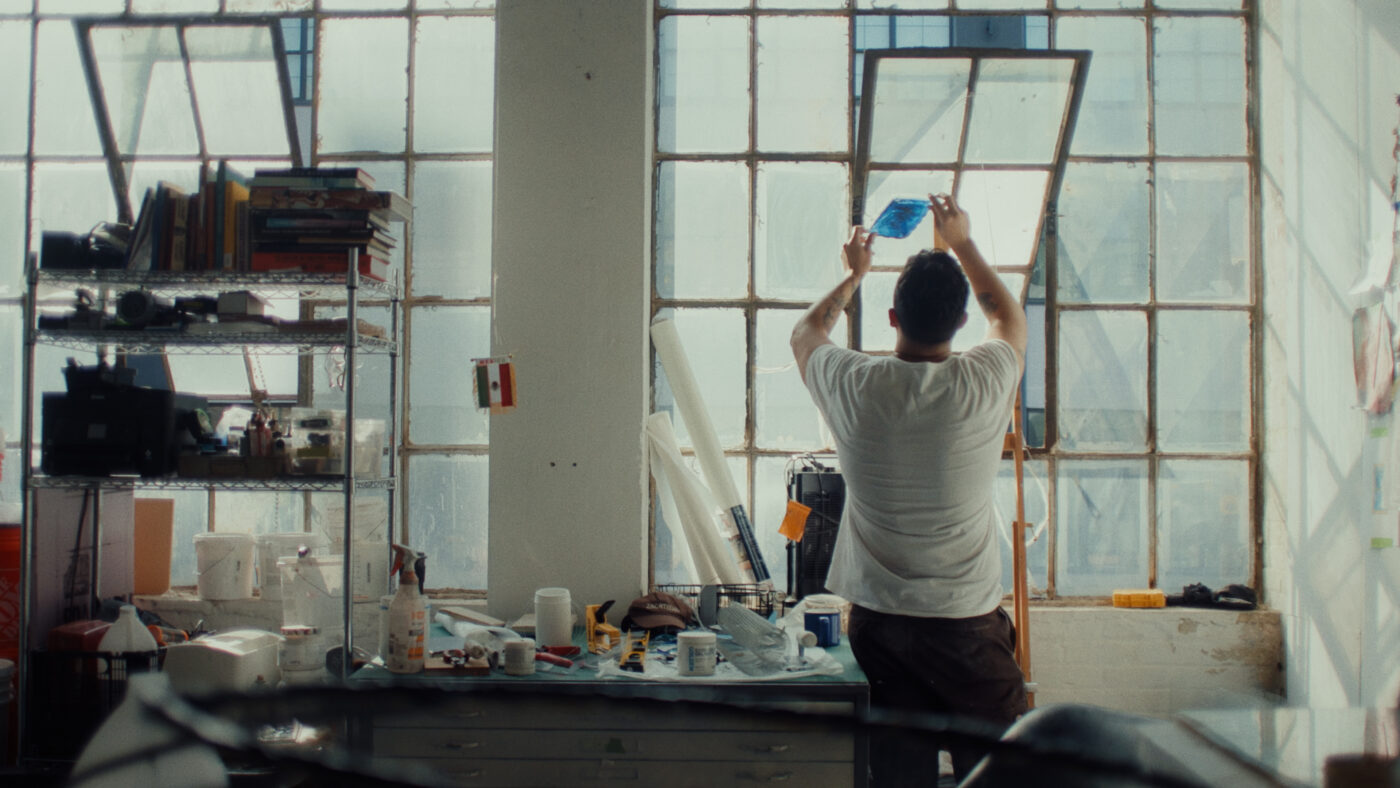
“How I moved through my practice initially, was very much like, let me see if I can communicate. Now, it’s maybe wanting to see what else is there.”
José de Jesús Rodríguez