Alicia Gifford is a dedicated art educator based in Pensacola, Florida, where she was born and raised. She currently serves as the art department head and girls’ weightlifting coach at Escambia High School, teaching courses such as 2D Design, Advanced Placement Art, and Photography. Her commitment to students’ well-being was further recognized when she was named Teacher of the Year for the 2024–25 school year.
Teaching with Contemporary Art
The Power of Reflection: Helping Students Write About Their Creative Process
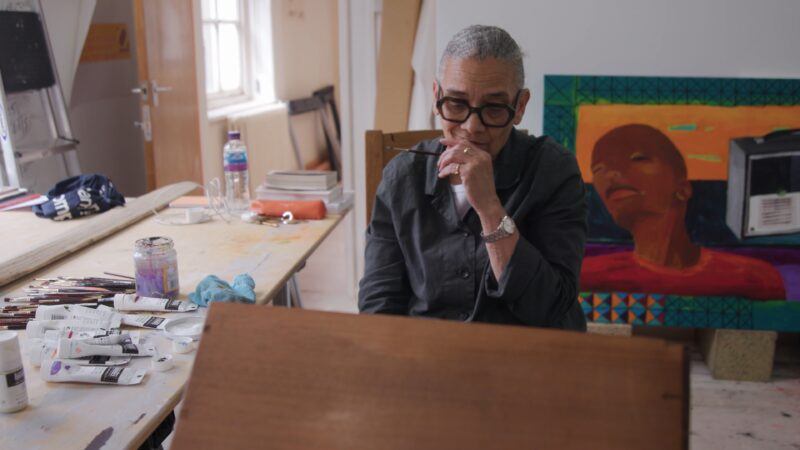
As we become more immersed in the ever-evolving world of AI, how do we as Art teachers continue to help students with writing, specifically about their purpose and process behind art pieces?
I have been teaching high school Art for some time now, and since around 2019, I have noticed a steady decline in students’ ability to discuss artwork. It’s easy to blame COVID, social media, and now artificial intelligence for this, but what can we do to remedy the growing crisis in students’ writing proficiency? I have thought about this a lot and tried many different approaches. Some worked, while others failed, but one thing remained consistent throughout the process: baby steps. I have learned that meaningful change does not happen all at once; it happens gradually, through small steps, reflection, and a willingness to try again when something does not work.
The classes I teach are 2D Studio Art 1, 2D Studio Art 2, Art 3 Honors, AP 2D Design & Drawing, and Digital Photography. My goal is for students to develop strong critique and reflection skills as they move through the upper level art classes. By the time they reach these courses, I want students to feel comfortable participating in art critiques, discussing their ideas, and reflecting on the artistic choices they make in their work.
I begin building these skills in 2D Studio Art 1 by starting small with simple reflection questions when students complete an artwork. For example, at the end of a contour drawing lesson, students answer two questions on the back of their artwork: “What are the benefits of contour drawing for the artist?” and “How are contour drawings different from other types of drawings?” After students have had time to respond, we discuss their answers as a class before they turn in their work. This gives students an opportunity to practice talking about art in a low pressure environment while learning from their classmates.
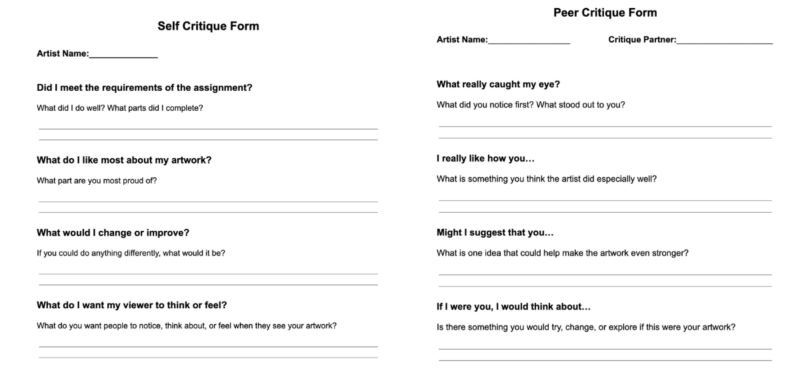
As students become more comfortable, I gradually introduce self and peer critiques that I have adapted over the years. For beginning art classes, I start with self critiques because I want students to first become comfortable reflecting on and talking about their own artwork. Once they have developed more confidence, we move onto peer critiques. This gradual progression helps students become more comfortable sharing their ideas and giving and receiving useful feedback.
In classes like 2D Studio Art 2, Art 3 Honors, and AP 2D Design & Drawing, we focus more on full class critiques and artist statements. I introduce full class critiques in 2D Studio Art 2, starting small by giving each student two sticky notes to use during a gallery walk. Students walk around the room, look at their classmates’ artwork, and leave a comment next to two art pieces. This approach takes the pressure off students by allowing them to share their thoughts in writing rather than having to speak in front of the class. Once everyone has had a chance to participate, I ask volunteers to share their thoughts about a particular artwork that stood out to them. This helps students engage in meaningful conversations about their artistic choices.
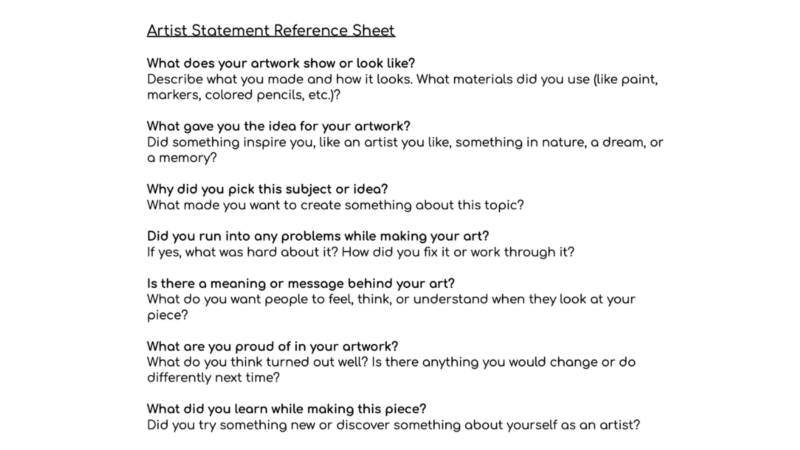
For artist statements, especially in my AP classes, I provide students with a series of guiding questions to help them reflect on their work. They use their responses to develop a paragraph or two that becomes their artist statement. This process encourages students to think more deeply about their artistic choices and communicate their intentions in a thoughtful, purposeful way based on the work they have created.
My goal as an art educator is to help students slow down and observe what is happening around them. Through critique, discussion, reflection, and writing, I encourage students to find their own voice and learn how to express their thoughts and ideas visually. I hope these strategies help students develop a deeper understanding of themselves, their experiences, and the world around them.