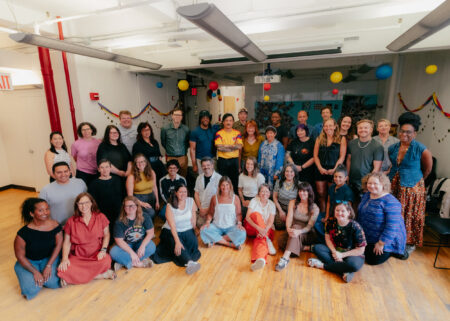
Nathan Asplund is a visual artist and educator based in Long Beach, California. He is originally from the city of Santa Clarita, where sprawling suburban landscapes and hardcore punk music first informed his art practice. He received his BA from CSU Channel Islands, where he studied art—primarily illustration, painting, and After Effects animation. He now teaches studio art classes at Bell High School in Southeast Los Angeles.
Teaching with Contemporary Art
Small Revolutions
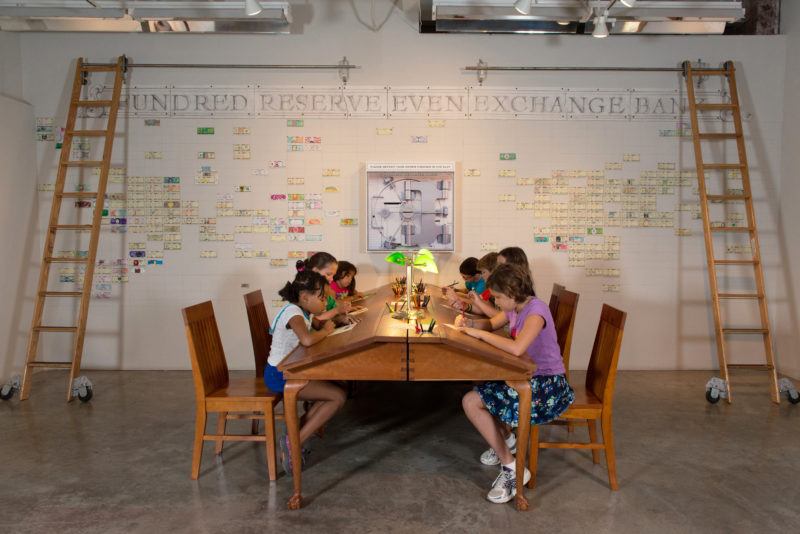
Students draw Fundreds in the Charlotte branch of the Fundred Reserve Even Exchange Bank, 2013. Fundred Project, 2008-2019. Photo: Ben Premeaux. Courtesy of the Fundred Project.
“The silent majority of non-affluent home owners and renters have remained mere pawns in the growth power struggles, their independent social interests (for instance economic justice and environmental protection, jobs and clean air, and so on) suppressed in civic controversy”—Mike Davis, City of Quartz
Every Tuesday during lunch, students pour into my classroom. Some of the guests are familiar faces: kids who know the classroom space as home to Drawing or AP Art and Design. Other guests are strangers who greet me with a “Hi Mr.” and ask to grab a slice of pizza. Tuesday is Youth Action! Day at Bell High School, a club that I host in collaboration with Communities for a Better Environment (CBE), a local environmental protection agency. Youth Action! Club advocates for environmental justice in Southeast Los Angeles (SELA). Environmental justice is the radical belief that all people, regardless of age, gender, ethnicity, immigration status, or otherwise, have the right to clean air, water, and soil. The city of Bell, where I teach visual art classes, is on the front line for widespread environmental catastrophe. Trucks from the 710 freeway choke the nearby neighborhoods with smog, and industrial cities like Vernon spread lead, chemicals, and other harmful carcinogens across SELA. Youth Action! aims to open conversations around SELA’s environment, uplifting student voices and experiences. We eat pizza, play cup games and charades, and talk about the ways that we can fight against towering injustices.
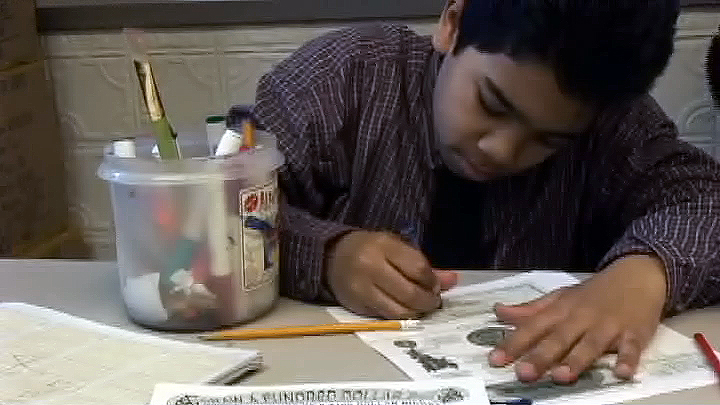
Production still from the Extended Play film “Mel Chin ‘Fundred’ at George Jackson Academy.” © Art21, Inc. 2008.
When I think about environmental justice in SELA, I am reminded of the contemporary artist Mel Chin and his Fundred Dollar Bill Project. Post-Hurricane Katrina, Chin went down to New Orleans to see what solutions artists could bring to the city. Looking at the rubble of the Ninth Ward, he described “feeling helpless” in the wake of this catastrophe. As he learned about the community of New Orleans, he became aware of an environmental crisis that existed long before the hurricane: lead in the soil. Lead poisoning in New Orleans was rampant, and it disproportionately impacted children. In response to this horrible realization, he created his Fundred Dollar Bill project, an initiative designed to raise lead poisoning awareness through art (specifically drawings of dollar bills created by children, addressing the need for funds). As an artist, Mel Chin could not turn his eyes from this injustice, created in large part due to the government and corporations neglecting the needs of society’s most vulnerable populations. Each dollar bill that was drawn for the project seemed like a small revolutionary act. It’s been 21 years since Katrina, but the trend of government and corporate neglect feels a little too familiar here in smoggy Southeast Los Angeles. What is the role of art in the midst of tragedy? What can we do when society’s most vulnerable members are under attack?
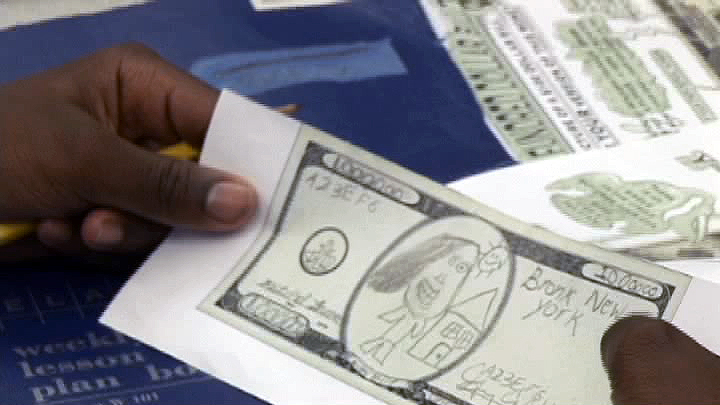
Production still from the Extended Play film “Mel Chin ‘Fundred’ at George Jackson Academy.” © Art21, Inc. 2008.
When Mel Chin described feeling helpless in the wake of Katrina, I immediately understood what he meant. Across California, and especially in SELA, we’ve had a tumultuous year; ICE raids have filled residents with heartbreak through the violent separation of families, and bombings across Southern Lebanon have struck fear into our Lebanese immigrant students, worrying about their families back home. As these issues continue to build, what I do in the classroom sometimes feels insignificant. It feels strange to ask my students to shade a still life when the world is seemingly collapsing. Online, I often read about the idea of joy as a form of resistance, and I certainly don’t disagree. The artistic process has the power to be the most joyous experience in the world. But when we’re in the last month of school during the throes of standardized testing, and everyone is in full-blown burnout mode, those joyous moments can feel few and far between. Art class doesn’t always feel joyous. Right now, in our classrooms and communities, I think we all feel how Mel Chin felt: helpless.
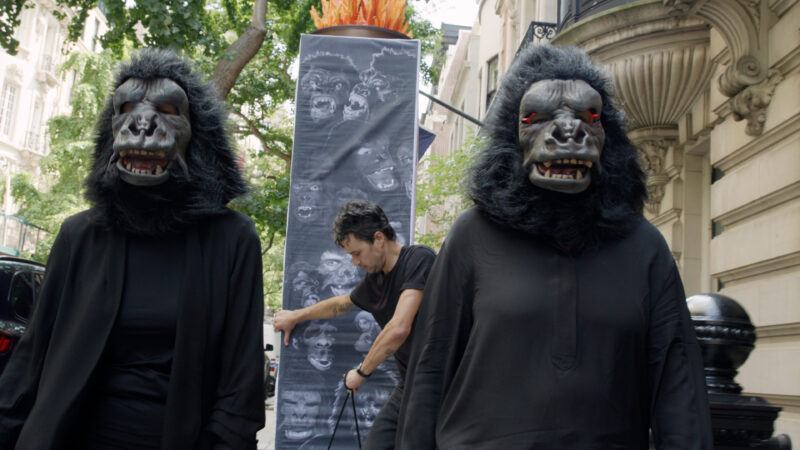
Production still featuring Guerrilla Girls from the Art in the Twenty-First Century Season 11 episode “Bodies of Knowledge.” © Art21, Inc. 2023.
Reflecting on our chaotic school year, and desperate to create some sort of change in the face of helplessness, I decided to finish the semester by painting revolutionary protest posters with my students. I’ve been interested in political art for many years, as a teacher, student, and artist. I remember, in college, being floored by vibrant political works like Lincoln Cushing’s ¡Revolucion!: Cuban Poster Art, or Corita Kent’s Vietnam War posters. I also remember seeing Leon Golub’s grotesque depictions of prison guards and mercenaries, appalled by the lasting scars of US interventionism. This beautiful overlap of art and politics is something that I often return to while teaching. In my class, students were tasked with thinking about injustices that they would like to solve. I asked students “what feels unfair?” and “if you were in charge, what would you change?” We looked at a variety of revolutionary works: The Guerrilla Girls postering New York City, Emory Douglas’s Black Panther Party art, and works from the Center for the Study of Political Graphics. Inspired by these great artists, students were asked to look at their experiences to protest an injustice. Turning the classroom’s focus back towards student perspectives is a liberatory action that has its roots in thinkers like bell hooks and Paulo Freire. In Teaching to Transgress, bell hooks described her radical education, learning from Black women in the Jim Crow era American South. During this radical education, bell hooks observed that her Black teachers viewed students as “whole human beings” in order to create liberatory education. In these posters, I aimed to do the same thing, giving students an opportunity to bring their lived experiences into their education.
When I began this project, I came into it with a lot of preconceived ideas. I focused mainly on big news cycle stories: ICE raids, the war in Iran. I also hoped that these posters would revitalize the sluggish classroom pace as we slowly waded through the last month of school. While big topics like ICE raids were certainly addressed in these protest posters (the raids have had a massive impact on SELA), I was also moved by the small things that students struggled with. The school’s bathrooms are never open. College is expensive, and I’m not sure where I can go next year. My local park is dirty. My brother has to work three jobs, so I never get to see him. I would be lying if I said these posters have completely transformed the classroom culture, rallying everyone into explosive energy. But students are still transgressing in small ways. They are calling out injustices and deciding what’s unfair. Together in art class, my hope is that we are building a culture of small revolutions. Every Tuesday, during Youth Action! club, it is a pleasure to witness these small revolutions again and again, as students assert that their experiences in Southeast Los Angeles matter.