Alicia Gifford is a dedicated art educator based in Pensacola, Florida, where she was born and raised. She currently serves as the art department head and girls’ weightlifting coach at Escambia High School, teaching courses such as 2D Design, Advanced Placement Art, and Photography. Her commitment to students’ well-being was further recognized when she was named Teacher of the Year for the 2024–25 school year. Beyond her teaching responsibilities, Alicia contributes to the community as a board member of Hope Above Fear, a nonprofit organization dedicated to supporting youth and young adults affected by substance abuse.
Teaching with Contemporary Art
How Can You Use Your Voice?
Courtesy of Alicia Gifford.
In Florida schools, certain topics and teaching approaches are restricted in art education. As a high school art teacher working through such a tumultuous time, I had to carefully consider how to bring Contemporary Art into my classroom without overstepping boundaries in a state with educational restrictions. After a lot of reflection and creative problem solving, I chose to center my approach around three things: focusing on technique and medium, emphasizing visual literacy, and student-led discussions.
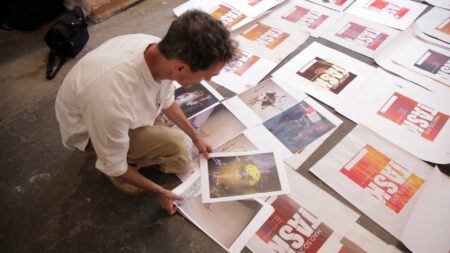
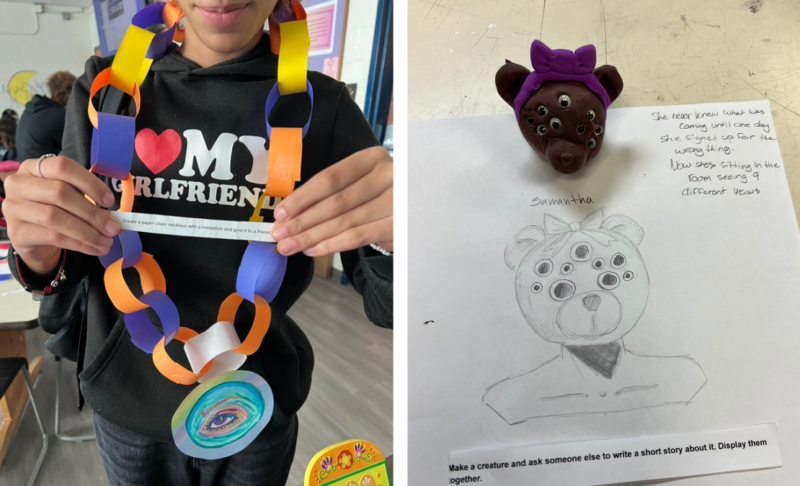
How do I implement these ideas using contemporary art and artists? With my freshmen, I focus primarily on technique and medium, encouraging them to create freely without unnecessary restraints. Oliver Herring’s “TASK” is a perfect example of this approach. His work emphasizes play, experimentation, and exploration. These are qualities that are essential for creativity and are important for us to hold onto as we grow older. I adapted this activity on a much smaller scale than Herring’s “TASK.” I set up carts in the room with various art supplies: one dedicated to gluing materials, one with a variety of paper and cardboard, and another with assorted crafting supplies. Students blindly selected a task from a bowl and then used the available materials to complete it.
Courtesy of Alicia Gifford.
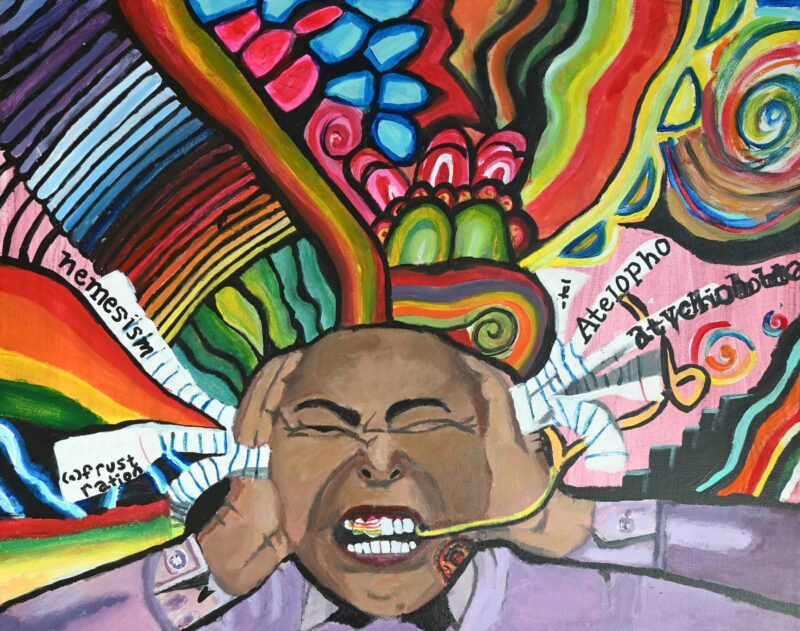
Through this journey, I found myself becoming an even stronger advocate for art education. I was honored to be invited to speak on our district’s Voices United In Education podcast, where I emphasized the critical role art plays in fostering skills like critical thinking, problem solving, and visual literacy, which are skills that support success across all academic disciplines. This led me to ask my students two questions that I feel are important: How can you use your voice? How can art be your voice? For my AP students, these questions inspired the beginning of their sustained investigations. These questions encouraged student-led conversations that guided them toward creating art with meaning and intention.
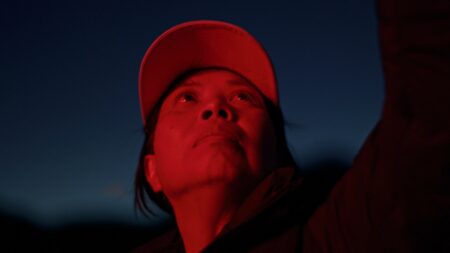
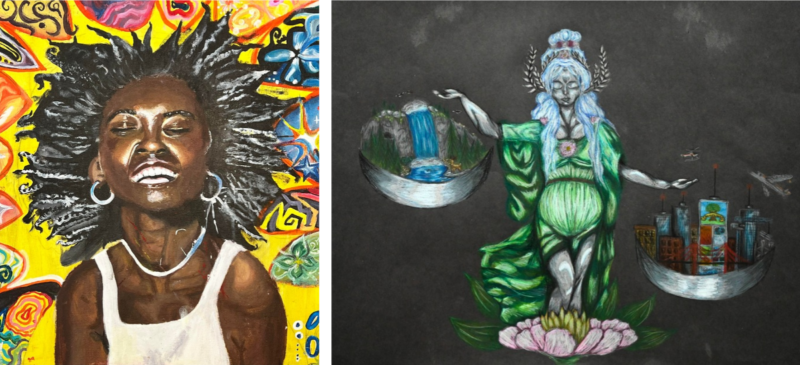
The process started by asking students to list topics they were interested in or passionate about. These could be specific themes, or even areas of study. Their responses ranged from emotional portraits and identity, to heritage, mental health, and global issues. We collectively researched Art21 artists whose work aligned with each student’s interest. As a class, we explored the work and watched videos like Rose B. Simpson in “Dream House,” Kerry James Marshall in “Identity,” and Amy Sherald in “Everyday Icons,” among others. Students then responded to each video, reflecting on what resonated with them about the artist’s work and process. This activity led students to think more specifically about what they wanted to create and how they can use their voice.
Courtesy of Alicia Gifford.
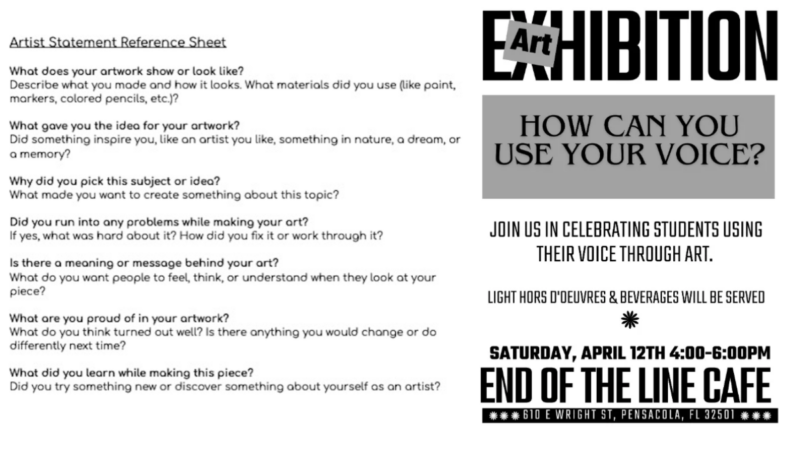
What truly stood out during this process was students’ writing. I wanted their voices to be heard, alongside the artwork they were creating. This led to the idea of my students having their own art exhibition in town. This was challenging, especially with no district budget for the arts. I needed to find a place willing to let us use their space for free. I reached out to a friend of mine, Jen Knight, owner of End Of The Line Cafe, a well known vegan restaurant in town. Jen, who is also a passionate advocate, welcomed us. With much excitement, we had a place to display artwork!
Courtesy of Alicia Gifford.
My students spent the year creating work for their sustained investigations and eagerly awaiting the art exhibition.The entire process was student led, from brainstorming and problem solving to designing flyers and promoting the event. I provided support where needed, including a writing “reference sheet” to help them refine their artist statements. We practiced consistently throughout the year, preparing them for the exhibition.
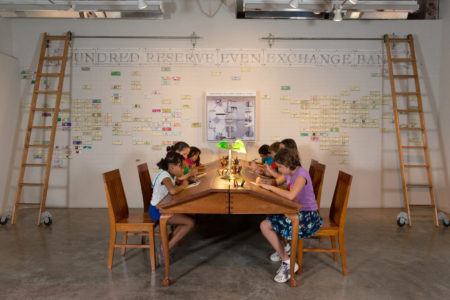
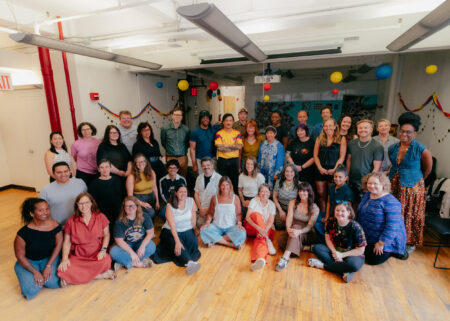
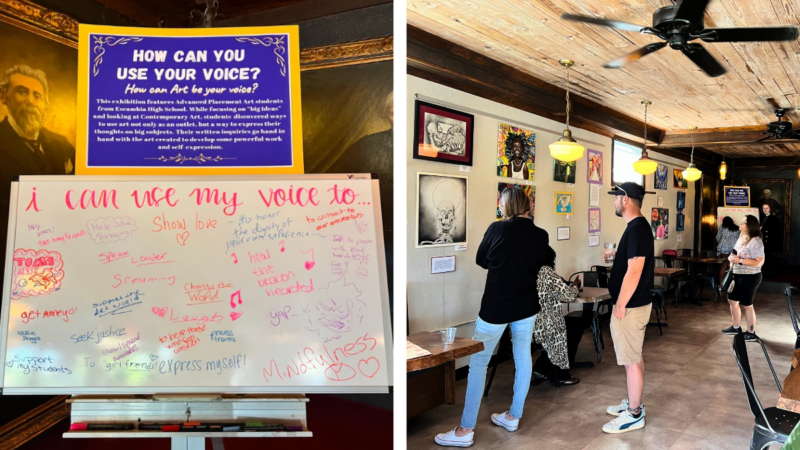
Once their artist statements were written, we felt we needed an interactive piece for the show. We decided on a board with the statement “I can use my voice to…”. This interactive board invites the audience to reflect, just as the students have done. Inspired by Candy Chang’s “Before I Die” project, it’s a space for anyone to share how they can use their voice. What made the reception special was watching students share and discuss their work with others. They had the chance to talk about their art with family, friends, and members of the community who attended. Seeing everyone come together in this intimate space outside of the classroom showed the support and encouragement surrounding both the students and the local art community.
Courtesy of Alicia Gifford.
After the art show, I asked students to write a short reflection on their experience and what stood out to them in AP Art this year. One student shared, “I remember everyone in AP just automatically conversing with everyone, and finding their group of people they connected with. It stood out to me when everyone was going around complimenting each others’ art. I think that’s important because it makes everyone feel included.” Another student said, “The connections are a big part of it for me.” And lastly, one student noted, “What I will remember about the art show is the sense of accomplishment and pride I felt when I saw my work. What stood out to me was that all my fears and insecurities didn’t matter. When my art was exhibited, I wasn’t judged like I thought I was going to be; I was instead celebrated for my work.”
Overall, the exhibition was a success, and students took great pride in showcasing their work. I hope this inspires teachers in similar circumstances to let students guide the conversation and find their purpose in art making. In the future, I plan to explore more ideas and invite fine and performing arts students from other schools to collaborate and share their voices with us.