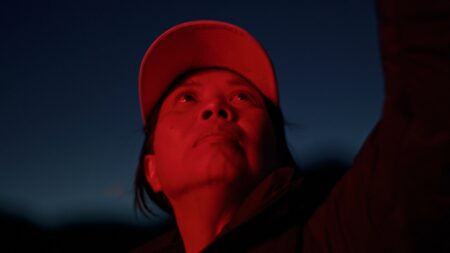
Interview conducted for Art21 in April of 2026 by Jurrell Lewis. Original photography for Art21 by Sasha Tivetsky. All other photography courtesy the artist and Matthew Brown Gallery.
Big Question
How do we harness spite?
DD Herschlein is fueled by spite
Interview by Jurrell Lewis

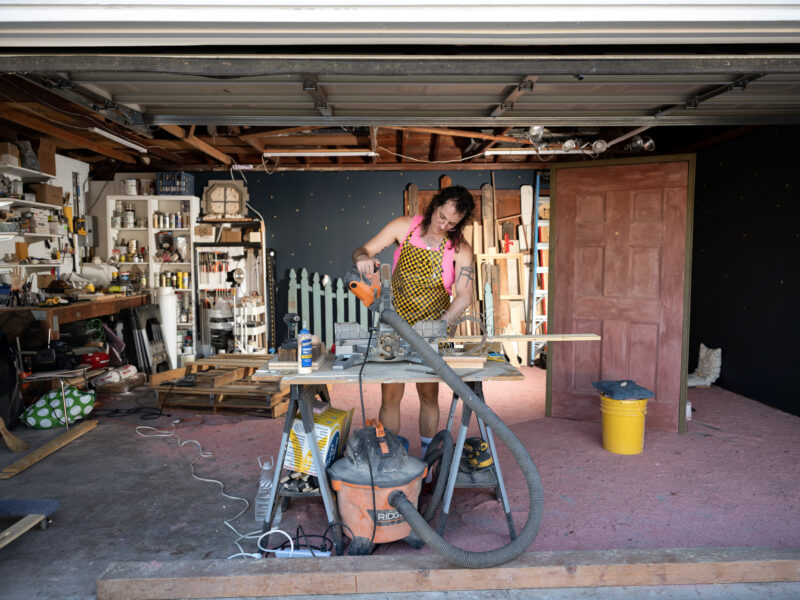
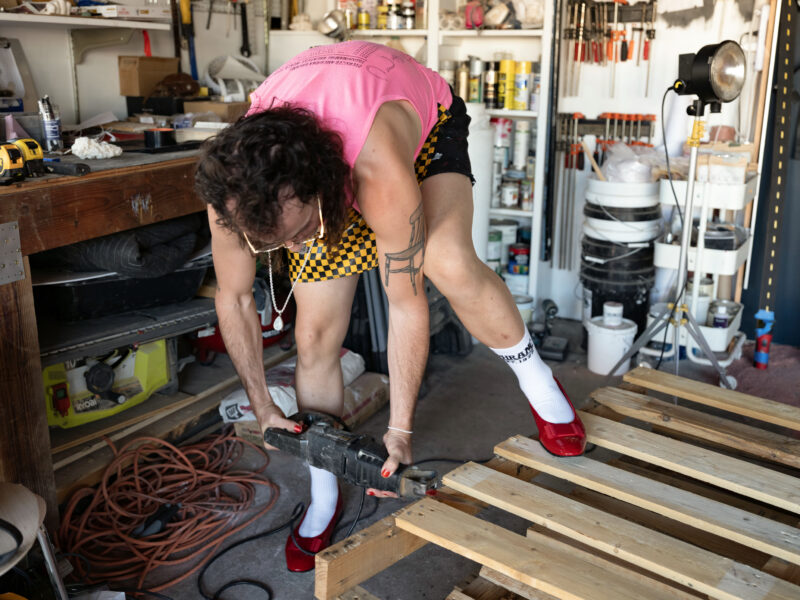
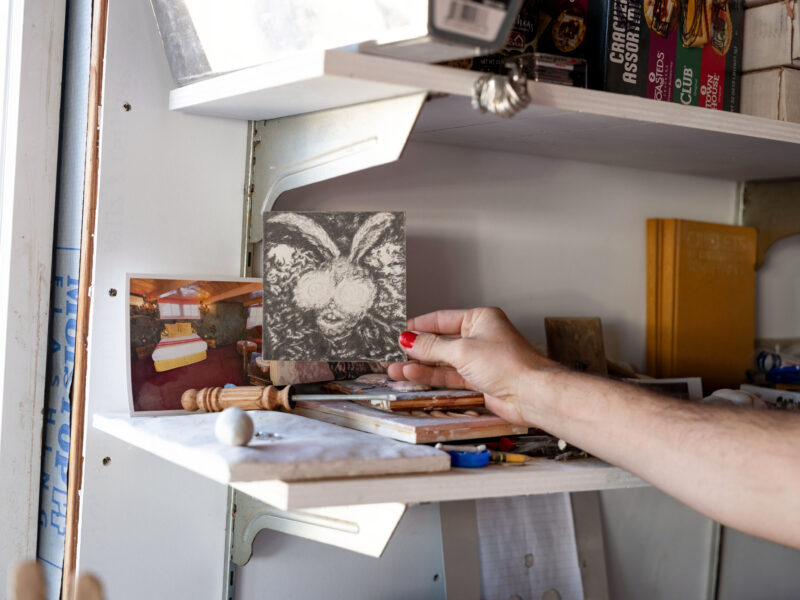
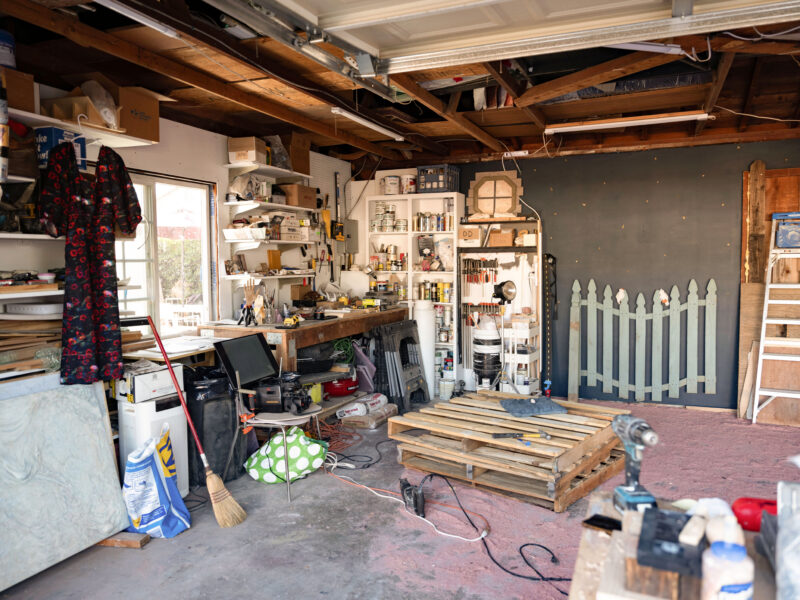
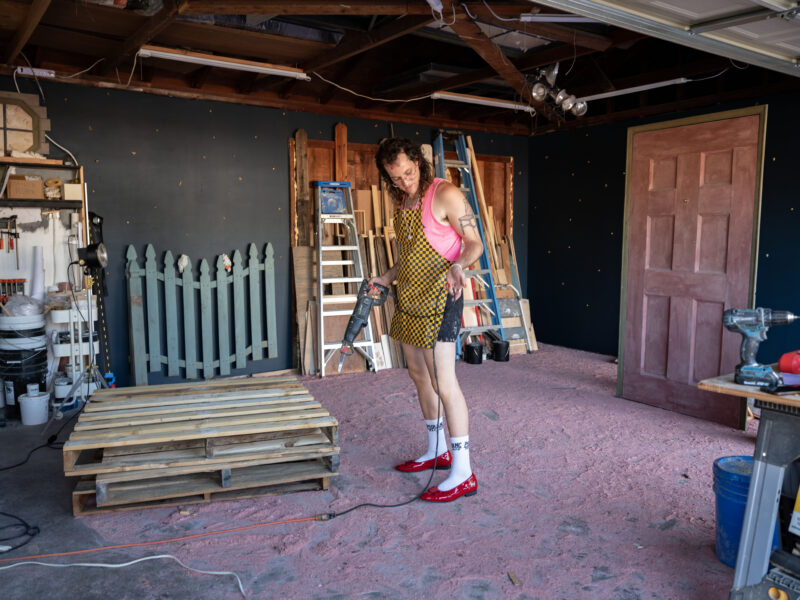
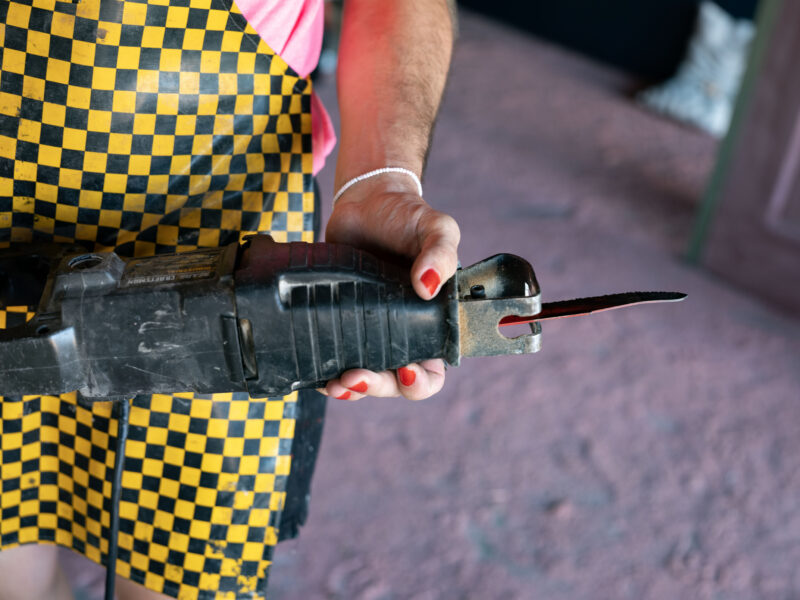
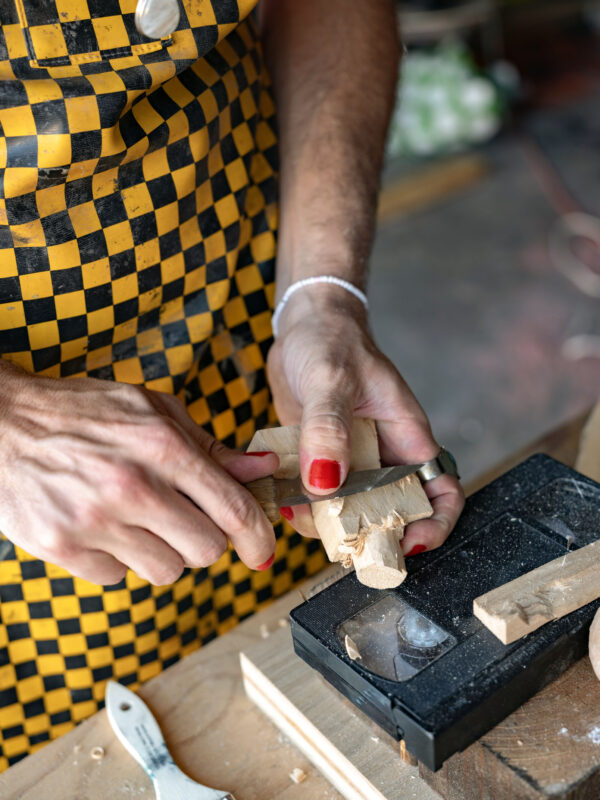
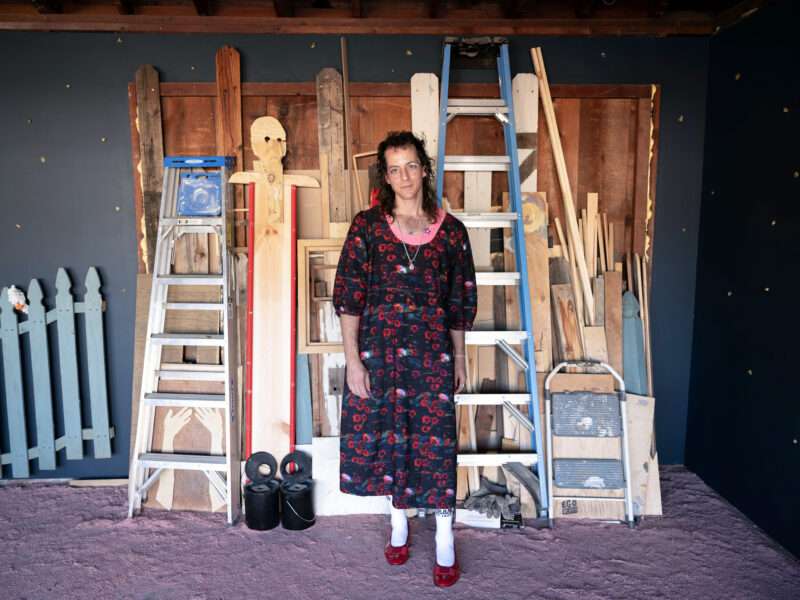
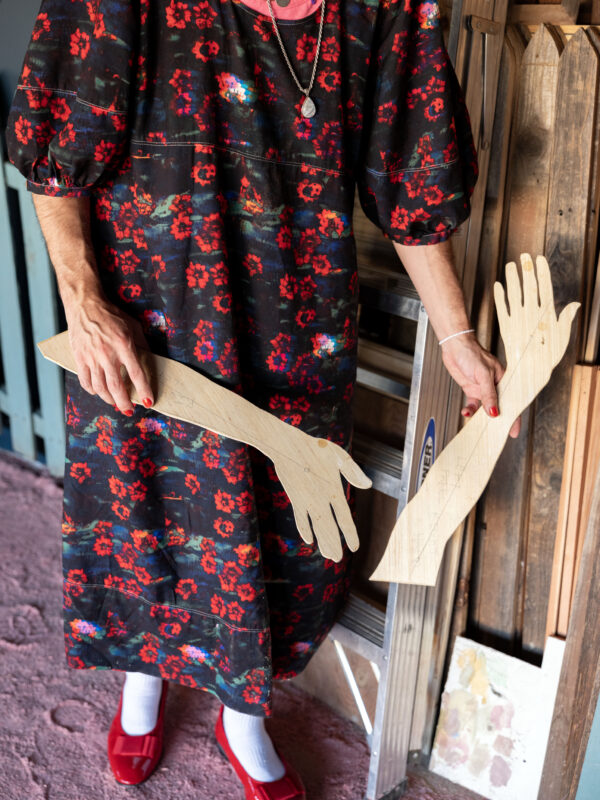
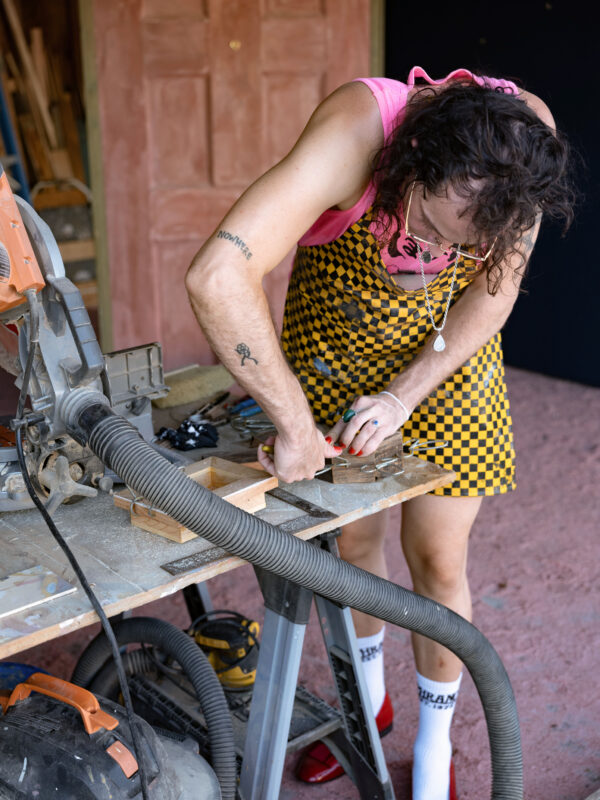
DD Herschlein in their studio. Photographed for Art21 by Sasha Tivetsky in July 2026.
DD Herschlein in their studio. Photographed for Art21 by Sasha Tivetsky in July 2026.
DD Herschlein in their studio. Photographed for Art21 by Sasha Tivetsky in July 2026.
DD Herschlein in their studio. Photographed for Art21 by Sasha Tivetsky in July 2026.
DD Herschlein's studio. Photographed for Art21 by Sasha Tivetsky in July 2026.
DD Herschlein in their studio. Photographed for Art21 by Sasha Tivetsky in July 2026.
DD Herschlein in their studio. Photographed for Art21 by Sasha Tivetsky in July 2026.
DD Herschlein in their studio. Photographed for Art21 by Sasha Tivetsky in July 2026.
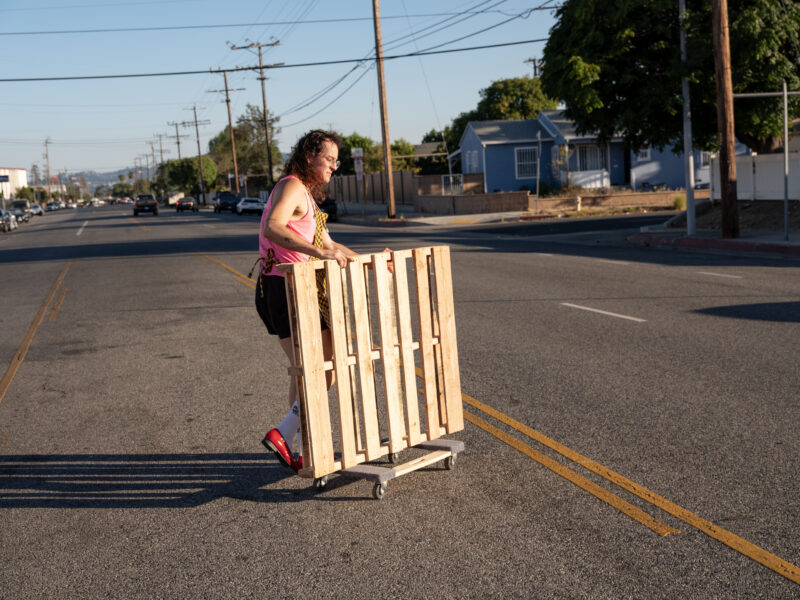
DD Herschlein collecting materials for their studio. Photographed for Art21 by Sasha Tivetsky in July 2026.
DD Herschlein.
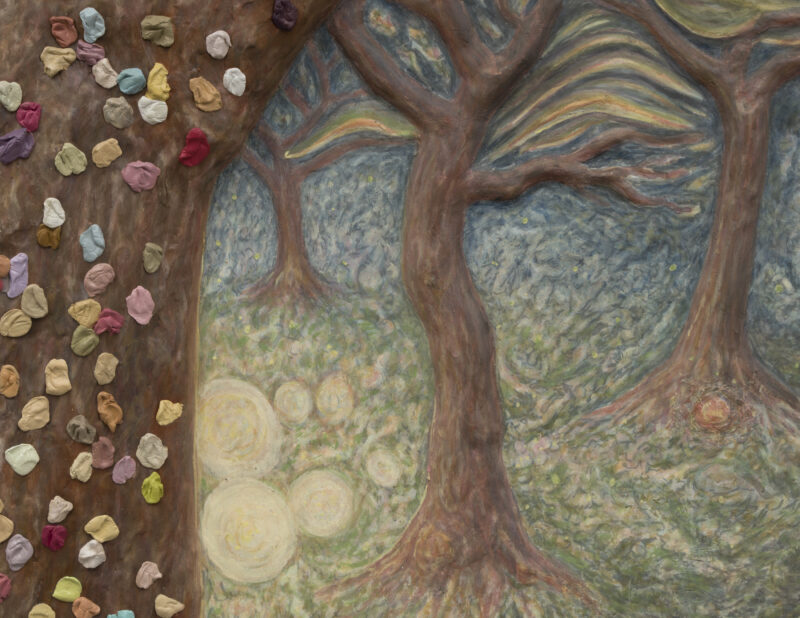
"The Gum Tree" (Detail) (2026).
Wood, foam, plaster, joint compound, fiber tape, epoxy putty, milk paint, oil paint, shellac, wax. Photographed by Charles Benton.
DD Herschlein.
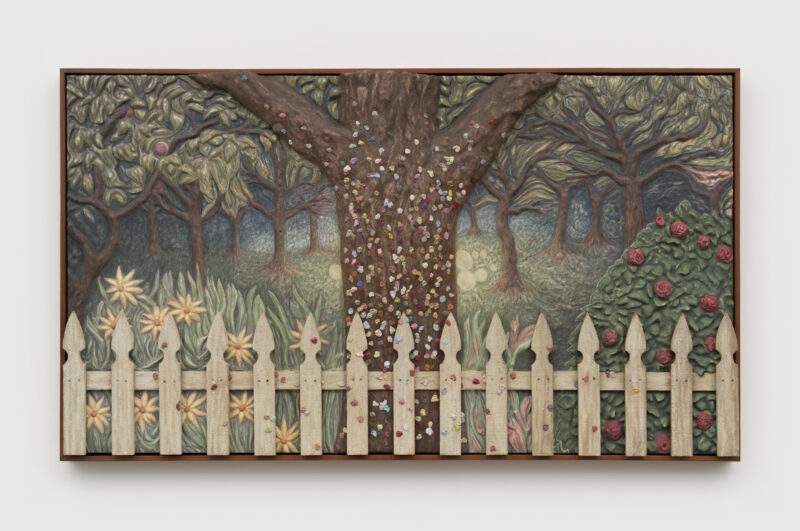
"The Gum Tree" (2026).
Wood, foam, plaster, joint compound, fiber tape, epoxy putty, milk paint, oil paint, shellac, wax. Photographed by Charles Benton.
DD Herschlein.
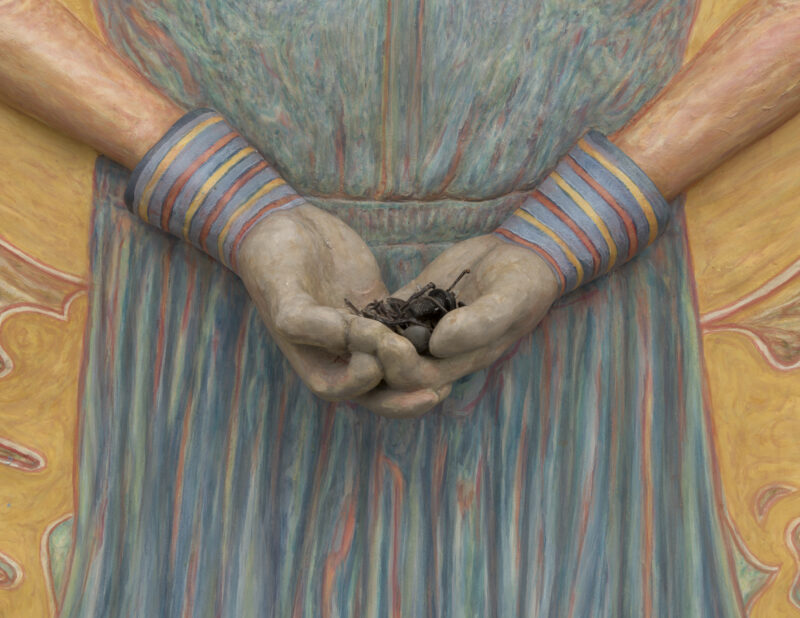
"I Will Take You Apart" (Detail) (2026)
Wood, foam, plaster, joint compound, fiber tape, epoxy putty, nails, nuts and bolts, milk paint, shellac, wax, color pencil, artist’s frame. Photographed by Charles Benton.
DD Herschlein.
"I Will Take You Apart" (2026)
Wood, foam, plaster, joint compound, fiber tape, epoxy putty, nails, nuts and bolts, milk paint, shellac, wax, color pencil, artist’s frame. Photographed by Charles Benton.
DD Herschlein.
"Living Is Easy With Eyes Closed (Spite Fence)" (Detail) (2026).
Salvaged fencing, wood, brick, mortar, milk paint, shellac, wax, acrylic paint, black gesso, hardware. Photographed by Charles Benton.
DD Herschlein.
"Spite House" (2026).
PVC, wood, asphalt roofing, dirt, matte medium, molding paste, newspaper, epoxy putty, metal, wire, hardware.
Photographed by Charles Benton.
DD Herschlein.
"Burning The Universal Facade" (1980 / 2026).
Photograph by Donald Gardner 1980.
Framed and recontextualized by DD 2026. Photographed by Charles Benton.
When I was eleven, my grandma took my family to Maine during summer vacation. She rented a house on this hill overlooking the water, and as we were driving up the hill, we passed a fence on eight-foot-tall stilts, which was just baffling to me. I asked my grandma what it was, and she said, “That’s a spite fence,” and explained the situation to me. The houses along the uphill side of the road were being converted into short-term rentals. An older couple on the downhill side was frustrated by these homes turning into, basically, Airbnb rentals. Realizing that the view of the water from the hill was one of the things that made these rentals appealing, they built a tall fence on their property that blocked the view: a spite fence. I found that to be very funny and quite righteous.
It’s curious how “spite architecture” is defined when you Google it: “architecture built to irritate or annoy.” The language used is so dismissive and demeaning. I’m interested in the gap between my own reaction and this generalized definition of “spite structures.”
Was that couple’s fence just an attempt to “irritate or annoy?” That definition dismisses the foundation of what they were doing: asserting their values against the imposition of another set of values. That’s what I think spite and spite structures really do. They might annoy somebody, but annoyance isn’t really the point. Spite, in this context, has the power to counter imposed hegemonic systems; it provides an avenue for people to assert their values outside what is expected, technically allowed, or socially permitted. The way spite is dismissed is an attempt to take away that power, to make it seem like an unacceptable response.
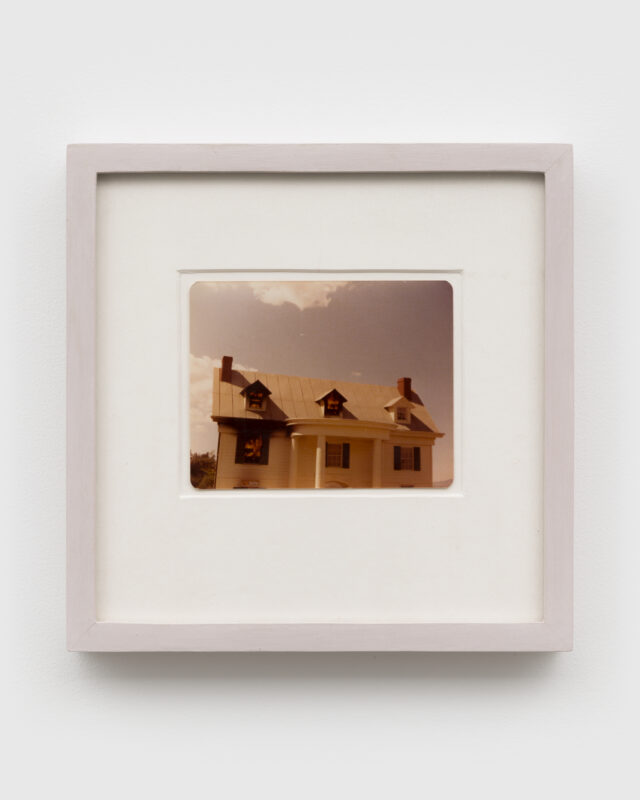
In my exhibition Spite House, spite operated on many different levels. It was a response to the specific nature of the gallery and a viewer’s expectations, but it was also useful as a personal motivator and means of permission. The show begins with a disaster: the first piece is a photo by my neighbor, Donald Gardner, taken at Universal Studios. The image is of a house fire, an unburnable facade on the Universal Studios tour. I framed and titled the photo, Burning the Universal Façade (1980/2026). This collaborative piece contextualizes the show in our world where government-sanctioned abductions, the Genocide of Palestinian people, and the attempted erasure of trans people are revealing something essential about the mechanisms at play in society. We are being asked to ignore and move past these realities as if nothing is wrong, but the facade is crumbling.
In the show itself, I’m resisting the expectation that a viewer can just walk into a room and take everything in at once, insisting on being present and letting things unfold over time. The show isn’t just a painting next to a painting next to a painting; it’s a bit more involved. I want you to think about your position in this room by creating these playful moments of involvement.
While making the show, I was more broke than I’d ever been. I couldn’t buy new materials. I feel like there’s this expectation that an artist puts all this money into producing a clean, exceptional body of work, that goes into the clean, exceptional gallery, and then is sold to clean, exceptional people. That’s not the context I’m working in and it doesn’t feel that way for most people. But despite working with little money or resources, I looked around and found all these things I did have access to, like salvaged wood and discarded materials in my neighborhood. Spite became fuel and drive, shifting my perspective. When I see spite architecture in the world, that is what I feel from it. This passion to push against normative expectations or unfair systems.
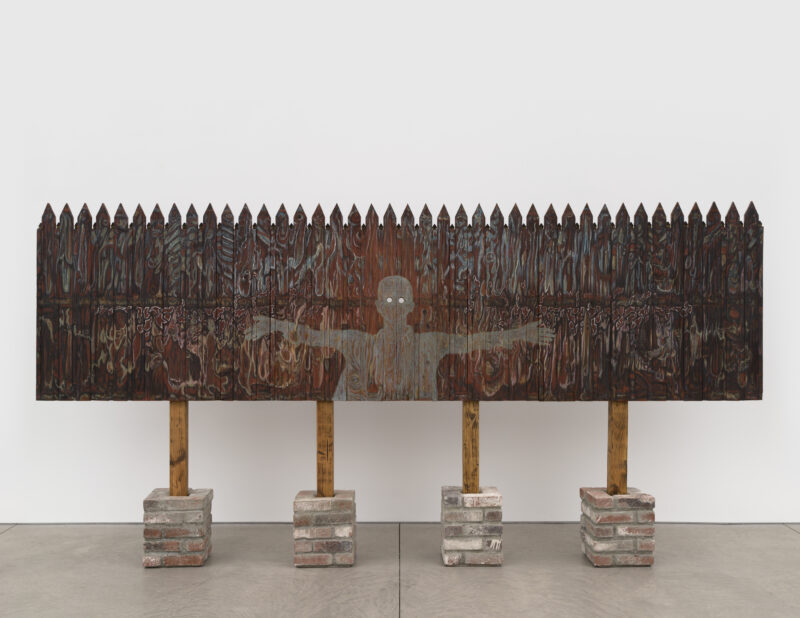
After Burning the Universal Façade, there’s this painting of a chair, The Receiving Chair (Everything You Need) (2026), and a row of small drawings I call “the evacuation suite.” The drawings depict this moment in a disaster, of gathering everything in a rush and leaving your old life behind. They lead you toward a fence that hides what comes next. The fence, Living Is Easy With Eyes Closed (Spite Fence) (2026), was salvaged from the Eaton Fire in Altadena. It stands on stilts so it lands at a 58-inch midpoint, blocking the paintings behind it.
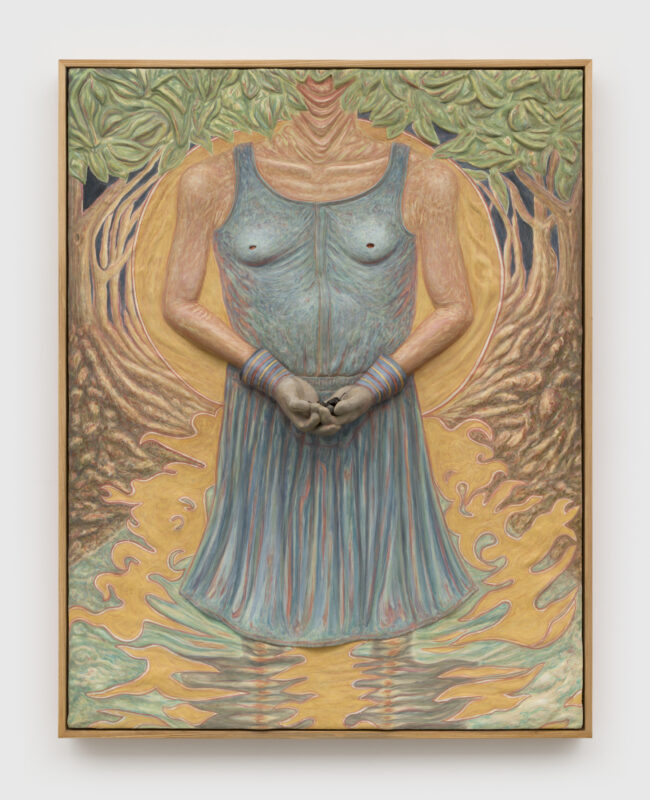
The fence withholds several pieces that are different from my previous work. In the past, I generally dealt with tropes and frameworks of the horror genre because it felt appropriate for depicting how our world functions. But these works are more about alleviating fear or horror, not clinging, but preparing emotionally to accept what’s next. One of the pieces behind the fence is called I Will Take You Apart (2026). It depicts a figure approaching the viewer with their hands clasped in front of them in this offering gesture. In those hands are bent nails, nuts, and bolts taken from the reclaimed wood of the fence and gazebo, which is also in the show. I’m thinking that being taken apart could be a necessary and generous act. It would allow you to discover what’s in the way of growing, changing, or being okay. How am I situated in society, or in this hierarchy? What is my context? How am I operating? One thing I think spite can prompt is a rigorous questioning of who we are and where we stand.
Our current social framework blocks us from seeing new ways forward, just as the fence blocks you from these more hopeful works. It’s when you decide to move around the fence that you’re presented with more openness and possibility.
I understand the settler-colonial or capitalist mind to function primarily through images. Turning something into an image separates it from its larger context, and this cropped understanding allows for isolation, control, and ownership. An identity becomes an image sold back to someone and nature becomes something parceled up and extracted from, rather than something people are in relation to. To make an image of a thing is a way of conceptually commodifying it, and while images are not inherently bad, they can be easily manipulated. I think spite works best within this realm of the image, and I see spite architecture as an excellent way to counter certain narratives by disrupting their aesthetic aspirations.
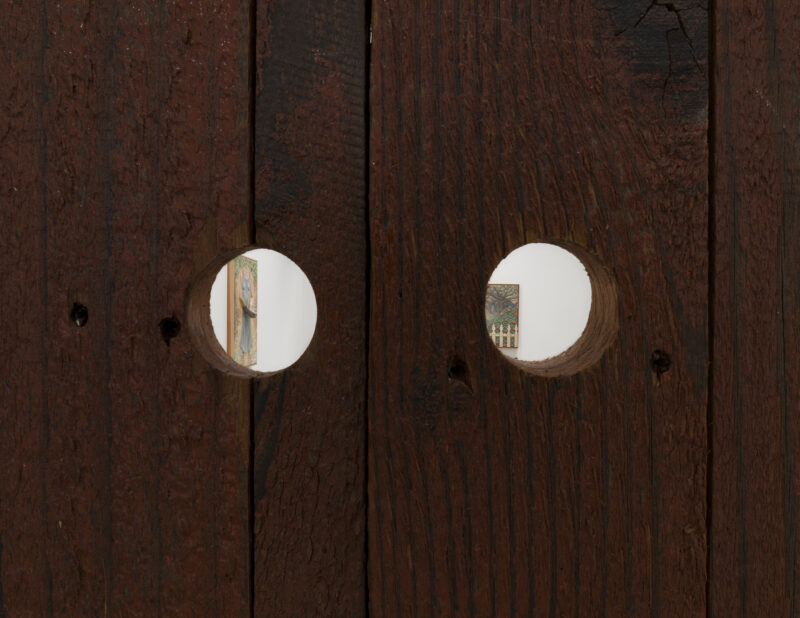
Through this lens, I’m thinking about symbolic and literal framing devices in our lives, like fences, doors, and windows. These real, physical demarcations of space also function as symbols and frame how we see ourselves and the rest of the world, creating distinctions between what’s mine and what’s yours. I think an early transgression most children engage in is peeking through a fence or a window, reflecting a natural curiosity about crossing boundaries and disrupting order. The fence in the show, Spite Fence, has two little eyeholes cut out so you can peer through. When you walk around the fence to see the reliefs in the room, you see a human silhouette painted on it where the holes are, so your eyes are the eyes of that figure, and your legs are its legs. You’re implicated in this potentially scary image of the voyeur, but in general my work asks whether something is scary or simply transgresses our social frameworks.
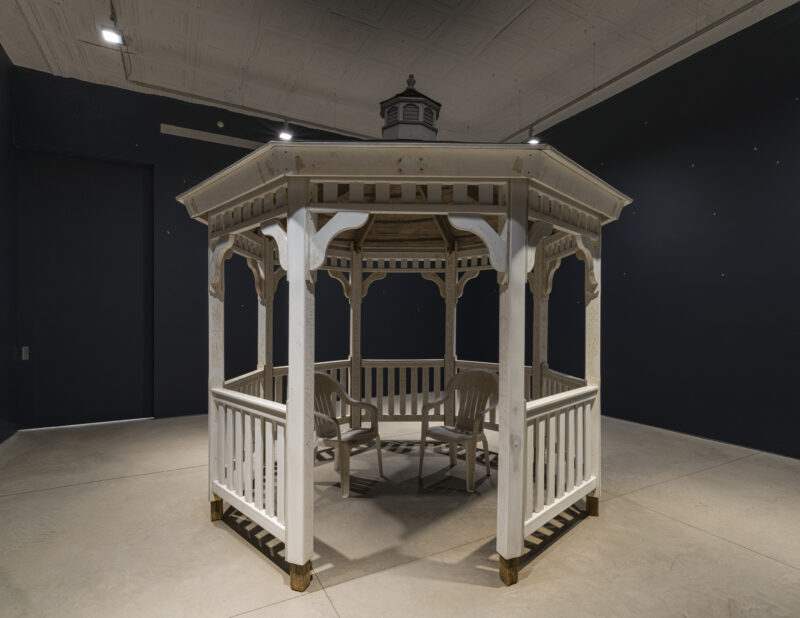
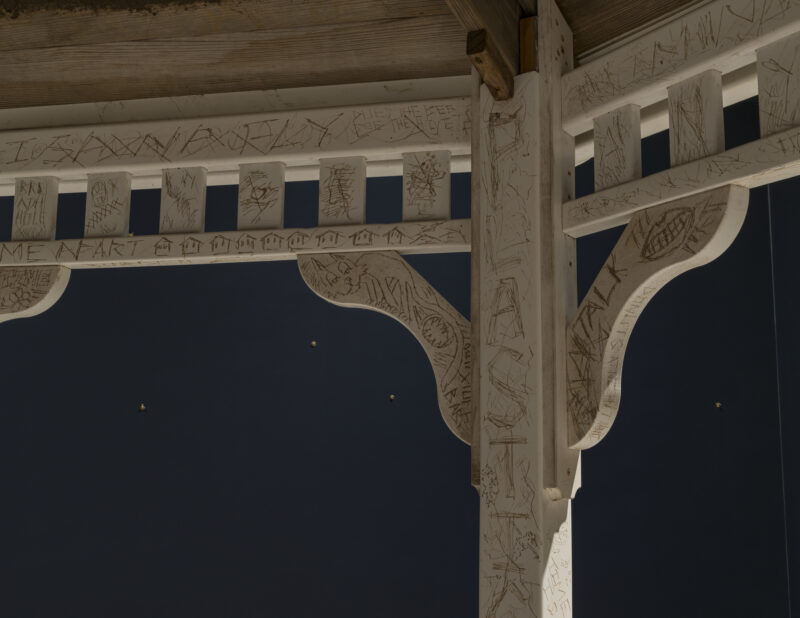
In the last room, you get Spite House (2026) and Morning Stars (2026). As the culmination of the show, this is a place to sit, rest, contemplate, talk—all these things you’re not encouraged to do in an art gallery, or in general. Spite House is a gazebo, another framing device. Gazebos are ancient structures, but the term “Gazebo” wasn’t coined until the 18th century. The Latin suffix “-ebo,” meaning “I shall,” was added to “gaze,” meaning “I shall gaze.” I’m interested in how the gazebo intersects with landscape painting and manicured gardens, these controlled and constructed representations of nature that signal human dominance. A gazebo is a structure that sits within this constructed space and provides a rectangular framework from which to view a landscape as a controlled image, or as something to be owned. I think that’s fascinating and absurd.
I mostly interacted with gazebos as a teen in the park at night with my friends. I was thinking about what it meant to occupy spaces that are part of one symbolic order and to use them for something else. Spite House is trying to disrupt this space of leisure and ownership and make it a more collective project. The gazebo in the show is sort of a found object. I saw that someone was getting rid of a gazebo, and my dad helped me get it, take it apart, and turn it into a modular sculpture. I’m very materially specific in my work, and this gazebo is made of PVC, so I was trying to think about what PVC calls for.
PVC doesn’t weather, and it’s easy to clean, but it’s also easy to scratch. So, I thought about “scratchiti” or scratching vandalism. I covered the inside of the gazebo with scratchiti to disrupt its symbolism and evoke nostalgia for adolescence. That’s important to me, because it is a period of your life that’s constantly framed by adult society and expectations. You’re told how to think, perform, and exist, and there are these interesting moments where objects or locations are given over to teens and kids to make their own rules. Spite House is a gazebo that’s been given over to the teens.
The Gum Tree (2026), a relief of a tree behind a fence that’s covered in chewed gum, is inspired by a big tree that grew along the side of a staircase leading to a waterslide at Splish Splash, a Long Island waterpark. People knew it as the gum tree, and everyone would chew a piece of gum to stick to it. The moment the staff decided to stop cleaning it off is interesting to me.
At what point is the tree, or the gazebo, officially given over? Those kinds of moments leave me in awe, this expression of a collective decision. It requires a sort of consensus; it’s not something one person can decide. So, the scratchiti and the gum in these pieces are about this different kind of expression, a collective reclamation.
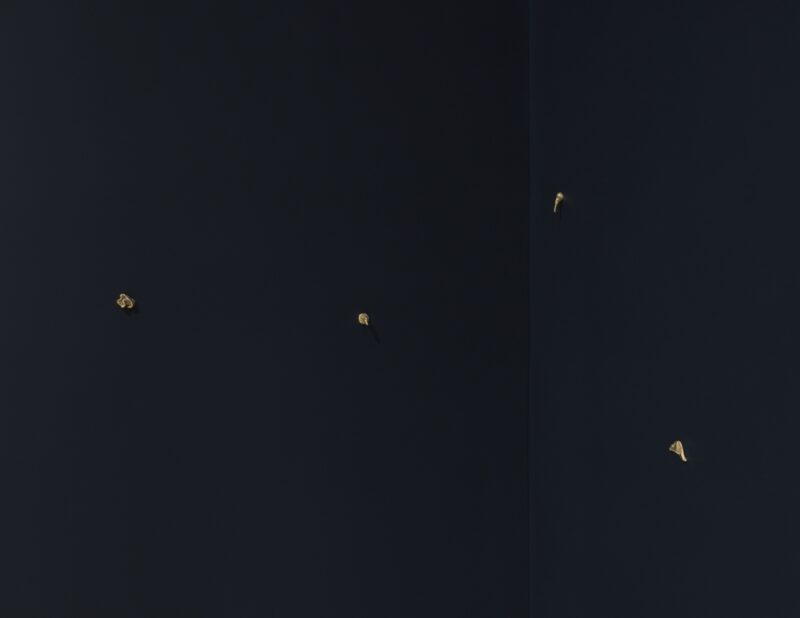
Morning Stars also play off of the form of chewed gum using epoxy putty, but are spray-painted gold and dotted across painted walls to replicate a night sky. There’s something special about the chewed-gum-to-star transformation, this aspect of building your own world and seeing it as constructed theater. Each “star” is a pin, available for $50.00 and mailed to the buyer at random, which is sort of behaving spitefully toward the market and how it operates. So much of the art market is about “first choice,” or privileging one person over another and these inaccessible price points. One thing I’ve been struggling with, is this idea that I can’t afford my own art, that the people who appreciate what I do can’t afford it either. I’m trying to find a way to bring them in. Morning Stars could’ve been framed as a complete installation, with instructions on where each pin goes, and maybe nobody would even buy it. But distributing them this way, at random, for $50.00, invites you to participate in Morning Stars. It’s a conversation between my audience and me.
The name came about when I learned that Lucifer means “light bringer” or “morning star” in Latin, so I was thinking about his revolt against a hierarchical system. Morning star is also a name for Venus because it’s one of the brightest things in the sky first thing in the morning. So, the Morning Stars are like beacons in the night sky, signaling that there’s more here.
DD Herschlein.
"Spite House" (2026).
PVC, wood, asphalt roofing, dirt, matte medium, molding paste, newspaper, epoxy putty, metal, wire, hardware.
Photographed by Charles Benton.
DD Herschlein.
"Spite House"(Detail) (2026).
PVC, wood, asphalt roofing, dirt, matte medium, molding paste, newspaper, epoxy putty, metal, wire, hardware. Photographed by Charles Benton.
DD Herschlein.
"Morning Stars" (2026)
Epoxy putty, pin backs, spray paint. Photographed by Charles Benton.
DD Herschlein.
"I Will Take You Apart" (2026)
Wood, foam, plaster, joint compound, fiber tape, epoxy putty, nails, nuts and bolts, milk paint, shellac, wax, color pencil, artist’s frame. Photographed by Charles Benton.
DD Herschlein.
"I Will Take You Apart" (Detail) (2026)
Wood, foam, plaster, joint compound, fiber tape, epoxy putty, nails, nuts and bolts, milk paint, shellac, wax, color pencil, artist’s frame. Photographed by Charles Benton.
DD Herschlein.
"Burning The Universal Facade" (1980 / 2026).
Photograph by Donald Gardner 1980.
Framed and recontextualized by DD 2026. Photographed by Charles Benton.
DD Herschlein.
"Living Is Easy With Eyes Closed (Spite Fence)" (2026).
Salvaged fencing, wood, brick, mortar, milk paint, shellac, wax, acrylic paint, black gesso, hardware. Photographed by Charles Benton.
DD Herschlein.
"Living Is Easy With Eyes Closed (Spite Fence)" (Detail) (2026).
Salvaged fencing, wood, brick, mortar, milk paint, shellac, wax, acrylic paint, black gesso, hardware. Photographed by Charles Benton.
DD Herschlein in their studio. Photographed for Art21 by Sasha Tivetsky in July 2026.
DD Herschlein in their studio. Photographed for Art21 by Sasha Tivetsky in July 2025.
DD Herschlein's studio. Photographed for Art21 by Sasha Tivetsky in July 2026.
DD Herschlein in their studio. Photographed for Art21 by Sasha Tivetsky in July 2026.
DD Herschlein in their studio. Photographed for Art21 by Sasha Tivetsky in July 2026.
DD Herschlein in their studio. Photographed for Art21 by Sasha Tivetsky in July 2026.
DD Herschlein collecting materials for their studio. Photographed for Art21 by Sasha Tivetsky in July 2026.
DD Herschlein in their studio. Photographed for Art21 by Sasha Tivetsky in July 2026.
DD Herschlein in their studio. Photographed for Art21 by Sasha Tivetsky in July 2026.
DD Herschlein in their studio. Photographed for Art21 by Sasha Tivetsky in July 2026.
DD Herschlein in their studio. Photographed for Art21 by Sasha Tivetsky in July 2026.
DD Herschlein in their studio. Photographed for Art21 by Sasha Tivetsky in July 2026.
DD Herschlein.
"The Gum Tree" (Detail) (2026).
Wood, foam, plaster, joint compound, fiber tape, epoxy putty, milk paint, oil paint, shellac, wax. Photographed by Charles Benton.
DD Herschlein.
"The Gum Tree" (2026).
Wood, foam, plaster, joint compound, fiber tape, epoxy putty, milk paint, oil paint, shellac, wax. Photographed by Charles Benton.