Art21 Producer Andrea Yu-Chieh Chung sits down with Associate Curator Jurrell Lewis to discuss the Art21 New York Close Up film “Jordan Strafer’s True Stories.” Documenting Strafer at work on her latest film, TALK SHOW (2026), before it’s premiere at the 81st Whitney Biennial, Chung describes the careful approach to “capital ‘T’ truth” that both filmmakers share, and the unique ways that Strafer works with truth as a material that made for an exciting creative collaboration. Sharing special moments on set and revealing the process of documentary filmmaking, Chung takes viewers behind the scenes on “Jordan Strafer’s True Stories.”
As a documentary filmmaker, I was drawn to the way Jordan Strafer works with real life and real events as material, fictionalizing and remixing them to create her films. Her process is a form of collaging real events. I’m inspired by how observant Jordan is—how she keeps her eyes open and remains attentive to the world around her. If she sees something interesting, in media or simply while walking around, she notes it down. It may not immediately make it into a film, but years later, it could become part of a project.
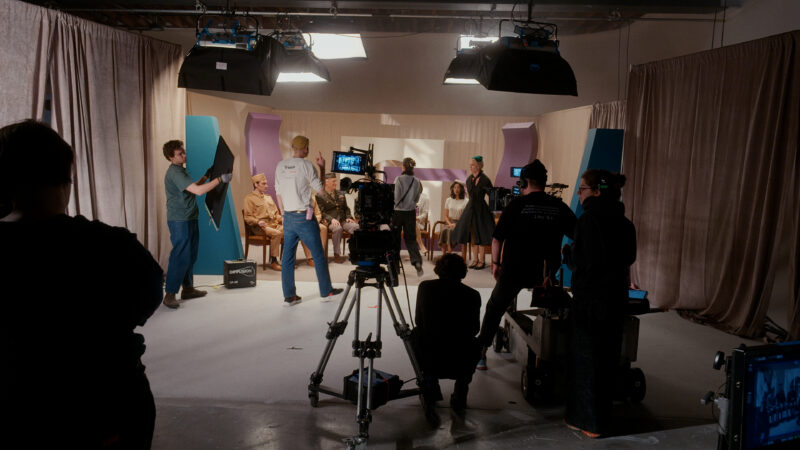
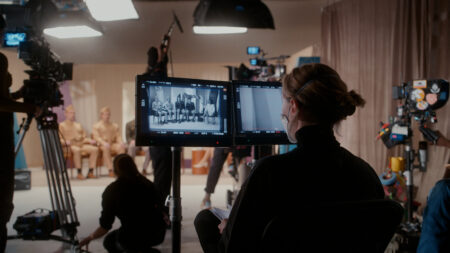
Cast and crew on the set of Jordan Strafer’s TALK SHOW (2026). Production still from the New York Close Up film “Jordan Strafer’s True Stories.” © Art21, Inc. 2026.
Jordan is also very insistent on getting the words right. There’s something about re-performing a transcript as spoken words that creates the strange, uncanny quality of her work. As someone who edits other people’s words a lot, I found this especially fascinating.
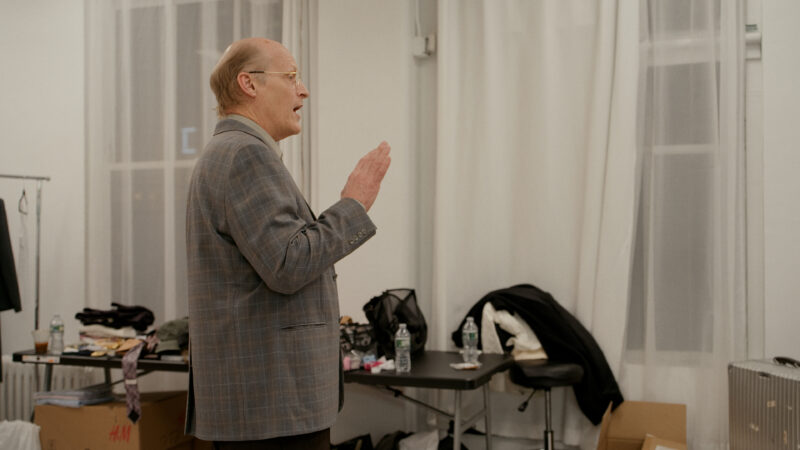
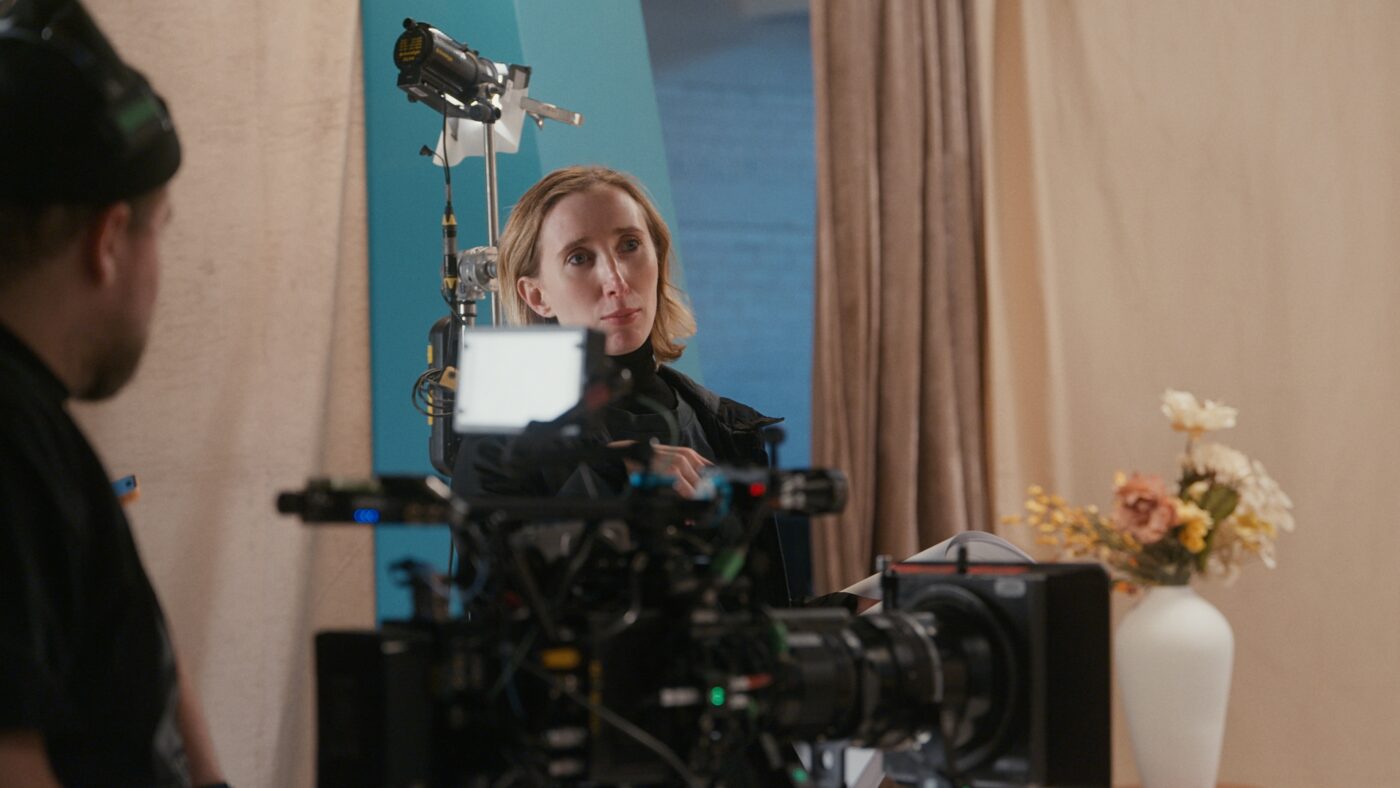
Jim Fletcher rehearsing on the set of Jordan Strafer’s TALK SHOW (2026). Production still from the New York Close Up film “Jordan Strafer’s True Stories” (2026). © Art21, Inc. 2026.
In Jordan’s latest film, TALK SHOW (2026), a psychologist leads a meditation for a fictional talk show audience, reenacting a specific 1991 episode of The Oprah Winfrey Show. We were lucky to film Jordan rehearsing with Jim Fletcher, who plays the psychologist, during a costume fitting, and later while they were shooting the scene. The meditation is known to make people emotional, and the first time I experienced it during the rehearsal, I too began to tear up. It was a special moment of witnessing firsthand the power of reenactment. Even though the scenario was fictionalized, the emotion was real.
That moment made me think about the complicated relationship between fiction and truth in Jordan’s work. I’ve never believed that documentaries can provide their audience with a capital-T “truth.” What we do as documentary filmmakers is reflect the truth as we absorb it, while allowing the audience space to consider what that means to them. While making this film, we wanted to highlight Jordan’s interest in how pop culture and media shape the ways we understand truth and morality. In the edit, we make a point of juxtaposing the archival footage Jordan references, her filmmaking process, and her completed work, so viewers can see what she is reenacting and what she is changing. Seeing what she’s changing allows us to consider what she’s critiquing or what she wants us to notice. In doing so, we hope to see the seams of what we might otherwise accept as true, while allowing the audience space to reflect on what truth means to them.
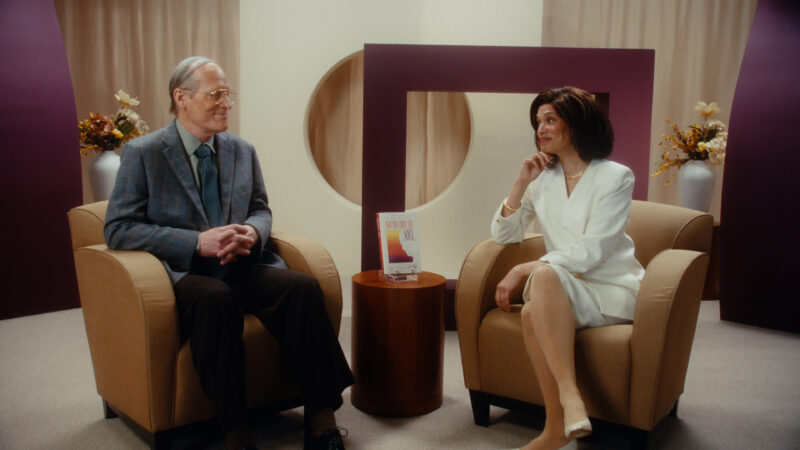
Production still from Jordan Strafer’s TALK SHOW (2026).
Being an Art21 filmmaker is like being a translator. I translate an artist’s sensibility and the way they think into documentary form. I don’t try to replicate an artist’s aesthetic, but I do want the film to feel like them. Making this film with Jordan was such a treat because it reminded me that filmmaking gives us the time and space to look closely, stay curious, and dive into rabbit holes that we might not have known existed.
— Andrea Yu-Chieh Chung
Director, “Jordan Strafer’s True Stories”